

I know how much you want to give your shoppers the perfect experience. We all love it when a store remembers our style or suggests the right size. However, modern shoppers are becoming much more cautious about their data.
Navigating privacy concerns in e-commerce personalization requires a delicate balance between helpfulness and overstepping boundaries. I want to help you master this balance to keep your customers happy and safe.
In this guide, we will look at how to build deep trust. We will explore the risks of modern data collection. You will also learn five specific strategies to stay compliant and relevant.
My goal is to show you that privacy and personalization can live together. Let’s dive into how you can protect your brand and your buyers.
The Strategic Paradox: Balancing Personalization and Data Integrity
We often face a strange problem in the digital world. People want a shopping trip that feels unique to them. They hate seeing ads for products they already bought.
Yet, they also worry about how much we know about them. This is the strategic paradox of the modern web. Every brand dealing with privacy concerns in e-commerce personalization must understand this tension from day one.
The Definition of the Personalization Value Exchange
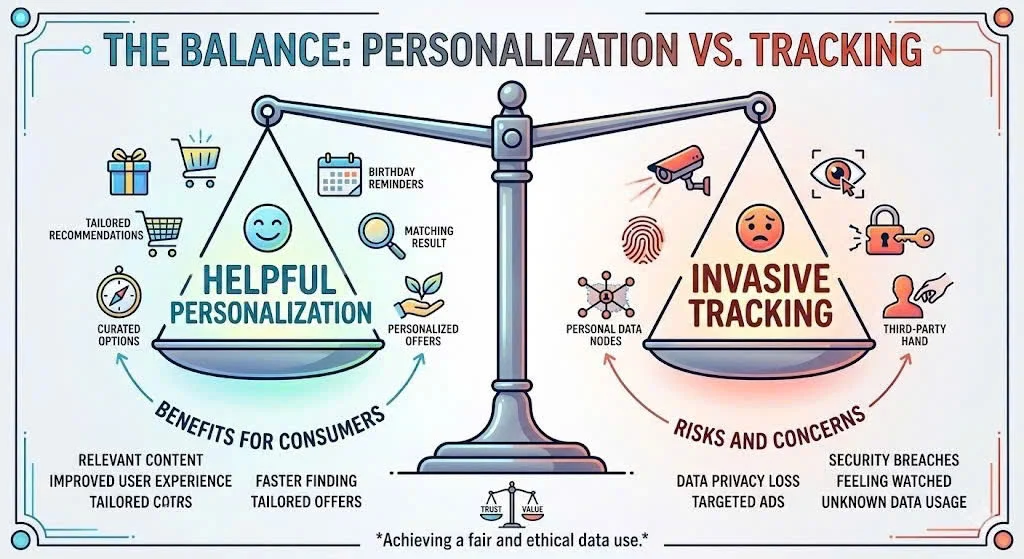
I like to think of data collection as a “Value Exchange.” This is an understandable concept. A customer gives you a small piece of their identity.
In return, you give them a better shopping experience or a special discount. If the value you give is lower than the data you take, trust breaks.
I always tell my clients to be clear about this exchange. Tell the customer exactly what they get for their email or birthday. When the benefit is clear, people feel much more comfortable.
It turns a scary data grab into a fair trade.
The 1-2-3 Evolution of Personalization Data Usage
Personalization has undergone major changes over the years. We can break it down into three simple steps of evolution. Understanding where you are helps you spot potential issues.
- Step 1: Segment-Based. You group people by broad categories like location or gender.
- Step 2: Behavioral. You track what people click on to guess what they like.
- Step 3: Predictive. You use AI to guess what they will want next.
As you move to step three, privacy concerns in e-commerce personalization grow significantly. You need stricter rules to keep things ethical. Always ensure your tech stack matches your privacy promises.
Exposing Critical Privacy Risks in Modern Personalization
Before we fix the problems, we must name them. Many brands make mistakes without even realizing it. These mistakes can hurt your reputation and lead to big fines.
I have seen many good companies struggle because they ignored these risks.
The Rise of “Shadow Profiling” and Opaque Collection
Shadow profiling is a major worry for many shoppers. This happens when a brand collects data from hidden sources. For example, buying data from third-party brokers.
This creates a profile that the user never agreed to build. When a customer sees a recommendation based on a “shadow profile,” it feels like magic—but the scary kind. They wonder how you know so much about them.
This lack of transparency is one of the fastest ways to trigger privacy concerns in e-commerce personalization. I recommend avoiding third-party data whenever possible.
Security Honeypots and the Threat of Data Breaches
The more data you store, the more attractive you look to hackers. I call large databases “security honeypots.” A single breach can ruin years of brand building.
It is not just about losing emails; it is about losing the heart of your business. Personalization often requires storing sensitive details. This might include home addresses or shopping habits.
You must treat this data like gold. Use strong encryption and limit who can see the files in your office.
Algorithm Bias and The Ethics of Dynamic Pricing
Sometimes, the machines we use make mistakes. AI can develop biases based on the data it reads. This might lead to showing different prices to different people.
While “dynamic pricing” is common in travel, it can feel unfair in retail. If your AI targets specific groups with higher prices, you face an ethical crisis. Customers will eventually find out.
Always audit your algorithms to ensure they treat everyone fairly. Fairness is a key pillar of long-term trust.
The Creepiness Factor: Crossing the Invasive Threshold
Have you ever talked about a product and then seen an ad for it? Most people find that “creepy.” There is a thin line between being helpful and being invasive.
We call this the “Invasive Threshold.” I suggest staying on the helpful side of that line. Do not use data that the customer did not give you directly.
If you use information from their social media without asking, you have crossed the line. Stick to the facts they shared on your site. This boundary is essential to resolving privacy concerns in e-commerce personalization responsibly.
Global Compliance: Navigating Modern Regulatory Mandates
Rules are not just suggestions anymore; they are the law. You must know the rules in the areas where you sell. This protects you from lawsuits and shows customers you are a pro.
I follow these updates closely because they change every year.
Establishing Compliance: From GDPR to CCPA/CPRA
If you sell to people in Europe, you must follow GDPR. If you sell in California, CCPA and CPRA matter. These laws give users the “right to be forgotten.”
They can ask you to delete all their data at any time. Compliance is one of the most concrete ways to address privacy concerns in e-commerce personalization legally.
|
Regulation |
Region |
Main Goal |
| GDPR |
European Union |
Safeguarding personal data and privacy for all individuals. |
| CCPA/CPRA | California, USA | Consumers’ ability to control their own information. |
| VCDPA | Virginia, USA | Framework for personal data privacy and security. |
I suggest using a consent management platform. This tool helps you track who said “yes” to cookies. It makes staying compliant much easier for small and large teams alike.
Transitioning to a Cookieless Personalization Strategy
The world is moving away from third-party cookies. Browsers like Safari and Chrome are making it harder to track users across the web. This is actually a good thing for privacy.
It forces us to be more creative and honest. We now focus on “first-party” data. This is data you collect directly on your own website.
It is more accurate and much safer to use. I believe the future of e-commerce depends on how well you handle your own data.
Strategic Solutions: Establishing Privacy-First Personalization
Now, let’s talk about how to win. You can provide amazing experiences without being a “big brother.” These five strategies are what I recommend to every brand I work with.
Prioritizing Zero-Party Data via Interactive Experiences
Zero-party data is the holy grail of addressing privacy concerns in e-commerce personalization. This is information the customer voluntarily shares with you. Think of quizzes, polls, or style finders.
For example, a makeup brand might ask, “Is your skin dry or oily?” When the user answers, they expect you to use that data. They want you to show them the right products for their skin.
This is the most ethical form of personalization. It builds a direct relationship based on a conversation.
Implementing Privacy by Design (PbD) Architecture
Privacy is not something to address later. “Privacy by Design” requires security to be embedded from day one.When you build a new feature, ask how it affects data.
If it doesn’t need personal data, don’t use it. I find that this mindset saves time and money later. It is much harder to fix a privacy leak after the site is built.
Make privacy a core part of your development process. Your tech team will thank you for the clear direction.
Adopting Session-Based AI for Real-Time Relevance
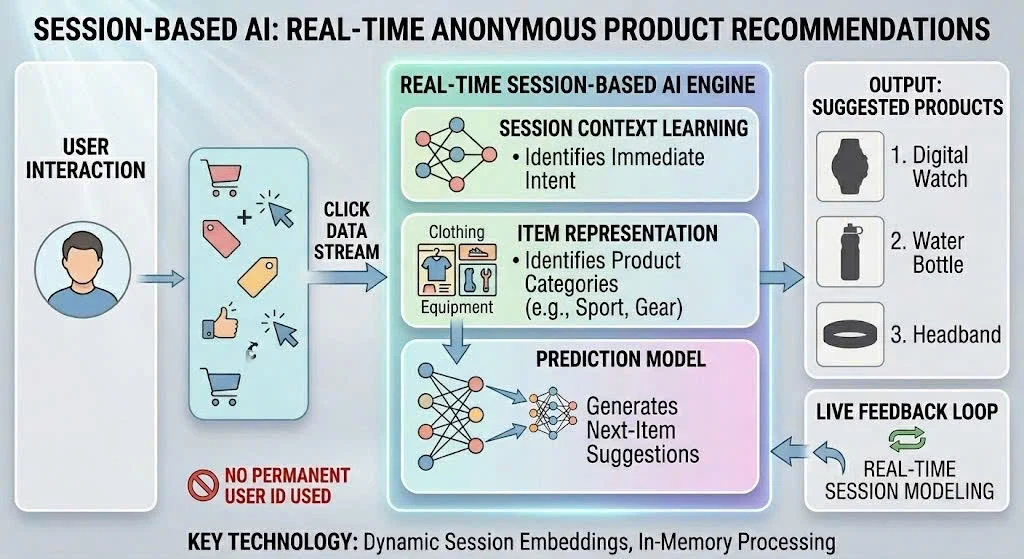
You don’t always need to know who someone is to help them. Session-based AI looks at what a user is doing right now. It looks at the pages they view during this single visit.
It does not look at their history from six months ago. This approach is one of the smartest technical answers to privacy concerns in e-commerce personalization. If I am looking at hiking boots today, show me socks.
You don’t need my name or my home address for that. This is a very privacy-friendly way to boost sales.
Operational Audits: Sustaining Long-Term Brand Credibility
Trust is not a one-time setup. It is a garden that you must tend to every week. You need to check your systems to make sure they still work.
I recommend doing a full audit at least twice a year.
Utilizing Just-In-Time Consent for Data Collection
Don’t ask for everything at once. When a user first lands on your site, they don’t trust you yet. Asking for their phone number, email, and preferences immediately is too much.
This scares people away. Instead, use “Just-In-Time” consent. Only ask for the email when they want a discount.
Only ask for their location when they look for a local store. This feels much more natural and respectful. Timed consent is a practical tool to reduce privacy concerns in e-commerce personalization before they even arise.
Three Essential Steps for a Privacy Integrity Audit
How do you know if your store is safe? Follow these three simple steps I use for my audits:
Map your data. Know exactly where every piece of info goes. Check your vendors.
Make sure your email tool or AI tool follows the same rules. Test your deletion. Try to delete a test user’s data to see if it actually works.
If you can do these three things, you are ahead of most stores. Consistency is the key to maintaining your brand’s reputation.
Expert Q&A: Resolving Complex Privacy Conflicts
I get many questions about these topics. Here are some of the most common ones I hear from store owners. I hope these answers clarify some of the harder points for you.
Is it possible to provide high-quality personalization without tracking personal identity?
Yes, absolutely. By using session-based AI, you can track “behavior” instead of “identity.” You see that a user likes blue shirts and size large.
You don’t need to know they are John Doe from New York to show them blue shirts. This proves that privacy concerns in e-commerce personalization do not have to limit the quality of your customer experience.
What exactly is “Zero-Party Data” in e-commerce?
Zero-party data is data a customer intentionally shares. It often comes from interactive content like surveys or preference centers. It is the most accurate data because it comes straight from the source.
It is better than guessing based on clicks.
What are the three primary tiers of privacy-conscious shoppers?
I generally group shoppers into three tiers:
Privacy Cynics: They don’t trust anyone and often use ad-blockers. Privacy Pragmatists: They will share data if they get a clear benefit or discount. Privacy Unconcerned: They value convenience above all and rarely check settings.
How does “Opt-In” personalization compare to “Opt-Out” models in ROI?
Opt-in models often have a higher Return on Investment (ROI). While the list might be smaller, the people on it are more engaged. They chose to be there.
This leads to higher conversion rates and fewer spam complaints.
Why is absolute trust the outcome of solving privacy concerns?
Trust is the foundation of any long-term relationship. If a customer trusts you, they will return again and again. They become brand advocates.
Solving privacy issues removes the fear that stops people from buying.
Giving your customers a tailored experience is a powerful tool. However, you must always put their safety first. By being honest and using the right tech, you can win their loyalty for life.
We have seen that transparency is not a hurdle; it is a competitive advantage in today’s market. Remember to focus on zero-party data and keep your algorithms fair. Audit your systems and stay up to date with global laws.
If you treat your customers’ data as carefully as your own, they will reward you with their business. Dealing with privacy concerns in e-commerce personalization is the best way to ensure your brand thrives in the years to come.


17 High-Speed Hacks for the Ultimate Quick Booth Breakdown Checklist
How to Optimize Lead Capture Automation Workflows and Scale Pipeline: 15 Strategic Ways for Better Management
10 Best Foot Traffic Sensor Software Solutions for 2026: The Ultimate Intelligence Guide
15 Ironclad Strategies for Remote Store Data Security Management in 2026
Captivate, Connect, Convert: Mastering Interactive Touch Screens for Exhibitions
Innovative Exhibition Engagement Solutions for High-Impact Trade Shows