

I have spent years navigating the chaotic energy of trade show floors. The final hour of an event is always a whirlwind of activity. I know the feeling of exhaustion when the “show closed” announcement finally rings out.
You want to get home, but you have a massive display to pack up first. That is where a Quick Booth Breakdown Checklist becomes your best friend. In this guide, I will share the exact strategies I use to finish my teardown in record time while keeping everything safe.
A well-prepared plan saves you hours of stress and heavy lifting. I have seen teams struggle for half a night because they lacked a clear system. By following these 17 hacks, you can streamline your process and leave the convention center while others are still hunting for tape.
Let us dive into how you can master your next event exit.
Strategic Pre-Teardown Steps for Maximum Efficiency
I find that the best breakdowns actually start before the show even ends. You do not want to wait until the lights dim to start thinking about your boxes. I always begin my preparation about two hours before the official closing time.
This early start ensures that we maintain schedule adherence throughout the final evening.
1. Stage All Packing Materials
I recommend preparing your tape dispensers and boxes at least 60 minutes before closing. I usually hide a small kit of inventory packing supplies behind our main counter. This kit includes extra rolls of clear tape, markers, and box cutters.
If you have empty bins, keep them in an accessible, hidden storage area. This prevents you from having to wait for the marshaling yard to deliver your empty crates immediately.
Using a Quick Booth Breakdown Checklist means you never have to ask, “Where is the tape?” Having everything within arm’s reach allows my team to start the moment the clock strikes. I also suggest pre-labeling a few boxes for common items like pens or leftover brochures.
2. Sync Digital Lead Data to the Cloud
I never leave the floor without ensuring our leads are safe. I make it a priority to sync all digital data to the cloud before we unplug the Wi-Fi. A dead tablet or a corrupted local file can cost you hard-earned contacts, which is truly frustrating.
I check the upload status on every device to confirm the data is secure. This step is a vital part of my Quick Booth Breakdown Checklist because it protects our return on investment.
3. Designate Specific Team Assignments
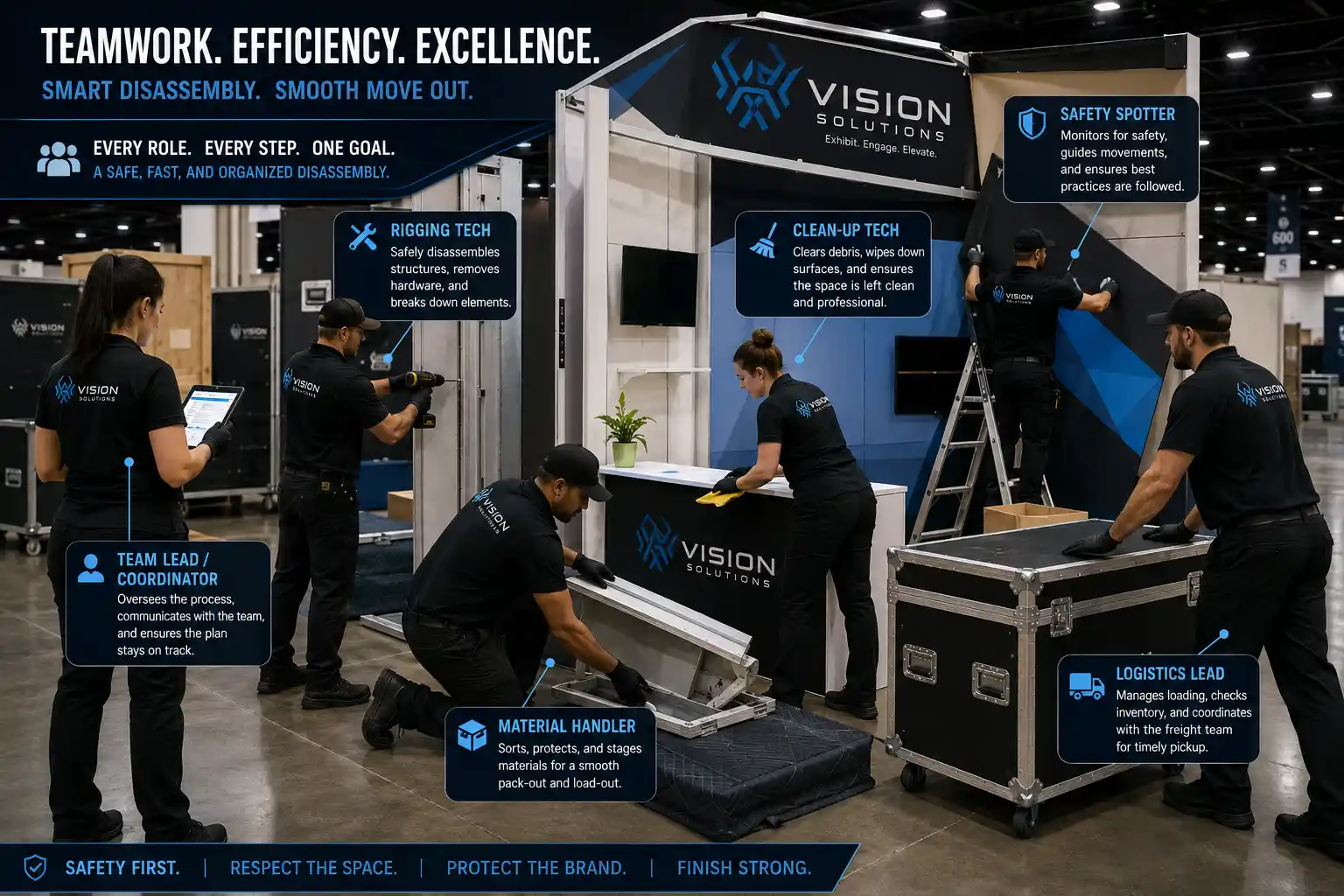
Good team coordination is the secret to a fast exit. I assign one person to handle the electronics and another to manage the graphics. I usually take charge of the structural elements myself.
When everyone knows their role, we avoid tripping over each other. This approach ensures safe work practices by preventing people from rushing into unfamiliar tasks.
A clear division of labor turns a chaotic mess into a synchronized dance.
Systematic Execution of Your Quick Booth Breakdown Checklist
Once the show is officially over, the real work begins. I like to move from the smallest items to the largest structures. This method clears the floor space quickly.
This approach also keeps small items from slipping under heavy furniture. My Quick Booth Breakdown Checklist focuses on a logical flow that keeps the aisle clear for other exhibitors.
4. Pack Small Inventory and Promotional Giveaways
I start with the inventory packing of our giveaway items. These are usually the easiest to box up. If we have leftover pens or stress balls, I pack them tightly to prevent shifting.
I find that using smaller boxes for these items makes them easier to carry later. It also helps with storage organization back at the office. I always mark these boxes clearly so I can find them for the next show.
5. Dismantle Branding Signage and Graphics
The next step in booth disassembly involves your branding graphics. I am very careful with fabric graphics. I always roll them to avoid permanent creasing rather than folding them.
If we have hard panels, I make sure to wipe them down before placing them in crates. Dust from the show floor can scratch the surface of your beautiful designs during transit. This attention to detail is a key part of my Quick Booth Breakdown Checklist.
6. Organize Technical Cables and Power Strips
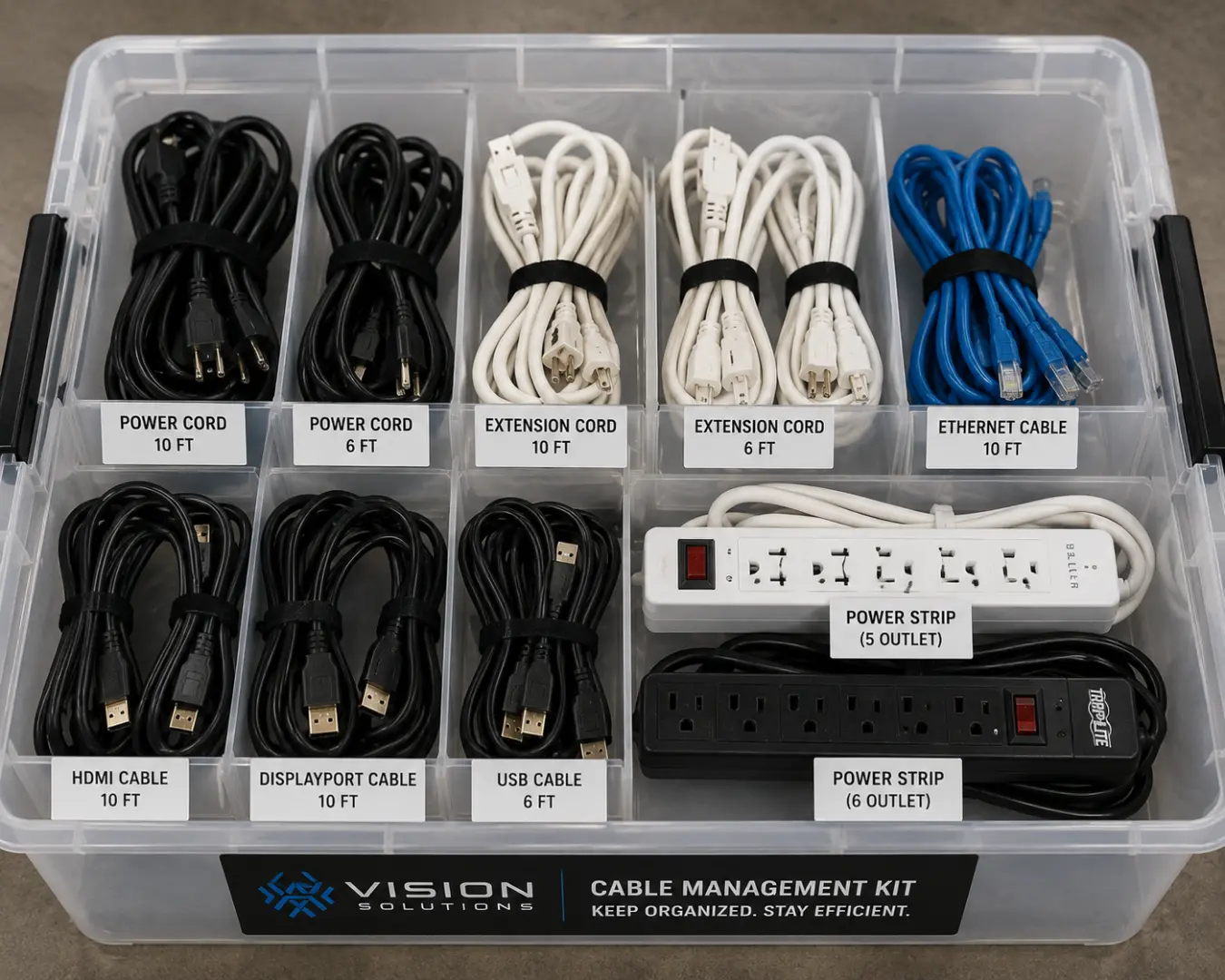
I hate tangled wires. They are a nightmare to deal with during the next setup. As soon as I unplug a cable, I fasten it with a Velcro tie.
I label both ends of the cables so I know exactly where they plug in next time. This saves us hours during future event equipment removal tasks. I store all power strips in a dedicated “tech tub” to keep them organized.
7. Collapse Structural Frames and Furniture
Finally, I move on to the heavy lifting. We collapse the frames and disassemble the furniture. I make sure to put all screws and small hardware into a labeled bag.
I then tape that bag directly to the frame piece it belongs to. This is a crucial step in this process. It prevents the panic of missing a single specialized bolt during your next event.
Asset Protection and Inventory Auditing
Your booth is a major investment. I treat every piece of equipment with respect. Protecting your assets during the breakdown is just as important as the show itself.
I include a specific section for damage inspection in my Quick Booth Breakdown Checklist to catch issues early. This proactive approach saves money and prevents surprises later.
8. Secure High-Value Electronics Immediately
I never leave laptops or tablets sitting out while we take down the walls. These items should be the first things packed and the first things moved to a secure location. I often place them in a locked cabinet or take them directly to our vehicle.
Security on the show floor can be thin during the move-out phase. I make it a priority in this system to keep these items under a watchful eye.
9. Conduct a Meticulous Final Floor Sweep
I always do a final walk-through of our space. I look for any items tucked into corners or under the carpet. This is also when I handle waste disposal.
I gather all trash and place it in the designated areas. Leaving a clean space is professional and keeps the venue staff happy. A Quick Booth Breakdown Checklist helps us pack up cleanly while preserving our reputation as a great exhibitor.
10. Audit the Master Booth Component Inventory
I use a master manifest to check off every crate and box. I compare the packed items against the original list we brought to the show. If something is missing, I note it for immediate replacement.
I also perform a damage inspection on the crates themselves. Repair any cracked crate before the next shipment goes out. This level of storage organization is what separates pros from amateurs.
Professional Logistics and Shipping Coordination
The team does not finish the job until the booth is on its way back. I spend a lot of time on transportation arrangements to ensure everything arrives safely. Dealing with shipping can be confusing, but my Quick Booth Breakdown Checklist makes it simple.
I follow the venue rules to the letter to avoid extra fees.
11. Finalize the Bill of Lading Documentation
I make sure the Bill of Lading is filled out perfectly. This document is the ticket for your freight. I double-check the piece count and the destination address.
I never leave the show floor until the BOL is turned in at the service desk. This is a non-negotiable step in my Quick Booth Breakdown Checklist. It is the only way to guarantee your freight gets picked up.
12. Apply High-Visibility Shipping Labels to All Crates
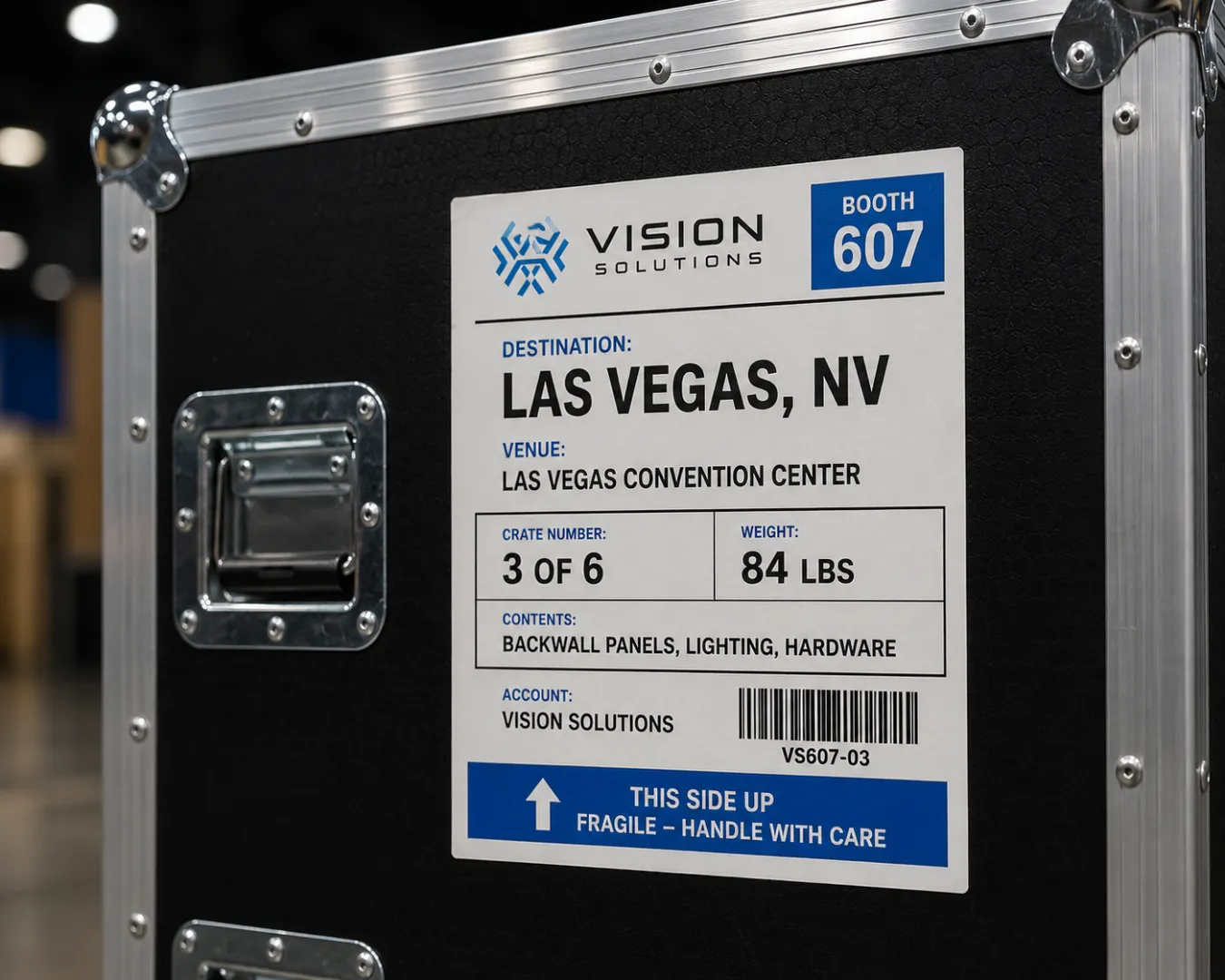
I use bright, high-visibility labels on every single piece of gear. Old labels must be removed to prevent the shipping company from getting confused. I place labels on at least two sides of every crate.
This helps the forklift drivers identify our gear quickly. This approach requires us to photograph the labeled crates as proof of their condition before they leave our sight.
13. Log Damage and Maintenance Needs for Next Time
I keep a maintenance log during the breakdown. If a light bulb burned out or a hinge got loose, I write it down. I do not want to forget these small details once I get home.
I include this log in my Quick Booth Breakdown Checklist so we can order parts immediately. This ensures that our next setup is even smoother than this one.
Vital Questions for Improved Breakdown Mastery
I often get asked how to make this process even faster. Here are the most common questions I hear on the show floor. These answers are based on my personal experience with dozens of successful events and event equipment removal projects.
14. Is professional drayage faster than self-hauling?
In my experience, professional drayage is usually faster if you have many large crates. They have the equipment to move heavy items quickly. If your pop-up booth is small, hauling it yourself saves time that would otherwise be spent waiting for crate delivery.
I always weigh the cost against the time savings when planning my Quick Booth Breakdown Checklist.
15. What distinguishes a breakdown from a load-out?
I view the breakdown as the physical act of booth disassembly and packing. The load-out is the logistics of moving those items out of the building and into a truck. You need a Quick Booth Breakdown Checklist for both to be successful.
One is about organization, while the other is about transportation arrangements and timing.
16. Which categories of tools belong in a breakdown kit?
I always carry a kit with four main categories: cutting tools, fastening tools, cleaning supplies, and labeling materials. I include a rubber mallet, a multi-tool, and plenty of microfiber cloths. Having these tools ready is a major part of our safety procedures.
We never have to make do with the wrong tool, which prevents injuries.
17. How does a quick breakdown ensure a faster future setup?
I believe that a clean breakdown is the first step of your next show. When I use a Quick Booth Breakdown Checklist, I pack items in the reverse order of how I need them. This means the items I need first for the next setup are the last ones packed.
It makes the next event feel effortless and much more organized.
Frequently Asked Questions
How long should a standard booth breakdown take?
For a 10×10 booth, I usually aim for 60 to 90 minutes. Larger custom islands can take several hours or even multiple days. It depends on the complexity of your booth disassembly needs.
What is the most common mistake during a breakdown?
I see many teams forget to turn in their Bill of Lading. Without that paper, your crates will sit in the warehouse for days. I always make that the final check on this list.
Should I hire labor for the breakdown?
If your booth requires heavy lifting or specialized tools, hiring professional labor is a smart move. It ensures safety procedures are met and reduces the physical toll on your sales team. I often find the cost is worth the speed they provide.
I hope these hacks help you navigate your next trade show exit with ease. Remember that a little bit of planning goes a long way. When you follow a consistent Quick Booth Breakdown Checklist, you protect your equipment and your sanity. I look forward to seeing you on the show floor and hopefully, seeing you finish your pack-out in record time!


Beyond the Brochure: 20 Creative Interactive Exhibition Booth Ideas to Command the Crowd
Captivate, Connect, Convert: Mastering Interactive Touch Screens for Exhibitions
Dominate Your Next Trade Show With 14 Innovative AI Tools for Booth Performance
Why a Professional Skin Analysis Device is the Must-Have Booth Tool
10 Best Foot Traffic Sensor Software Solutions for 2026: The Ultimate Intelligence Guide
AI Cameras to Analyze Visitor Behavior: The Comprehensive Guide to Business Intelligence