

I have spent years working at trade shows and outdoor markets. I know the stress of seeing a long line of customers. If your checkout is slow, people will leave. That is why I believe Fast Payment Integration for Booths is the most important part of your setup.
When you can process a sale in seconds, your revenue climbs. I want to share my best strategies to help you get there without any headaches.
In this guide, Fast Payment Integration for Booths ranges from every angle — technology, deployment, security, and connectivity. We will look at tools that make buying easy for your customers.
I will also talk about keeping those sales safe. My goal is to help you create a seamless checkout experience. Let’s dive into the world of fast payments and change how you do business.
1. 4 Modern Technologies for Fast Payment Integration for Booths
1.1 Direct Tap-to-Pay SDKs for Mobile Devices
I love the new tap-to-pay tech for smartphones. Direct tap-to-pay SDKs are a cornerstone of Fast Payment Integration for Booths at modern events. You no longer need a bulky point of sale machine for every staff member. You can use a Software Development Kit (SDK) to turn any phone into a reader.
This allows your team to walk around the booth. They can take payments right where the customer is standing. This flexibility keeps the flow of your booth moving fast.
1.2 Integrated mPOS Handheld Terminals
Mobile Point of Sale (mPOS) devices are small and powerful. I find them much better than old registers. The right mPOS device supports Fast Payment Integration for Booths across multiple staff members at the same time.
These handhelds connect to your payment gateway via Wi-Fi or cellular data. They usually have built-in printers or can email receipts. Using mPOS means you do not have a single bottleneck at a main desk. You can have three or four people taking payments at once.

1.3 Dynamic QR Code Payment Gateways
A QR code payment is a great backup. I often print unique codes for specific items. A customer scans the code with their phone.
They pay using their own digital wallet. I get an instant notification on my screen.
This method is touch-free and very fast. It works well when your card readers are busy with other people.
1.4 Self-Service Kiosk APIs for Unattended Booths
If you have a very busy booth, consider a kiosk. You can use an API to connect a touch screen to your system. Customers pick their items and pay on their own.
This works great for food or simple merchandise. It frees up your staff to answer questions. It also ensures that merchant integration is handled by the customer themselves.
2. 5 Critical Steps for Immediate Payment Gateway Deployment
2.1 Instant Merchant Account Onboarding
I always recommend choosing a provider with fast sign-up. You do not want to wait weeks for approval. Look for platforms that offer “instant onboarding.”
You can often start taking payments the same day you sign up. This is vital if you are preparing for a last-minute event. Always have your tax ID and bank info ready to speed this up.
2.2 Real-Time Inventory API Synchronization
Nothing is worse than selling an item you don’t have. I make sure my payment system talks to my inventory app. When a sale happens, the stock count should drop instantly.
This instant billing and sync prevent double-selling. It also helps me know exactly when I need to restock my booth shelves.
2.3 Establishing Multi-Channel Network Redundancy
Fast Payment Integration for Booths requires a rock-solid network setup. I never rely on just one way to get online. I use the event Wi-Fi as my main connection. I also keep a cellular hotspot as a backup.
If the Wi-Fi fails, my system switches over automatically. This keeps my mobile payment options live at all times. Redundancy is the secret to never missing a sale during peak hours.
2.4 Enabling Encrypted Offline Transaction Modes
Sometimes, the internet goes out completely. I look for hardware that supports “offline mode.” This stores the encrypted payment data on the device.
Once the signal returns, the system sends the data to the bank. This keeps the line moving even in “dead zones.” It is a lifesaver for outdoor festivals in remote areas.
2.5 Final End-to-End Latency Verification
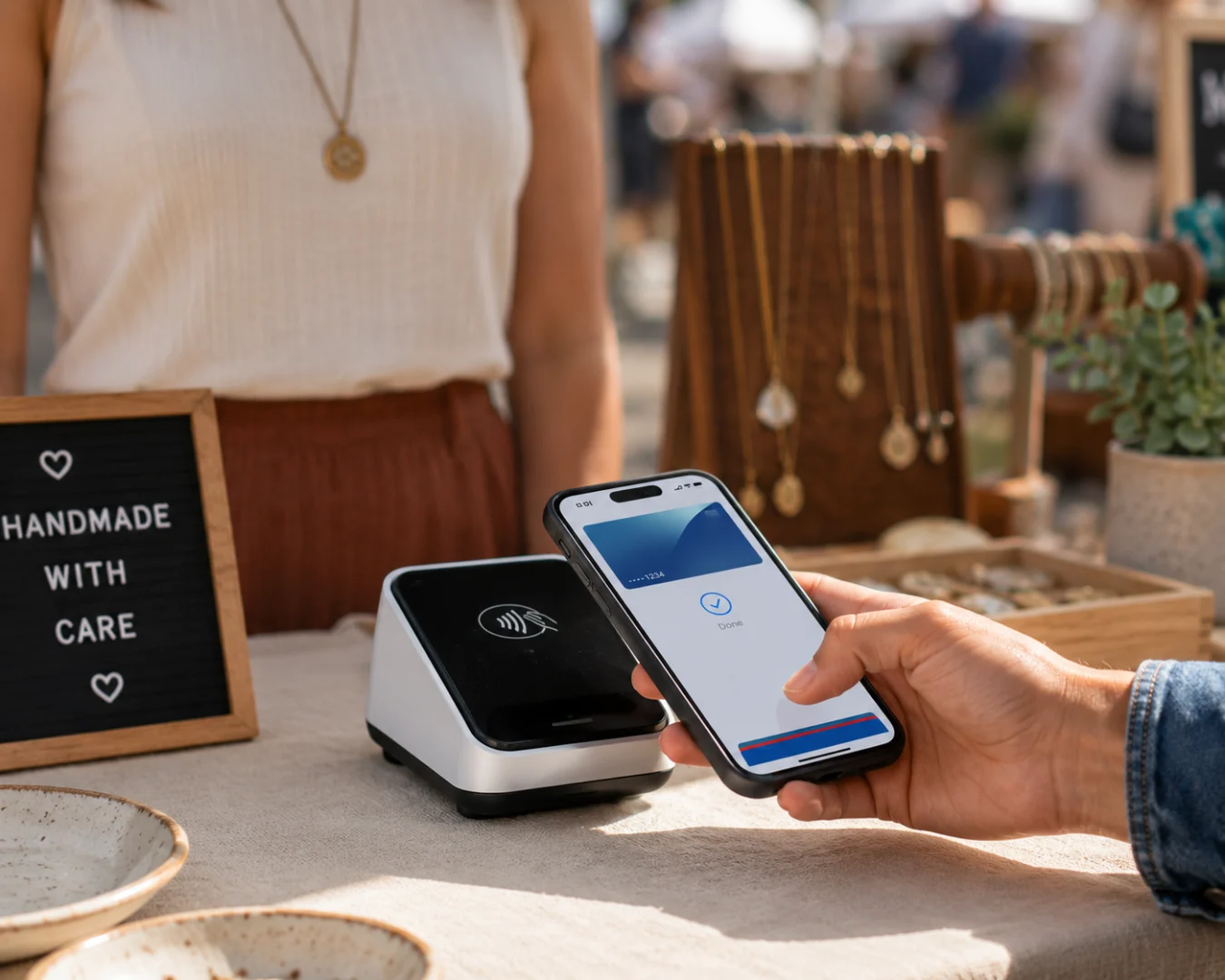
I always test the speed before the doors open. I run a few $1 transactions to see how long they take. I look for any lag between the tap and the “Approved” message.
If it takes more than three seconds, I check my network. Fast transaction security checks are good, but they should not be slow. I want my customers to see a green checkmark almost instantly.
3. 3 Technical Optimizations to Accelerate Booth Checkout Speed
These optimizations keep your Fast Payment Integration for Booths running at top speed during the busiest hours of any event.
3.1 Reducing Backend API Roundtrip Latency
I talk to my tech team about “roundtrip” times. This is the time it takes for data to go to the bank and back. You can minimize database queries and handshakes to save time.
Using a provider with servers close to your location helps a lot. Every millisecond you save makes the contactless payment feel smoother to the buyer.
3.2 Streamlining the User Interface for Staff Efficiency
A cluttered screen slows down my team. I remove redundant prompt screens from the checkout flow. For example, I skip the “Do you want a bag?” question if it is not needed.
I want my staff to tap only two or three buttons to finish a sale. A simple interface means less training time and fewer mistakes during a rush.
3.3 Prioritizing NFC Contactless Processing
I always encourage customers to tap their cards or phones. Near Field Communication (NFC) is much faster than dipping a chip. I place signs that say “We Accept Apple Pay and Google Pay.”
This guides people to use the fastest method available. It cuts down the time spent waiting for the machine to read the card chip.
4. 3 Essential Security Standards for High-Speed Booth Systems
Fast Payment Integration for Booths protects both you and your customers when the right security standards are in place.
4.1 Implementing End-to-End P2PE Encryption
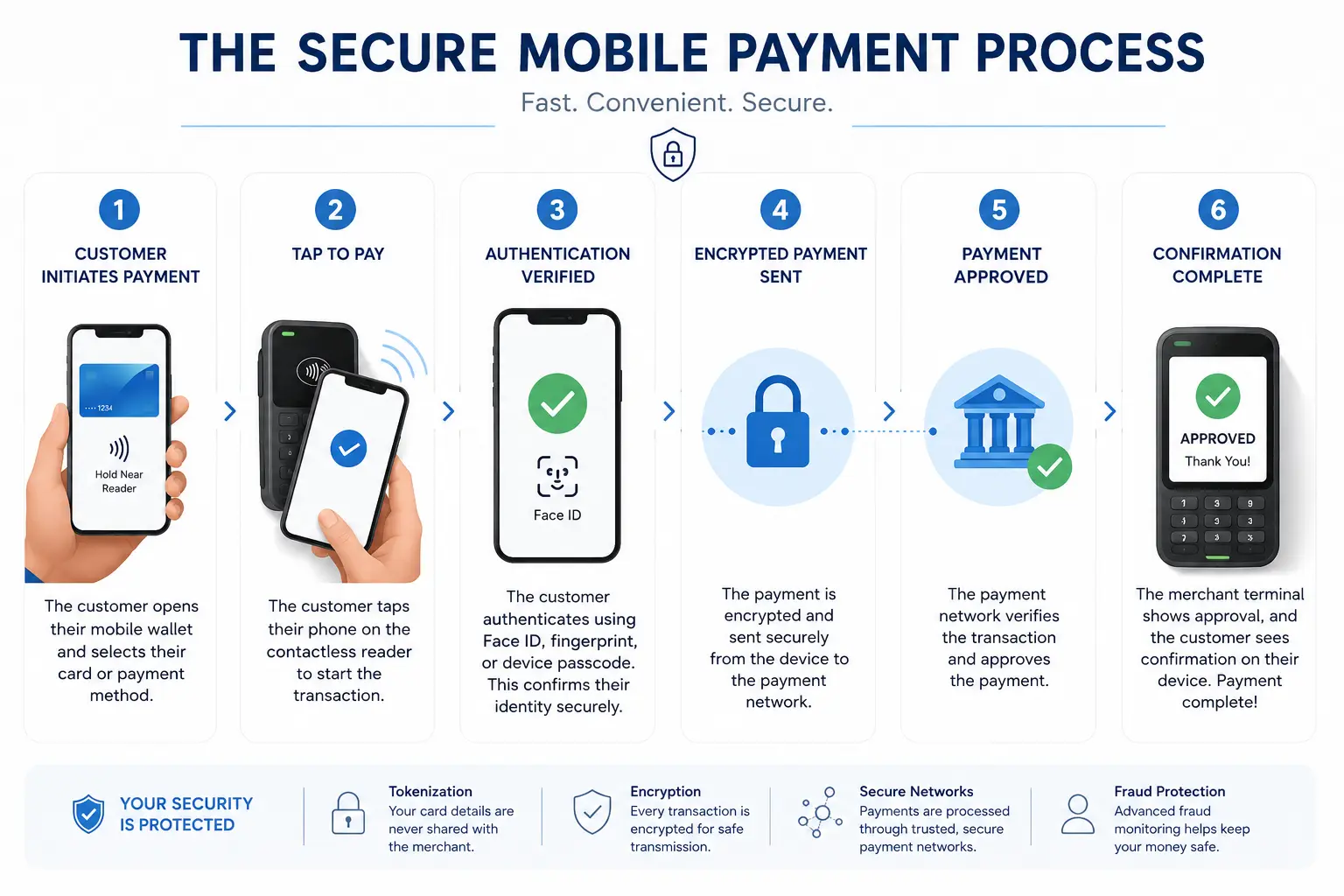
I take transaction security very seriously. Point-to-Point Encryption (P2PE) is a must. It masks the card data from the moment it is swiped or tapped.
This data stays hidden as it travels through the network. This protects me from hackers and keeps my customers safe. It also makes my yearly security audits much easier to pass.
4.2 Configuring Automatic Fraud Detection Filters
I use software that flags suspicious cards instantly. Sometimes, a “fast” system can let bad cards through. Good filters check for stolen card patterns without slowing the sale.
I set my limits to be safe but not too strict. I want to block the bad guys while letting my real customers buy with ease.
4.3 Managing Compliance Data via Tokenization
I never store actual card numbers on my booth’s tablet. I use tokenization instead. This replaces sensitive data with a random string of numbers.
If my device is ever stolen, the thieves get nothing useful. It is a smart way to handle merchant integration while keeping risks very low.
5. 2 Proactive Solutions for Solving Booth Connectivity Issues
5.1 Mitigating Local Signal Interference with High-Gain Antennas
Trade show halls are full of metal and other signals. This can mess with my Wi-Fi. I use high-gain antennas on my routers to cut through the noise.
These antennas pick up a much stronger signal than standard ones. It ensures my digital wallet transactions do not time out because of a weak connection.
5.2 Deploying Hardware Heartbeat Monitoring Systems
I like to know there is a problem before it stops a sale. Reliable hardware monitoring is essential to keep Fast Payment Integration for Booths running without interruption. A “heartbeat” system monitors all my payment devices. It sends me an alert if a reader goes offline.
This allows me to fix the issue before a customer arrives. Being proactive saves me from the frustration of a broken checkout line.
6. Essential Questions for Scaling Fast Payment Integration for Booths
6.1 Is Fast Payment Integration for Booths secure for high-value sales?
Yes, it is very secure. Modern systems use the same high-level encryption as big retail stores. Whether you sell a $5 sticker or a $5,000 painting, the data stays safe.
I always make sure my hardware is PCI-compliant. This gives me and my high-ticket buyers peace of mind.
6.2 What is the technical definition of a Fast Payment System?
A fast payment system settles transactions in near real-time. This means the money is authorized and the receipt is issued in seconds. It uses high-speed APIs to communicate with banks.
For a booth, it means no waiting for dial-up speeds or slow paper processing.
6.3 Which payment methods work best for indoor versus outdoor events?
For indoor events, Wi-Fi-based mobile payment works best. For outdoor events, I prefer cellular-based systems or offline modes. Outdoor events often have spotty internet.
QR codes are also great for outdoors because they don’t require the customer to use my network. They use their own data plan instead.
6.4 How do mobile wallet speeds compare to traditional chip-and-pin?
Fast Payment Integration for Booths is the best way to handle a huge crowd at your event. Mobile wallets are significantly faster. A chip-and-pin transaction can take 10 to 15 seconds. An NFC tap usually takes less than two seconds.
I find that using digital wallets can double the number of people I help in an hour. It is the best way to handle a huge crowd.
I hope these strategies help you win at your next event. Success at a booth is about more than just great products. It is about how you treat your customers’ time.
By focusing on speed and security, you show them that you are a pro. You will see fewer people walk away and more money in your account.
Setting up Fast Payment Integration for Booths might seem hard at first. However, once you have the right tools, it becomes second nature.
Take it one step at a time and start with the basics. Your customers will thank you for the quick service. Good luck with your sales, and I hope your next booth is your most profitable one yet!


10 Revolutionary Strategies: How AI Improves E-commerce Customer Experience
Innovative Exhibition Engagement Solutions for High-Impact Trade Shows
9 Essential Enhancements to Optimize Your Booth Engagement Measurement Tools
E-commerce Personalization: Orchestrating High-Conversion Experiences in the AI Era
18 Critical Strategies to Dominate Your Retail Niche with a Remote Store Management System
How to Optimize Lead Capture Automation Workflows and Scale Pipeline: 15 Strategic Ways for Better Management