

Beauty brands constantly seek new ways to capture attention. In today’s crowded market, standing out is key.
This article explores how interactive tech can transform beauty booths. These tools boost customer engagement, gather valuable data, and drive sales.
The Strategic Value of Interactive Technology in Beauty Exhibits
Trade shows and beauty expos are fast-paced environments. Brands need to create a strong impact right away.
Traditional static displays often fail to engage modern consumers. This is where interactive tech solutions shine.
Defining Modern Interactivity in Retail Spaces
Modern interactivity in retail is about participation. Interactive tech moves beyond passive viewing. Customers become active participants in their brand journey.
It delivers a memorable and personal experience. It involves technology that responds to user input. This could be a touch, a gesture, or even a voice command.
The goal is to build a two-way conversation between the brand and the consumer.
The Business Case for Interactive Booths
Investing in interactive booths offers clear business advantages. These benefits extend from initial engagement to long-term sales. They help brands achieve their marketing goals more effectively.
Extended Customer Dwell Time: Interactive tech content keeps visitors at your booth longer. Engaging games or virtual try-ons encourage deeper exploration. This increases their exposure to your brand message.
Automated Data Collection: Say goodbye to clipboards and paper forms. Interactive tech systems can seamlessly collect customer data. This includes preferences, contact details, and product interests. It streamlines lead generation.
Personalized Brand Recall: Memorable experiences create stronger emotional connections. When customers interact directly, they form unique memories. This makes your brand and products more unforgettable.
Augmented Reality (AR) Mirrors for Instant Virtual Try-Ons
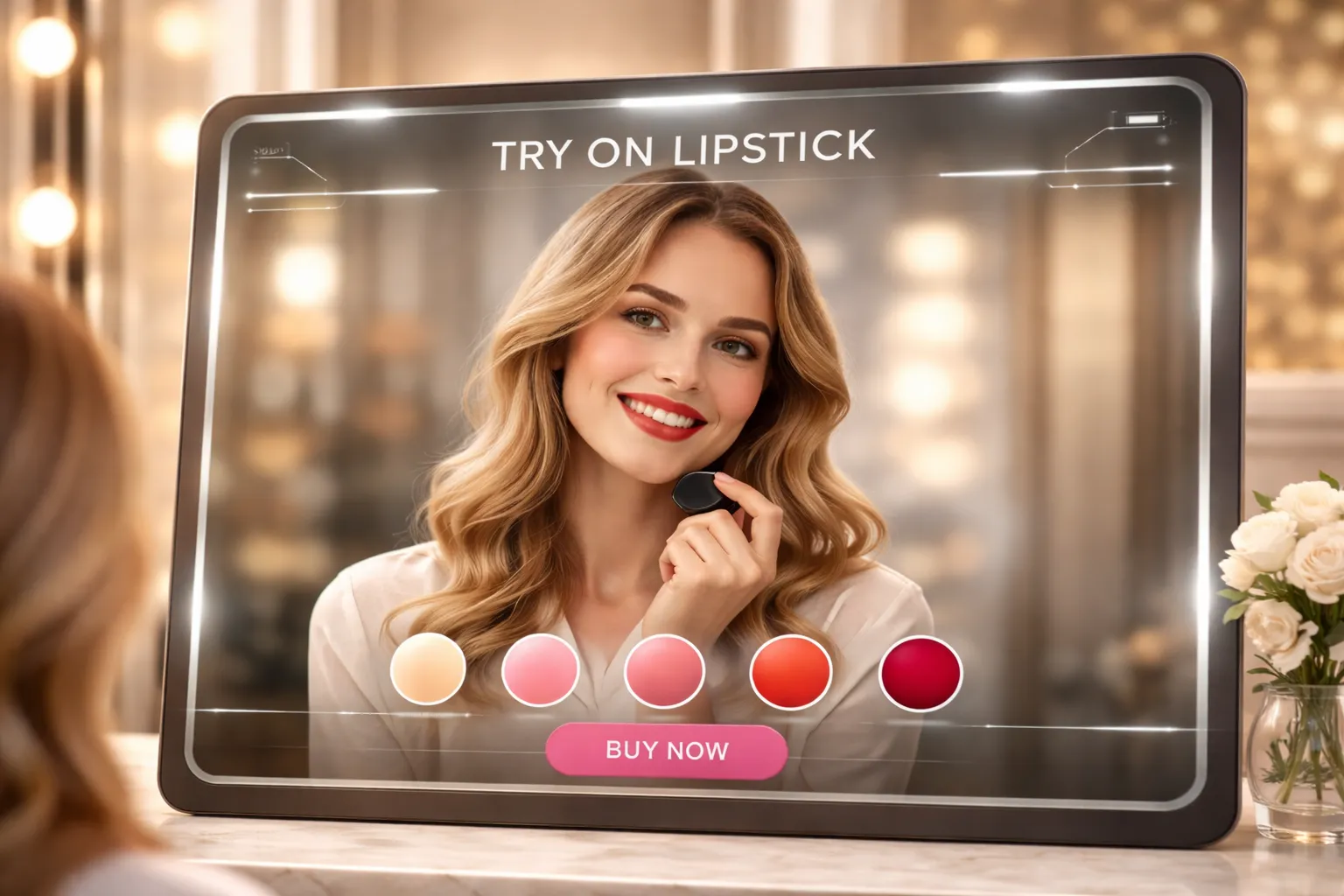
Augmented Reality (AR) mirrors are changing how consumers try beauty products. They offer a sanitary and efficient way to explore makeup and hair colors.
These mirrors overlay digital images onto a live video feed of the user. Customers can instantly see how products look on them.
Precision Color Matching and Real-Time Rendering
AR mirrors are among the most popular interactive tech solutions in beauty booths today. They use advanced algorithms for accurate color matching. They can show true-to-life shades of lipstick, eyeshadow, or hair dye.
The rendering happens in real time. This means customers see immediate, flawless results. They can experiment with many looks quickly.
The Viral Potential of Social-Integrated Mirrors
Many AR mirrors allow users to capture and share their virtual try-on photos. This happens directly to social media platforms.
Such features encourage user-generated content. This creates organic buzz and expands brand reach significantly. It’s a powerful interactive tech marketing tool.
Improving Hygiene and Operational Efficiency
AR mirrors solve several traditional booth challenges. They make the customer experience safer and smoother.
Eliminating Physical Testers: There is no need for physical product samples. This reduces mess, waste, and the cost of replenishment. It also makes cleanup easier for booth staff.
Reducing Skin Irritation Risks: Customers can try countless products without touching their skin. This prevents potential allergic reactions or irritations. It also ensures a clean experience for everyone.
Real-Time Inventory Tracking: Virtual shade popularity can be tracked by the system. This provides valuable insights into consumer preferences. It helps brands manage inventory and forecast demand more accurately.
AI-Driven Diagnostic Kiosks for Professional Consultations
AI-driven diagnostic kiosks are a powerful form of interactive tech that brings a scientific approach to beauty consultations. These smart systems offer personalized advice.
They help customers understand their specific needs, building trust and positioning your brand as an expert.
High-Definition Biometric Skin and Hair Analysis
These kiosks use high-resolution cameras and advanced sensors as part of an interactive tech diagnostic flow. They perform detailed analyses of skin and hair.
This includes detecting hydration levels, fine lines, dark spots, or scalp conditions. The analysis is precise and objective.
Generating Automated and Personalized Product Recommendations
Based on the diagnostic results, the AI system recommends tailored products. It suggests specific cleansers, serums, or treatments.
These recommendations are highly personalized. They address the individual’s specific concerns. This makes the suggestions more relevant and effective.
Establishing Credibility Through Data-Backed Insights
These kiosks provide concrete, data-backed evidence. This moves discussions beyond simple sales pitches. It creates a professional and trustworthy environment.
Providing Objective “Scientific Proof”: Customers receive a detailed report on their skin or hair. This objective data helps them understand their concerns. It also validates the recommended solutions.
Building Consumer Trust: The diagnostic approach builds confidence. Customers trust recommendations based on their own biometric data. This strengthens their belief in your brand’s expertise.
Delivering Digital “Beauty Prescriptions”: Kiosks can generate digital summaries. These “prescriptions” often include QR codes. Customers can scan these codes for immediate purchase or further information. This simplifies the buying process.
Gamified Touch-Walls and Immersive Storytelling Surfaces
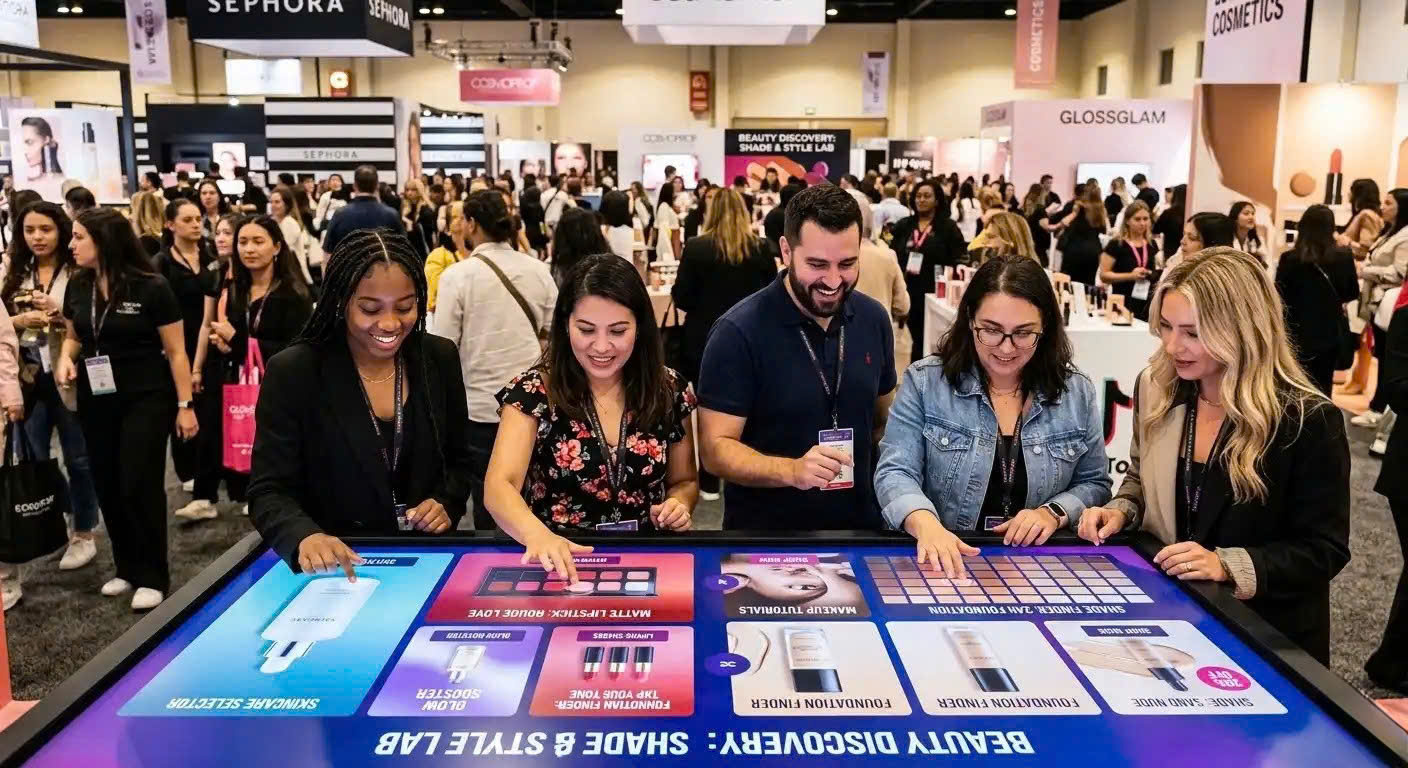
Gamified touch-walls and immersive surfaces transform a booth into an engaging playground. These large-scale interactive tech displays draw crowds.
They encourage participation through playful challenges and compelling narratives. This creates a memorable brand experience.
Large-Scale Visual Engagement via Motion Sensors
These interactive walls use motion sensors or multi-touch interfaces. They respond to gestures, movements, or direct touch.
This creates a dynamic visual spectacle. The large display captures attention from across the show floor. It invites passersby to engage.
Gamifying the Customer Journey to Drive Participation
Turning product discovery into a game is one of the most effective uses of interactive tech in booth design. Simple quizzes, puzzles, or virtual challenges can be integrated.
Customers learn about products in a fun, pressure-free way. This positive experience enhances brand perception.
Incentivizing Conversion via Digital Prize Systems
Gamified interactions can lead directly to sales. Digital prize systems reward participation. This provides a clear path from engagement to purchase. It offers immediate gratification to booth visitors.
Rewarding Booth Interaction: Offer instant discount codes or free samples. These rewards appear directly on the screen. They incentivize immediate action, such as visiting a sales counter.
Using Leaderboard Psychology: Displaying real-time leaderboards can spur friendly competition. People enjoy seeing their name in lights. This encourages more interactions and longer engagement times.
Collecting Zero-Party Data: Integrate preference-based quizzes or polls into games. This allows brands to collect valuable “zero-party data.” This is information voluntarily shared by customers. It helps tailor future marketing efforts.
Strategy for Integration: From Setup to Sales
Implementing interactive tech successfully requires careful planning. It’s not just about choosing the right tools.
It’s also about how it fits into your overall booth strategy. This includes layout, staff training, and post-event follow-up.
Planning Hardware for Specific Booth Dimensions
The size and layout of your booth heavily influence tech choices. Different solutions fit different spaces. Careful planning ensures optimal impact.
Compact Solutions: For smaller 10×10 booths, consider tablet-based kiosks or portable AR mirrors. These take up minimal space. They still offer high-impact engagement.
Mid-Range Installations: A 20×20 booth can house stand-alone diagnostic pedestals. These dedicated units provide a focal point. They offer deeper, more personal interactions.
Immersive Island Booths: Large island booths can deploy full-wall LED surfaces. Interactive sensory pods create truly immersive experiences. These demand attention and create a destination within the expo.
Integrating High-Tech Tools with the Human Touch
Technology should enhance human interaction, not replace it. Booth staff play a crucial role.
They can guide visitors through interactive tech experiences. They answer follow-up questions and close sales. A balance of tech and human interaction is ideal.
Managing Post-Event Analytics and Lead Nurturing
Interactive systems provide rich data. This includes engagement rates, popular products, and lead information.
Analyze this data to measure ROI. Use it to refine future marketing strategies. Follow up with leads promptly based on their expressed interests.
See more technologies in the beauty industry at AR Makeup Try-On Technology for Instant Engagement
Beyond the Tech: Risks, Questions, and Future Sustainability
While interactive technology offers great benefits, it also presents challenges. It’s important to consider potential issues.
Planning for these helps ensure smooth operation and long-term success.
Expert Q&A for Booth Managers and Exhibitors
Do these interactive systems require high-speed internet to function reliably on the show floor?
Yes, most advanced interactive tech systems, especially those with cloud-based features like real-time AR rendering or data collection, require reliable, high-speed internet. Event Wi-Fi can be inconsistent. Consider dedicated wired connections or reliable cellular hotspots as backup.
What is the difference between “overlay AR” and “spatial mapping” in beauty tech?
Overlay AR places digital elements directly onto a live camera feed. Think of virtual try-on mirrors.
Spatial mapping AR, however, analyzes and understands the physical environment. It can then place virtual objects that interact realistically with the real space, like a virtual makeup station appearing on a physical counter. Overlay AR is more common in beauty booths for simplicity.
Which technologies are prioritized for brand awareness versus direct lead generation?
Gamified touch-walls and social-integrated AR mirrors excel at brand awareness and viral sharing. AI diagnostic kiosks and personalized recommendation systems are stronger for direct lead generation. They capture specific customer needs and contact information for follow-up.
How does the ROI of interactive kiosks compare to traditional physical sampling?
Interactive kiosks often offer a higher ROI. They reduce costs associated with physical samples, product waste, and staffing for demonstrations.
They also provide valuable data for personalized follow-up. While physical samples create an immediate trial, kiosks deliver data-driven insights and a more consistent, hygienic experience.
Mitigating Technical Risks and Preventing Downtime
Technical glitches can disrupt the visitor experience — especially with interactive tech setups. Always have backup plans.
Pre-test all equipment thoroughly before the event. Train staff on basic troubleshooting. Have technical support on standby. Regular maintenance also prevents issues.
Closing the Loop: Predicting the Future of Sustainable Interaction
Sustainability is becoming a key consideration for events. Interactive tech can play a role here. Brands can use these tools to reduce their environmental footprint. This aligns with modern consumer values.
Reducing Physical Waste: Digital-first sampling strategies eliminate the need for disposable testers. This significantly cuts down on packaging and product waste. It makes beauty booths more eco-friendly.
Utilizing Energy-Efficient Hardware: Opt for interactive systems designed for energy efficiency. This lowers power consumption during long trade shows. It contributes to a greener event industry.
Transitioning to Modular, Reusable Tech: Invest in interactive tech installations that are modular and reusable. This reduces the need to build new displays for every event. It promotes a more sustainable approach to booth design.
The beauty industry is embracing innovation at a rapid pace. Implementing cutting-edge interactive tech can set your brand apart. Brands that invest in interactive tech early gain a significant competitive edge.
From AR mirrors to AI kiosks and gamified walls, these tools create memorable experiences. They also provide valuable insights.
By focusing on engagement, data, and sustainability, beauty brands can achieve impressive ROI and build lasting customer relationships.


Using VR Demos to Showcase Product
9 Essential Enhancements to Optimize Your Booth Engagement Measurement Tools
10 Best Foot Traffic Sensor Software Solutions for 2026: The Ultimate Intelligence Guide
10 Revolutionary Strategies: How AI Improves E-commerce Customer Experience
Innovative Exhibition Engagement Solutions for High-Impact Trade Shows
6 Key Insights into Choosing the Right Automatic Label Printer for Cosmetic Products