
Planning a trade show can feel like a mountain of work. We have all been there, standing in a quiet booth while the crowd walks by. It is frustrating to spend your budget and not see results. That is why we created this guide to help you win.
This guide to building a booth strategy for next events covers design, staffing, and technology — everything you need to turn visitors into loyal customers.
By focusing on smart design and better engagement, you can make your next show a huge success.
Our team has spent years testing what works and what does not. We realized that many companies follow the same old patterns. They use the same signs and the same boring scripts. To stand out, you need a fresh approach.
This article will walk you through 17 specific tactics. These ideas cover everything from your initial planning to the final follow-up. Let’s dive in and transform how you handle your event marketing.
Auditing Past Failures to Refine Your Booth Strategy
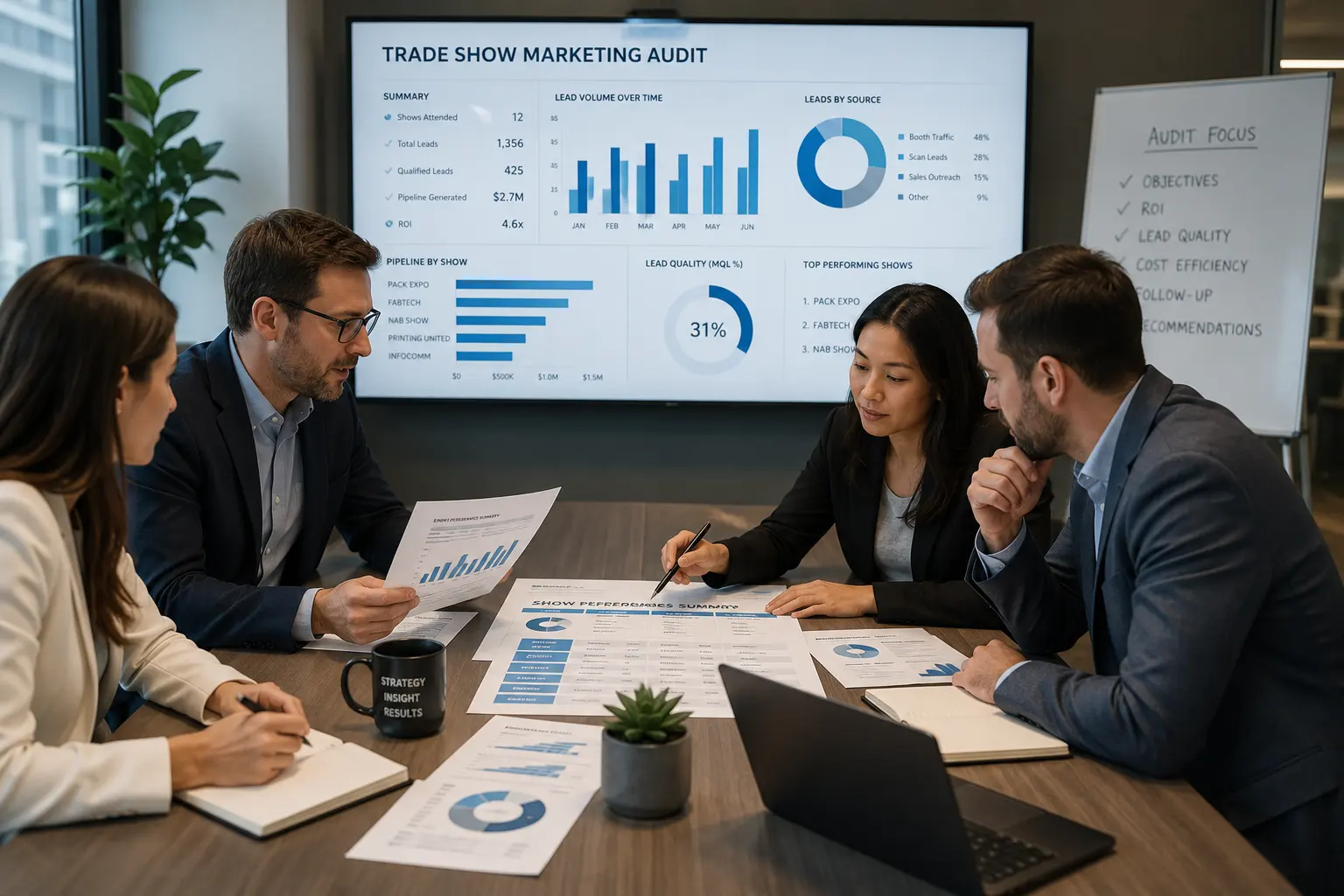
When you plan a booth strategy for next events, auditing past failures is the smartest first step. We always start by auditing our past performance. It is the only way to avoid making the same mistakes twice.
We look at both the numbers and the feelings of the team. This gives us a full picture of what happened.
You cannot improve what you do not measure. This step is the foundation of any great plan.
Lead Quality vs. Quantity Scorecard
A well-crafted booth strategy for next events always starts with a clear lead quality scorecard. It is easy to get 500 badges scanned. But if only five of those people buy something, was it worth it?
We rank leads on a scale of one to ten. A “ten” is someone ready to buy right now. A “one” is someone who just wanted a free pen.
By tracking this, we can see which events deliver the most value. This helps us decide where to spend our money next year.
Internal Staff Debriefing Sessions
Internal staff debriefing sessions are also vital. We gather everyone who worked the booth for a quick meeting. We ask them what questions people asked most often. We also ask what parts of the booth were hard to use.
Sometimes, the layout looks good on paper but fails in person. Your staff knows the truth because they were on the front lines. Listen to them and take notes.
Performance Benchmarking
Finally, we look at our competitors. Performance benchmarking helps us see where we stand. Did the booth next door have a longer line? Why did that happen?
Maybe they had better visual branding or more interactive displays. We do not copy them, but we learn from them. This competitive analysis keeps us sharp and ready to evolve.
Design Upgrades to Improve Your Booth Presence and Flow
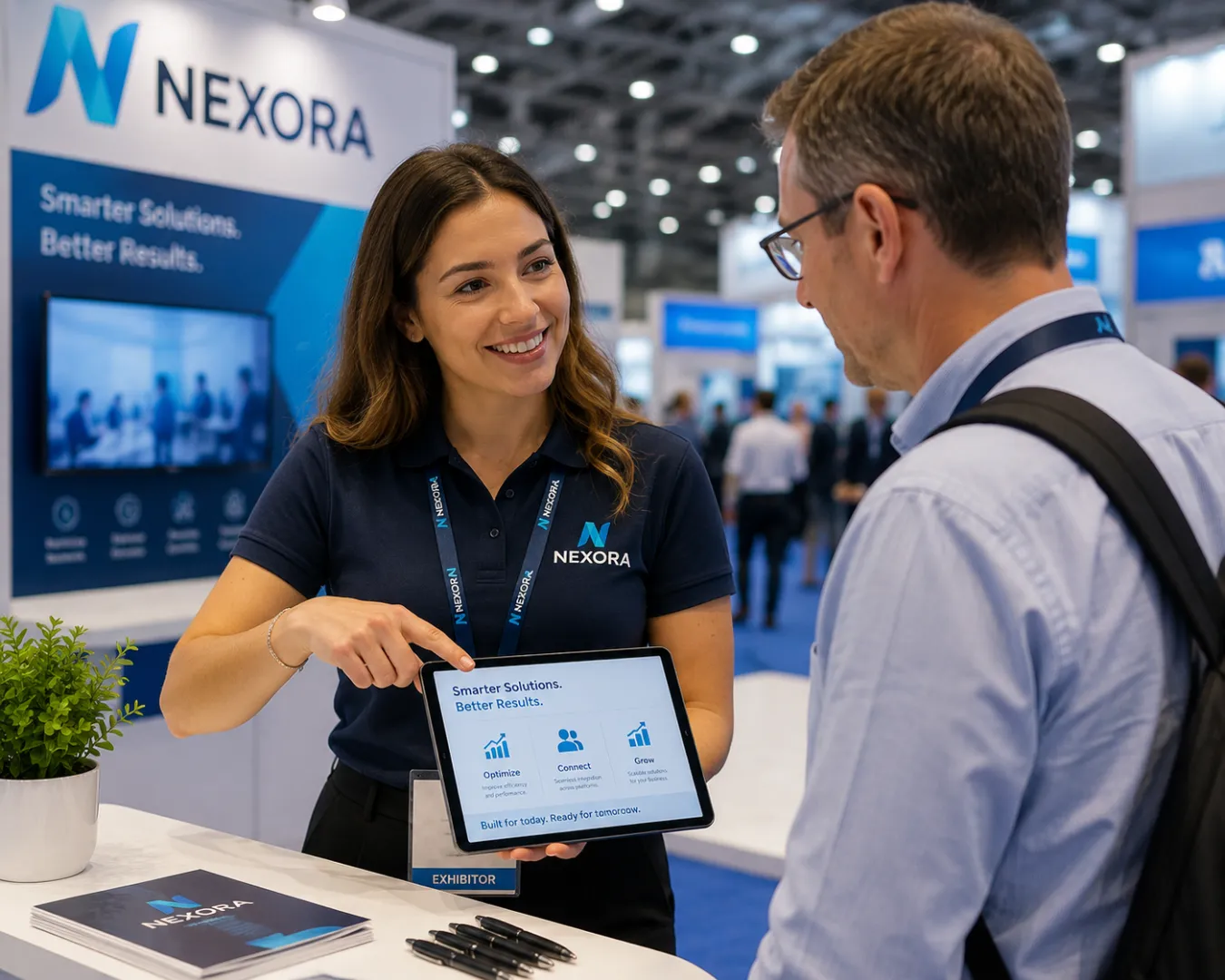
The design section of your booth strategy for next events should prioritize the three-second rule. Your booth is your storefront for the day. It needs to grab attention in a crowded room.
We use visual and spatial optimizations to make our space feel open and inviting. A cluttered booth scares people away. A clean, bright booth draws them in. We focus on making the space easy to navigate so people don’t feel trapped.
The Three-Second Value Proposition
A person walking by should know what you do in three seconds. If your signage is too complex, they will keep walking. Use big fonts and clear words. Tell them exactly how you solve their problems.
Your visual branding should be consistent and bold. Avoid using too many colors that clash or distract.
Interactive Engagement Zones
Every strong booth strategy for next events includes interactive engagement zones to keep visitors longer. We like to set up areas where people can touch or use our products. This keeps them at the booth longer.
The longer they stay, the more likely they are to talk to our staff. You can use tablets, touchscreens, or physical demos. These zones make your booth a destination rather than just a stop.
Sensory Branding and Lighting
We also think about sensory branding and lighting. Most trade shows have terrible overhead lights. We bring our own LED lights to highlight certain areas. It makes the booth pop and look professional.
Some companies even use specific scents or music to create a mood. Ergonomic traffic flow architecture ensures people can move around easily. We make sure there are no “dead ends” where visitors get stuck.
- Use high-contrast colors for your main message.
- Keep the floor space open and clear.
- Place your most popular item at eye level.
- Ensure your logo is visible from all directions.
Advanced Staffing Tactics for High-Performance Engagement
Your booth strategy for next events depends heavily on staff training and proactive engagement. You can have the best booth in the world, but bad staff will ruin it. We focus heavily on training for human ROI.
Your team needs to be more than just polite. They need to be proactive and energetic. We teach our team how to spot a potential lead from several feet away. This keeps them focused on the right people at the right time.
Curiosity-First Engagement Script
We use a Curiosity-First Engagement Script. Instead of asking “Can I help you?” we ask a question that sparks interest. For example, we might ask, “Have you seen how this new tool saves five hours a week?”
This starts a real conversation. It moves away from “yes or no” answers. It allows us to show our value right away through customized messaging.
The Sixty-Second Lead Qualification
Lead qualification is a critical part of any booth strategy for next events. We do not want our staff talking to the wrong person for twenty minutes. We teach them how to ask two or three quick questions.
These questions tell us if the visitor is a good fit. If they are not, we politely end the chat and give them a brochure. This saves time for the high-value leads.
Professional Presence and Staff Rotation
Professional presence and body language matter more than you think. We tell our staff to never sit down or look at their phones. They should stand near the edge of the booth and look ready to help.
During busy times, we use peak-hour staff rotation schedules. This keeps everyone fresh and prevents burnout. A tired staff member will not give a good first impression.
Modernizing Lead Capture with Frictionless Technology
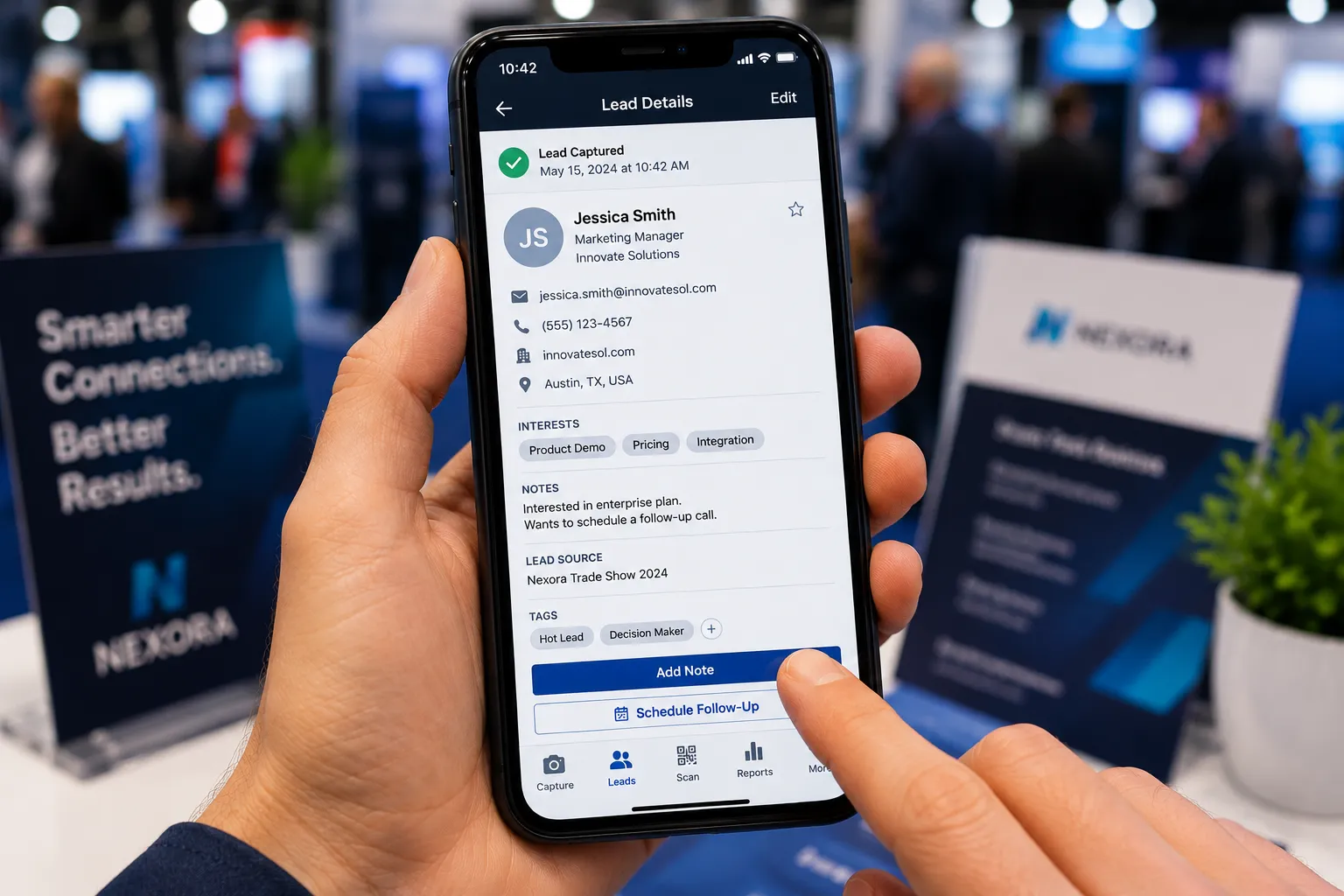
No booth strategy for next events is complete without frictionless technology for lead capture. Paper forms are a thing of the past. We use frictionless technology to capture data quickly. This makes the experience better for the visitor and easier for us.
No one likes writing their email on a clipboard. We use digital tools that sync instantly with our CRM system. This ensures we don’t lose any important contact details.
Post-Show Conversion Workflows
Post-show conversion workflows are where the magic happens. We set up triggered real-time email automation. When we scan a badge, the visitor gets an email within minutes.
It thanks them for stopping by and includes a link to more info. This keeps our brand fresh in their mind. It shows that we are organized and fast. This is a huge part of our lead generation success.
Pre-Event Promotion
A winning booth strategy for next events uses pre-event promotion to fill your calendar before day one. We use multi-channel outreach to tell people we will be there. We send emails, post on LinkedIn, and use targeted ads.
We often set up appointments before the show even starts. This guarantees that our booth stays busy with high-quality prospects. It turns a “maybe” into a “definitely.”
| Technology Category | Benefit | Importance |
| CRM Sync Tools | Prevents manual data entry errors | Essential |
| Lead Capture Apps | Faster badge scanning and notes | Essential |
| Interactive Screens | Increases visitor dwell time | Optional |
| Virtual Reality | Creates a memorable experience | Optional |
Future-Proofing for Long-Term Success and ROI
We want our success to last longer than just one weekend. That is why we focus on strategic resource allocation. We look at our budget and see where it does the most good.
Sometimes, we realize we spent too much on swag and not enough on staff training. We reallocate funds to high-impact areas that drive real growth.
Setting SMART Goals
Setting SMART goals is a key step in any booth strategy for next events. We don’t just say we want “more leads.” We say we want “50 qualified leads from the tech sector.” This gives us a clear target to hit.
It helps us measure our return on investment accurately. If we hit our goals, we know our plan worked. If we miss them, we know exactly where to improve next time.
Logistical Risk Mitigation
Proper logistical planning rounds out a solid booth strategy for next events and prevents costly surprises. We always have a “Plan B” for shipping delays or broken equipment. We bring extra cables, duct tape, and backup batteries.
These small things can save a show. By being prepared, we stay calm and professional. This allows us to focus on networking opportunities instead of fixing problems.
Critical Frequently Asked Questions for Exhibitors
Does doubling your booth size actually double your lead count?
Not necessarily. In our experience, a bigger booth doesn’t always mean more leads. If you have a huge empty space, people might be intimidated. A smaller, well-designed booth with great staff often performs better.
It is about how you use the space, not just how much space you have. Focus on quality design over square footage.
How do we define a successful Booth MQL in 2026?
A successful Marketing Qualified Lead (MQL) is someone who does more than just scan a badge. They should interact with a demo or ask a specific product question. In 2026, we also look for “intent signals.”
This means they followed our social page or clicked a link in our follow-up email. We want leads that show a real desire to solve a problem with our help.
Why do regional trade show strategies differ from global exhibitions?
Regional shows are often more personal. You might see the same people every year. The focus is on deep networking and local relationships.
Global shows are much faster. You meet thousands of people from all over the world. At global shows, you need a very fast qualification process. At regional shows, you can take more time to build a connection.
Which booth technology categories are considered essential versus optional?
Essential technology includes a fast lead capture app and a reliable CRM sync. You need these to manage your data. Optional technology includes things like VR headsets or AI robots.
These are great for brand visibility, but aren’t always needed for lead generation. Always prioritize the tools that help you talk to and track your customers first.
The Final Word on Event Success
Building a better booth is a journey of constant learning. We have found that the best results come from a mix of great design and smart people. You must be willing to look at your past and change for the future.
By using these 17 tactics, you can create a space that people love to visit. This will lead to better conversations and more sales for your company.
Remember to keep your messaging simple and your staff focused. Use technology to make things easier, not more complicated. When you focus on the needs of your visitors, they will respond with their trust.
We are excited to see how you use these ideas to win. Good luck as you refine your booth strategy for next events and reach your marketing goals.


9 Proven Metrics to Master Your Beauty Booth ROI Calculation and Dominate Trade Shows
10 Essential Variables for a Reliable KPI for Beauty Booth Evaluation
6 Critical Strategies for Mastering IoT Foot Traffic Sensors: The Ultimate 2026 Accuracy Guide
7 High-Impact Strategies to Scale Revenue with Lead Capture Automation
AI Heatmap Analysis for Retail Stores: 5 Data-Driven Strategies to Maximize Revenue
7 Best Offline Foot Traffic Sensor Technologies to Maximize Retail Performance