

Trade shows are exciting events for any cosmetics brand. They offer a chance to meet fans and find new partners. However, these events require a significant financial commitment.
To ensure the brand grows, owners must perform a detailed beauty booth roi calculation before and after the event. This process helps teams understand if their spending leads to real growth.
Without a clear plan, a brand might waste money on flashy displays that do not produce results.
Smart strategy plus early beauty booth ROI tracking turns a simple booth into a growth engine. Success is not just about how many people stop by to look. It is about the numbers behind the scenes.
This guide will walk through the essential metrics needed to measure success. By following these steps, any beauty business can improve its bottom line. Let us dive into the math and strategy of trade show success.
Essential Formulas to Perfect Your Beauty Booth ROI Calculation
Every successful event follows a clear formula, and a beauty booth ROI calculation starts by subtracting total costs from total revenue. Then, divide that number by the total cost. This gives the brand a percentage of profit or loss.
Most beauty brands aim for at least a 200% return to cover the time spent planning.
Adapting this equation for a cosmetic activation means the beauty booth roi calculation must go beyond simple sales figures. Brands must look beyond simple sales to perform a deep profitability analysis.
For example, a new lash brand might give away hundreds of samples. These samples do not bring in cash immediately. However, they create future customers.
Brands should assign a dollar value to these interactions to see the full picture of their success.
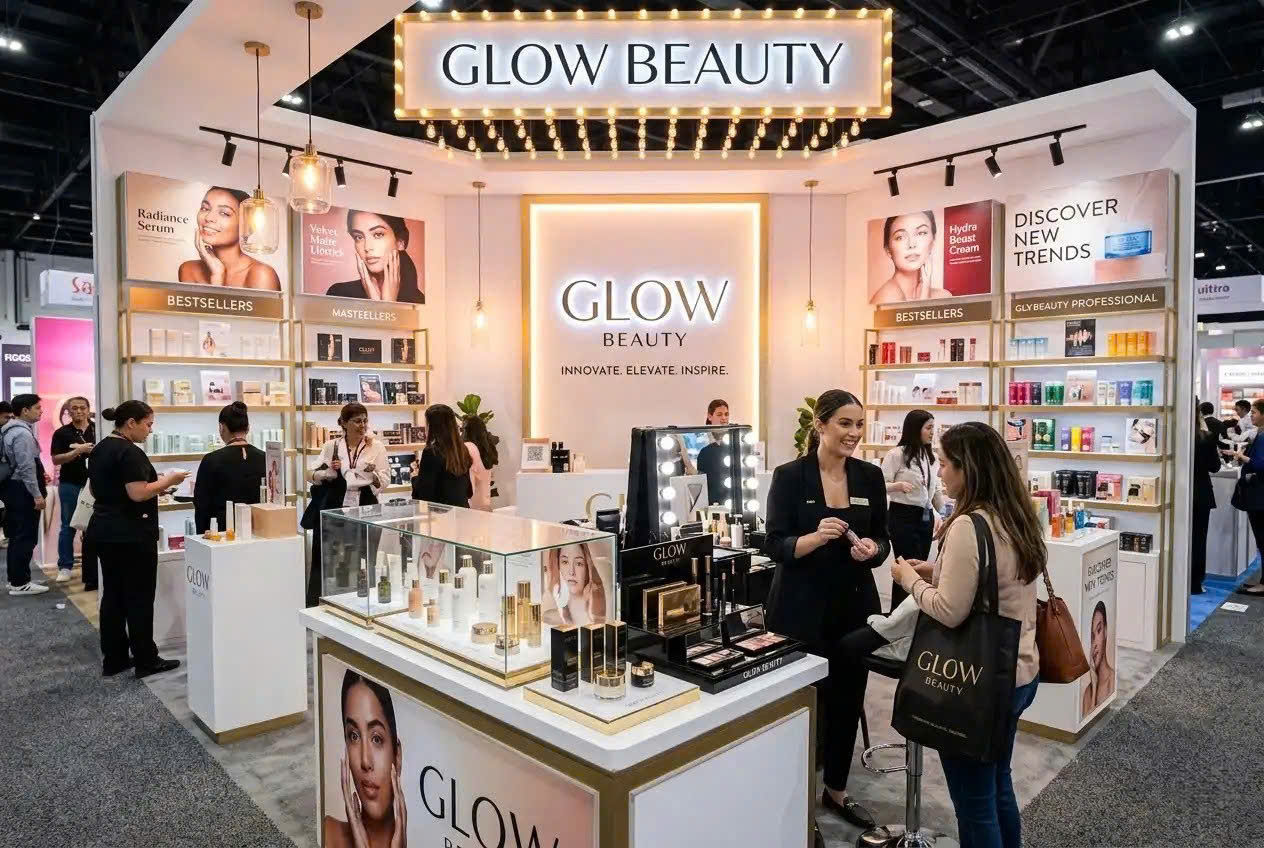
Immediate Cash Return vs. Long-Term Brand Equity
There is a big difference between cash in the register and brand fame. Immediate cash return comes from on-site sales and wholesale deposits. This is the most visible sign of investment recovery.
It helps pay the bills right away. Many small brands rely on this cash to fund their next production run.
A brand might lose money on-site, yet the beauty booth roi calculation will look very different once long-term equity is factored in. This includes new social media followers and email sign-ups. It also includes the buzz created when influencers talk about the booth.
A brand might gain thousands of loyal fans who spend more than the booth cost over time. Smart brands track both metrics to understand their business performance over several months.
Tracking 3 Major Investment Pillars for Beauty Exhibitors
To get an accurate result, a brand must track every penny spent. The first pillar involves fixed costs. These are the must-pay items like the venue floor space.
It also includes capital expenditure for the physical booth structure. Do not forget to count the cost of electricity and internet access. These small fees often surprise owners when the final bill arrives.
The second pillar is the true cost of goods for sampling. Giving away mini lipsticks or serums feels like marketing. However, these items have a production cost.
A thorough cost-benefit analysis should include the price of manufacturing and shipping these samples. If a brand gives away 5,000 samples, the cost can reach thousands of dollars quickly. This must be part of the total investment figure.
Labor and Professional Artistry Fees
People are the heart of any beauty booth. Brands often hire professional makeup artists or brand ambassadors. These experts make the products look amazing on customers.
However, their daily rates and travel costs add up. A brand must account for every hour worked by every staff member. This includes the time spent setting up and tearing down the booth.
Because labor is usually the largest hidden expense at events, it should always be fully counted in any beauty booth ROI calculation. Brands should train their team to focus on high-value tasks.
For example, an artist should collect an email address for every makeover they perform. This ensures the labor cost leads to a measurable lead for the sales team.
Quantifying 3 Key Revenue Streams and Strategic Returns
Revenue comes from many places during a trade show. The most obvious stream is on-site retail sales. Many beauty fans attend shows specifically to buy limited edition kits.
Brands should also track wholesale pre-orders from salon owners or boutique buyers. These large orders often provide the bulk of the revenue generation for the entire quarter.
Earned media is the second major stream to measure, and savvy brands fold this figure directly into their beauty booth roi calculation. Brands can estimate this value by looking at what a paid post would cost.
If a famous artist tags the brand, it might be worth thousands of dollars in free advertising. Assigning a dollar value to these mentions makes the report more accurate.

Measuring the Value of Consumer Data
Data is the new gold in the beauty world. Every email address collected at a booth has a specific financial metrics value. Brands can calculate this by looking at their average online conversion rate.
For example, if 5% of the email list buys a $50 product, each email is worth $2.50. Collecting 2,000 emails would then be worth $5,000 in future revenue.
- Total number of unique leads collected.
- Average lifetime value of a beauty customer.
- Cost per lead compared to Facebook ads.
- Number of potential wholesale partnerships initiated.
Comparing Booth Performance to Digital Marketing Benchmarks
It is helpful to compare physical events to digital ads. A brand might pay $20 to acquire a customer via Instagram. If the booth cost is $10,000 and it brings in 500 customers, the physical cost is $20 too.
This comparison helps the brand decide where to spend its next marketing dollar. It provides a clear look at the investment efficiency of the live event.
Success benchmarks vary by niche. A luxury skincare brand has different goals than a budget nail polish company. High-end brands focus on quality leads and partnerships.
Budget brands focus on high-volume sales. Understanding these niches helps set realistic expectations, which is why every niche calls for a customized beauty booth roi calculation framework.
Conversion Rate of Samples to Purchases
The bridge between a physical sample and an online sale is vital. Brands can use unique QR codes on sample packaging to track this. When a customer tries a cream at home and scans the code to buy more, the brand knows the booth worked.
This data proves that the offline experience leads to online profit, making QR tracking a must-have element of any beauty booth roi calculation. It is a key part of modern business performance tracking.
Post-Show Strategies to Consolidate Gains and Audit Results
The work does not end when the booth is packed away. Brands must perform a final audit to find budget leaks. Common leaks include shipping overages or wasted samples.
By identifying these losses, the team can save money next time. This audit is the final step in a complete cost-benefit analysis for the event.
Use the data gathered to negotiate better rates for the future. If a brand can show the event organizer their data, they might get a better booth location next year. Organizers want successful brands at their shows.
Good data gives the brand power in these discussions. It turns a one-time expense into a recurring advantage.
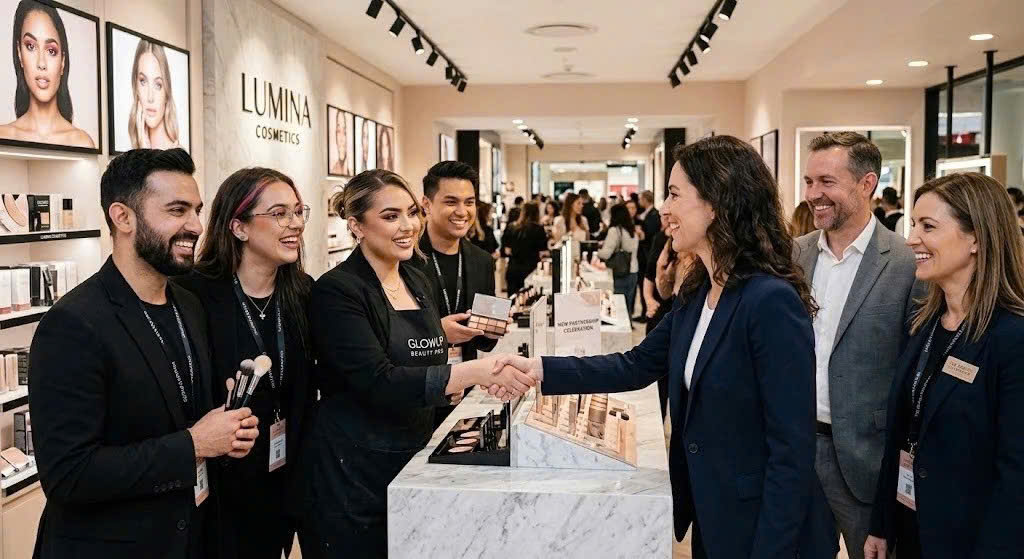
Bridging Leads and CRM Integration
Leads are useless if they sit in a box. The team should upload all data into their CRM system within 48 hours. This allows for a quick follow-up email while the event is still fresh.
A fast response significantly improves the investment recovery rate. It shows customers that the brand is professional and attentive.
Mitigating Financial Risks and Final ROI Consolidation
Every event carries financial risks. A slow day at the convention center can hurt the budget. Brands can mitigate this by promoting their booth on social media before the show.
This ensures a steady flow of traffic regardless of the event’s overall attendance. Pre-show marketing is a cheap way to protect a large capital expenditure.
Frequently Asked Questions
Is a high engagement rate more valuable than immediate sales?
It depends on the brand’s stage. New brands often value engagement to build awareness. Established brands usually prioritize immediate sales to hit quarterly targets.
Both are important for a healthy beauty booth roi calculation over time.
How can brands track offline-to-online attribution accurately?
Use unique discount codes for each show. When customers use that specific code on the website, the brand knows exactly which event they attended. QR codes and specific landing pages also provide excellent tracking data.
Can social media impressions be converted into a dollar value?
Yes, brands use a Cost Per Mille model. They look at what they would pay for 1,000 views on a social platform. Then, they multiply that by the views gained from the booth.
This helps quantify the marketing reach of the event.
Key Takeaways for Beauty Professionals
To master your next trade show, keep these points in mind. First, always track every expense, no matter how small. Second, value your data and your digital reach as much as your cash sales.
Third, follow up with leads immediately to ensure the highest investment recovery possible. Finally, use your data to make better choices for future shows.
Measuring success is the only way to grow in the competitive beauty industry. By using these nine metrics, any brand can turn a booth into a profit center. It takes discipline and careful record-keeping.
However, the rewards of a successful beauty booth roi calculation are worth the effort for long-term growth.


11 Strategic Remote Store Performance Analytics Tactics to Revolutionize Retail Growth
AI Heatmap Analysis for Retail Stores: 5 Data-Driven Strategies to Maximize Revenue
6 Breakthrough Strategies to Master Store Layout Heatmap Analysis and Skyrocket Sales
6 Critical Strategies for Mastering IoT Foot Traffic Sensors: The Ultimate 2026 Accuracy Guide
7 High-Impact Strategies to Scale Revenue with Lead Capture Automation
15 Powerful Tactics to Ignite Your Event Lead Follow-up and Maximize Revenue