
I have walked countless trade show floors over the years. I always see the same thing. Some booths are buzzing with energy. Others look like a library at midnight.
The difference usually comes down to how they use technology. Today, AI tools for booth performance are the secret weapon for savvy exhibitors.
You want your brand to stand out in a crowded hall. You need to capture attention quickly. You also want to gather high-quality leads without the stress.
Using the right automation tools can make this happen. I will show you how to transform your exhibit into a lead-generating machine.
In this guide, I will share 14 innovative ways to use AI. We will cover everything from planning to post-show follow-ups. These tools help you understand your audience better.
They also make your booth more interactive and fun. Let’s dive into the future of trade show success together.
Mastering Pre-Event Planning with Predictive AI and Design Tools
I believe that winning starts before you even pack your bags. Pre-event planning sets the stage for everything else. You can use event management software to find the right people.
Predictive AI looks at past attendee data to find your ideal targets. This helps you focus your energy on high-value prospects.
Strategic matchmaking is a game changer for many of my clients. Advanced behavioral AI identifies people who fit your “ideal customer profile.” You can then use scheduling automation to book meetings early.
This ensures your calendar is full before the show starts. You won’t have to hope for walk-ins all day.
I also suggest using generative AI for your booth layout. You can simulate how people will walk through your space. This helps you find the best spots for interactive displays.
It ensures that your main product showcase is visible from all angles. A good layout prevents traffic jams and keeps people moving toward your team.
Don’t forget about your invitations. Intelligent content engines can write personalized emails for every prospect. These tools analyze what each person likes.
They create messages that feel personal rather than like spam. This increases the chances of people visiting your booth to see a multimedia presentation.
Which AI tools for booth performance work best for your goals? That question should guide every decision you make in the pre-event phase.
The right AI tools for booth performance can be adapted to any budget or team size.
Optimizing Real-Time Traffic with AI Analytics and Engagement
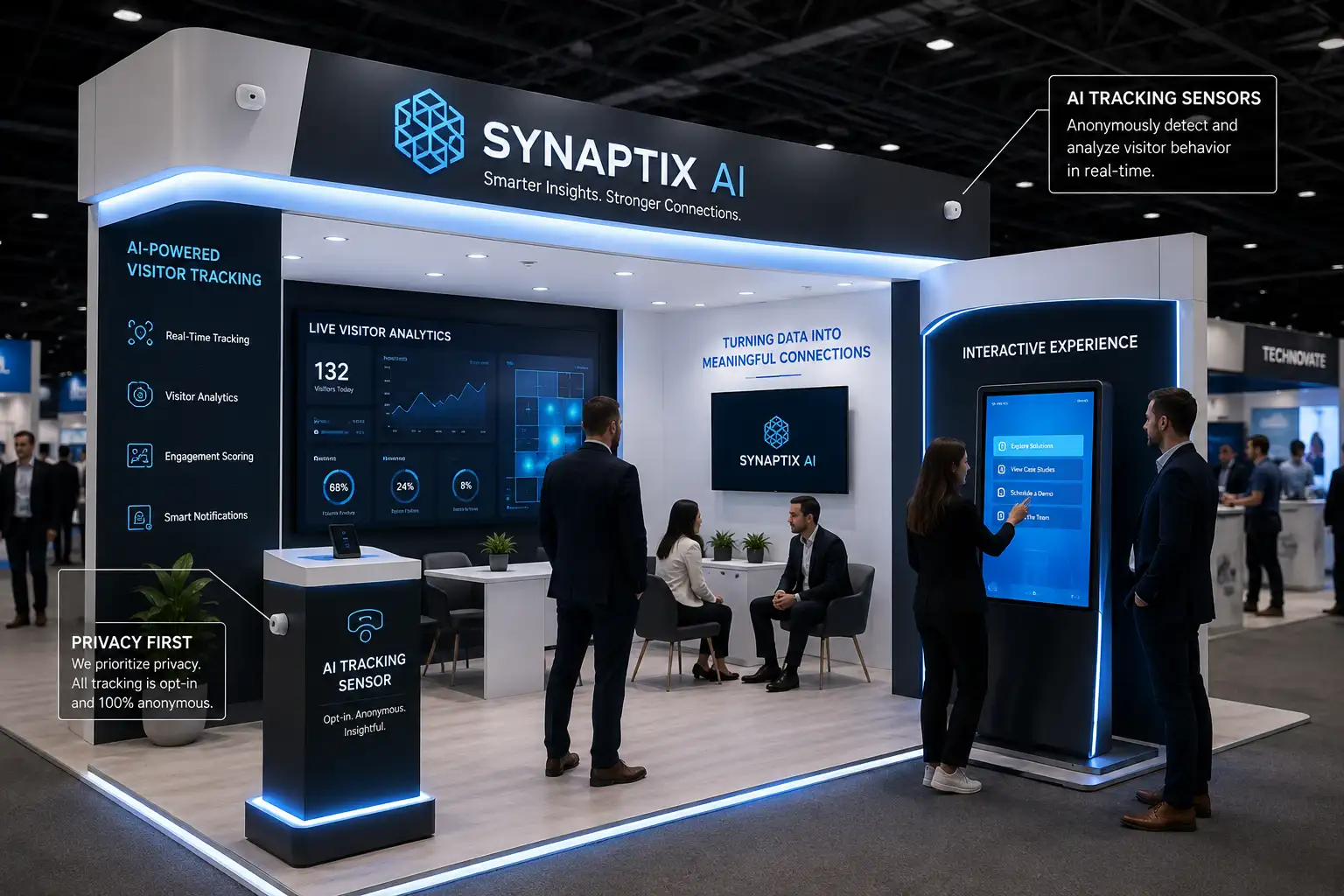
Once the doors open, things move very fast. I find that data analytics are essential for managing the chaos. Computer vision tools can monitor foot traffic in real-time.
They track how many people pass by and how many actually enter. This is much better than just guessing how busy you were.
These sensors provide real-time feedback to your staff. If the booth is too crowded, you can reposition your team. If one area is empty, you can adjust your multimedia presentation to draw attention.
I love seeing how these small shifts improve visitor engagement instantly. You get to fix problems while they are happening.
Dwell time analysis is another vital metric. AI heatmapping shows you exactly where people stand. Do they linger near the product showcase? Or do they spend time at the coffee station?
This tells you what parts of your booth are working. You can then use this to create more personalized experiences for visitors.
I also recommend using multilingual support through digital assistants. Trade shows often attract an international crowd. AI-powered tablets can talk to visitors in many languages.
They answer common questions and provide virtual demonstrations. This allows your human staff to focus on closing deals with top-tier leads.
- Use computer vision to count booth entries.
- Monitor dwell times to see what content works.
- Deploy digital assistants for multilingual support.
- Adjust staff positions based on real-time heatmaps.
Generative AI activations are perfect for keeping people in your booth longer. Think about a custom AI photo booth or a personalized quiz. These interactive displays create a memorable experience.
They give people a reason to stay and talk. The longer they stay, the more customer insights you can gather.
AI tools for booth performance help you work smarter, not harder, on the show floor. Investing in AI tools for booth performance is one of the smartest moves you can make before your next event.
Transforming Lead Intelligence with Automated Capture and Scoring
Capturing leads used to be a manual chore. I remember the days of paper forms and messy handwriting. Now, lead capturing is seamless thanks to AI.
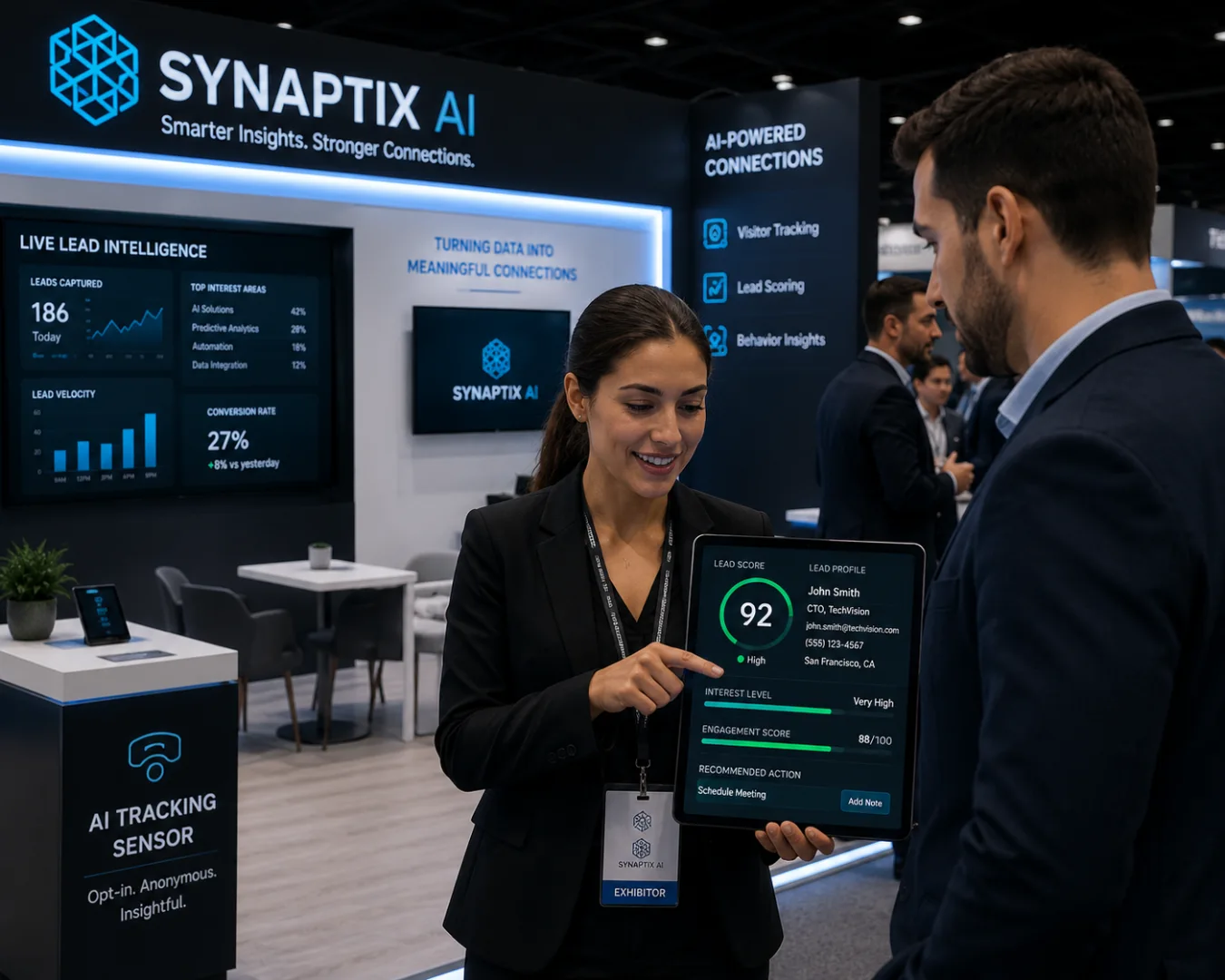
Voice-to-CRM transcription lets you record notes just by speaking. The AI captures the key details and puts them straight into your sales database.
This process saves a huge amount of time for your sales team. They can focus on the conversation instead of typing. The AI also handles feedback collection automatically.
It can summarize a ten-minute talk into three bullet points. This makes the sales debrief much easier after a long day.
Instant lead scoring is where the real magic happens. As soon as a lead is scanned, the AI looks at their profile. It ranks them based on their potential value to your business.
This helps your team prioritize who to follow up with first. You won’t waste time on leads that aren’t a good fit.
I find that automation tools reduce human error significantly. You won’t lose contact info or forget a specific request. The AI ensures every piece of data is clean and organized.
This leads to much better customer insights for your marketing team later on. It builds a solid foundation for your sales pipeline.
Understanding which AI tools for booth performance fit your exhibit is the first step toward better lead data. AI tools for booth performance range from simple lead capture apps to full analytics suites.
The following table shows the difference between old methods and AI methods:
| Feature | Traditional Method | AI-Powered Method |
| Data Entry | Manual Typing | Voice-to-CRM |
| Prioritization | Gut Feeling | Instant Scoring |
| Insights | Basic Contact Info | Deep Behavioral Data |
Accelerating Post-Show ROI via AI Follow-Up and Analysis
The work doesn’t stop when the show ends. In fact, the post-show phase is where the money is made. I always tell my clients to use hyper-personalized follow-up automation.
The AI can send emails that mention the specific virtual demonstrations the visitor saw. This feels much more authentic than a generic “thank you” note.
Send-time optimization is another clever feature. The AI analyzes when each lead is most likely to check their inbox. It sends the follow-up email at exactly that moment.
This simple trick can double your open rates. It ensures your message doesn’t get buried under a pile of other emails.
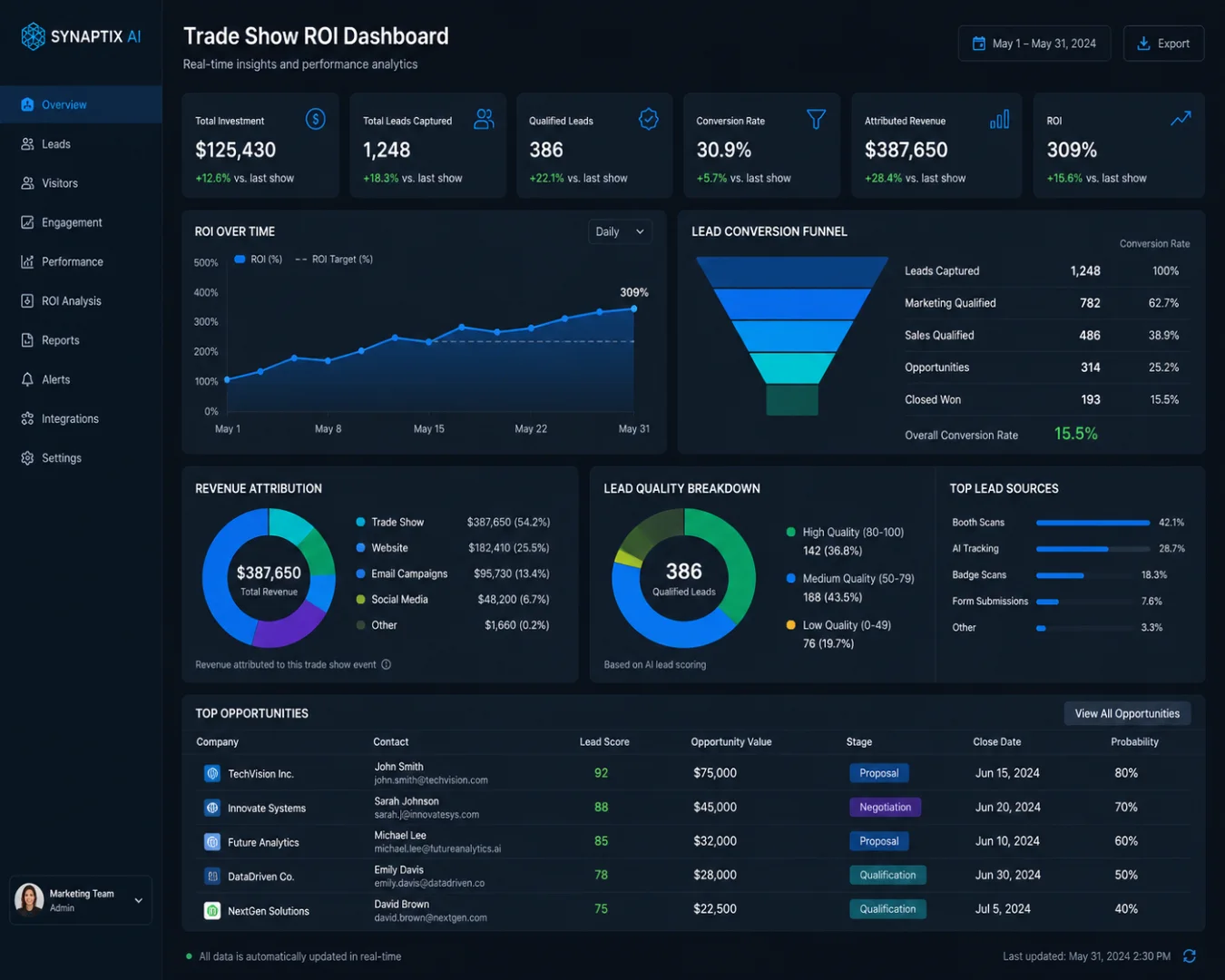
Predictive data attribution helps you see the long-term value of the show. It tracks leads through the entire sales cycle. You can see which AI tools for booth performance actually led to sales.
This information is vital for planning your budget for next year. It proves the ROI of your exhibit to your boss.
I also recommend a final round of feedback collection. Send a quick AI-powered survey to your visitors. They can share what they liked or what they missed.
This gives you a clear picture of your booth’s strengths. You can use these customer insights to make the next show even better.
Choosing AI tools for booth performance that match your team size and event scale is key to maximizing post-show ROI. Many exhibitors discover that AI tools for booth performance pay for themselves after just one show.
Navigating AI Privacy Regulations and Technical Implementation
I know that privacy is a big concern for many people. When you use computer vision, you must be careful. Most modern tools use anonymized data tracking.
They don’t store faces or personal IDs. They only count shapes and movements. This helps you stay compliant with GDPR and CCPA rules.
You should always use secure data hashing for any facial analysis sensors. This protects the privacy of your visitors. I also suggest having transparent consent workflows.
If you use conversational AI, let people know they are talking to a bot. Being honest builds trust with your potential customers.
Technical logistics are also important to consider. Some AI tools for booth performance need a lot of bandwidth. I recommend checking with the venue about high-speed internet.
You might need a dedicated line to keep everything running smoothly. A laggy display can ruin the visitor engagement experience.
Staff training is the final piece of the puzzle. Your team needs to know how to use these automation tools. I suggest holding a training session before the show.
Make sure everyone knows how to interpret the data analytics. When your team is confident, the technology shines.
Common Questions About Improving Booth Performance with AI
Is computer vision for traffic tracking legally compliant in Europe?
Yes, it is usually compliant if the data is anonymized. Most providers do not store personal images. They only process the data to count people.
You should always check the specific privacy settings of your tool. Displaying a small privacy notice at your booth is also a good practice.
What is the difference between AI lead capture and traditional badge scanning?
Traditional scanning only gives you basic contact info. AI lead capturing adds context to that data. It can record your conversation notes and score the lead instantly.
It helps you understand the visitor’s intent. This makes the follow-up much more effective and personalized.
Which AI tools are best for small-scale versus large-scale exhibits?
Small booths benefit most from lead capturing and scheduling automation. These tools help a small team stay organized. Large exhibits should focus on computer vision and interactive displays.
These help manage large crowds and provide multilingual support for many visitors at once.
The best AI tools for booth performance are those your team will actually use. Start small, measure results, and scale up from there.
Does implementing AI tools require a high-speed dedicated internet line?
It depends on the tool. Simple lead capture apps often work offline. However, real-time feedback and virtual demonstrations usually need a stable connection.
I always suggest getting a dedicated line if your budget allows it. It prevents any embarrassing technical glitches during the show.
In summary, the trade show floor is changing rapidly. You can no longer rely on just a nice backdrop and some brochures. By using AI tools for booth performance, you gain a massive advantage over your rivals.
You can plan better, engage more people, and close more deals. It is time to embrace these innovations and dominate your next event.
I hope these tips help you achieve your best show ever. Good luck out there!


Using VR Demos to Showcase Product
How to Optimize Lead Capture Automation Workflows and Scale Pipeline: 15 Strategic Ways for Better Management
8 Pro Strategies to Master How to Set Up Fast Payments at Booths and Eliminate Queues Forever
The 6-Step Blueprint to Master Retail Heatmap Software and Revolutionize In-Store ROI
Innovative Exhibition Engagement Solutions for High-Impact Trade Shows
E-commerce Personalization: Orchestrating High-Conversion Experiences in the AI Era