

In today’s fast-paced world, understanding customer and visitor movements is key. Businesses need accurate insights to make smart decisions.
AI cameras offer a powerful solution. They go beyond simple security monitoring.
These smart systems analyze behavior to provide valuable business intelligence. We explore how this technology works and its many benefits.
How AI Computer Vision Interprets Human Behavior
AI cameras rely on advanced computer vision technology. This technology helps them “see” and “understand” scenes.
They interpret human behavior through various digital processes. We can then turn this visual data into actionable insights.
The Evolution from Motion Detection to Pattern Recognition
Early surveillance cameras only sensed movement. They could tell if something moved in the frame.
Modern AI technology is significantly smarter. It is capable of pattern recognition.
These cameras identify distinct objects like people or vehicles. They can also detect complex actions. This capability shows substantial progress.
Core Architectures: Edge Computing vs. Cloud Processing
AI camera systems process data in different ways. Some use edge computing.
This means processing happens directly on the camera device. Edge computing offers faster analysis. It also reduces network bandwidth needs.
Other systems rely on cloud processing. Data uploads to a central server for analysis. Cloud solutions offer more computing power and are often more scalable for large networks.
Object Detection and Classification Protocols
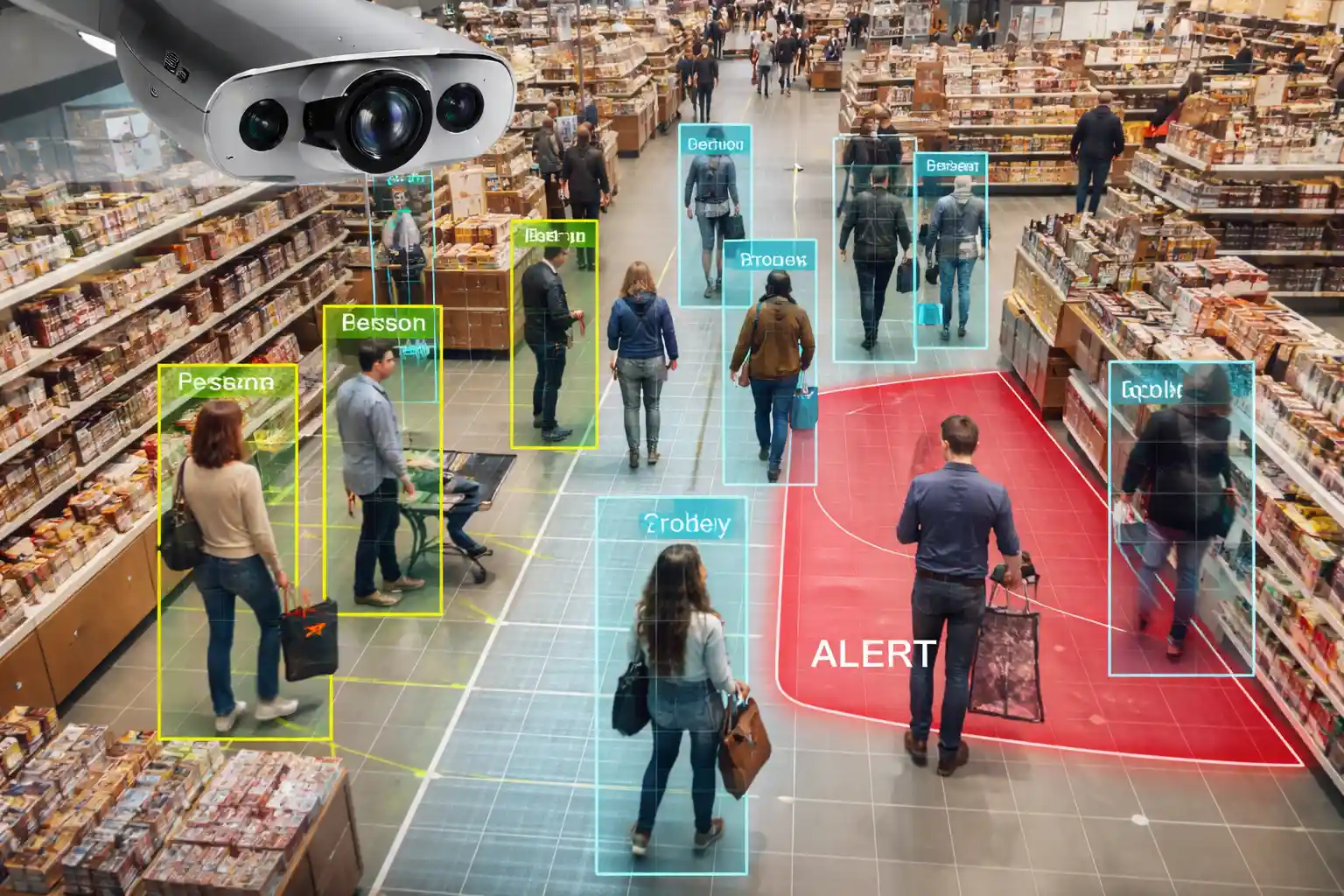
AI cameras first detect objects. They then classify them.
This means identifying if it is a person, a car, or another item. Sophisticated algorithms make this possible.
We use this data to understand traffic flow. It also helps in identifying specific interactions. This process forms the base of behavioral analysis.
Spatial Geofencing and Virtual Trigger Zones
We can set up virtual boundaries. These are called spatial geofences or trigger zones.
When a person enters these zones, the system records it. This helps monitor specific areas.
For example, it tracks how many people enter a store section. It also shows how long they stay there.
The Role of Neural Networks in Visual Learning
Neural networks are at the heart of AI cameras. These systems learn from vast amounts of data.
They get better at recognizing patterns over time. This deep learning capability improves accuracy.
It allows for complex behavior analysis. This includes identifying specific gestures or poses.
Core Behavioral Metrics: Transforming Video into Actionable Data
AI cameras turn raw video into meaningful numbers. This process gives businesses crucial data.
These metrics help us understand visitor actions. They reveal important trends and patterns.
Primary Quantitative Data Points
We gather several key data points, which are easy to measure and track.
They provide a clear picture of visitor activity. This information is key to driving operational improvements.
High-Precision Footfall and Occupancy Counting
AI cameras accurately count people. They track how many enter and leave an area.
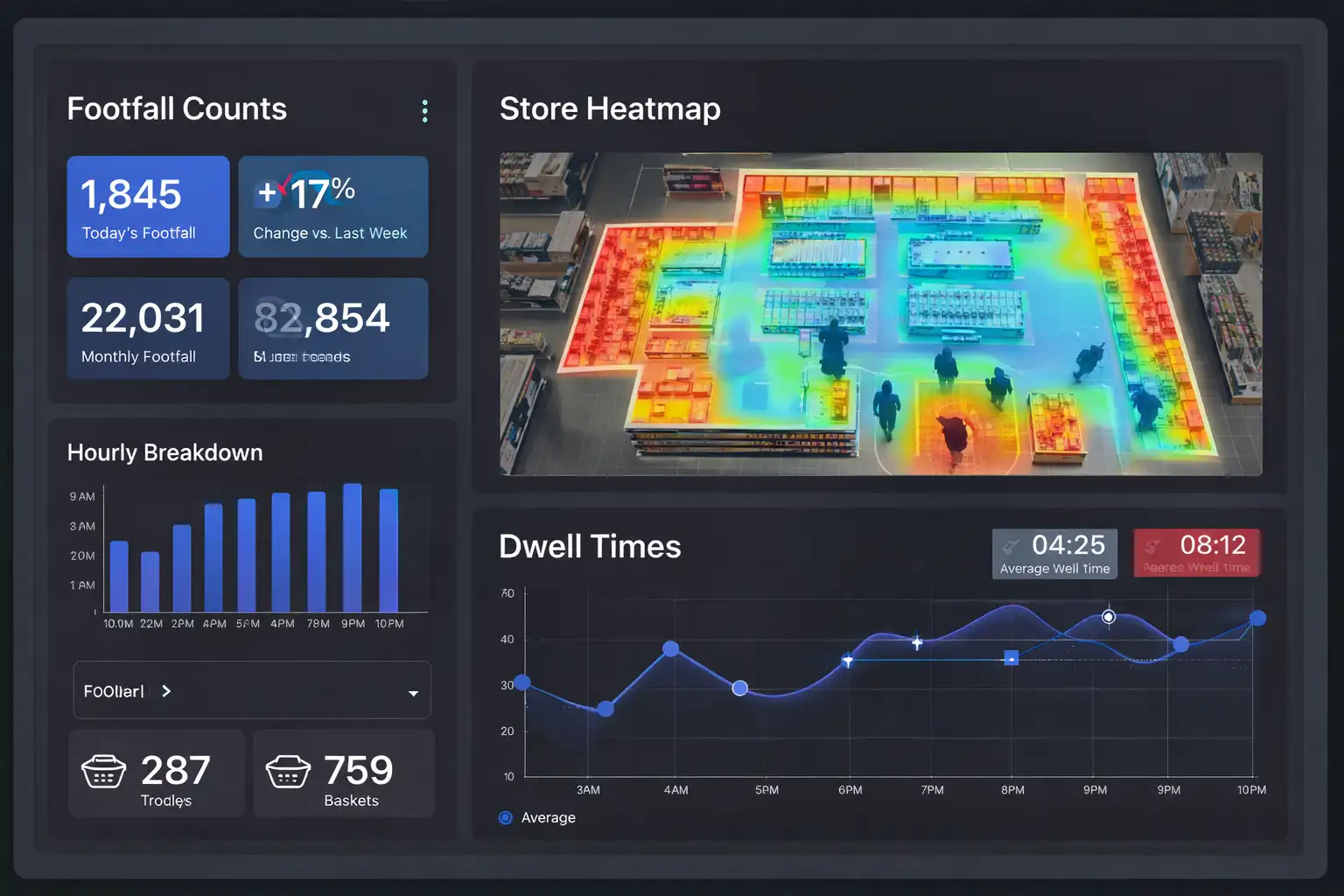
This is known as footfall counting. They also calculate current occupancy levels.
Knowing these numbers helps manage crowd flow. It also ensures to meet the safety limits.
Dwell Time and Engagement Depth Measurements
Dwell time measures how long visitors stay. We can track time spent in specific zones.
This shows what captures attention. High dwell times suggest strong engagement.
Low times might signal a lack of interest. This data helps optimize layouts and displays.
Heatmapping and Physical Flow Visualization
Heatmaps show popular areas. They highlight where visitors spend most time.
Areas with high activity glow “hot.” Cooler areas show less interest.
This visual tool helps us understand flow. It reveals natural paths people take. Businesses can use this to optimize product placement.
Real-Time Queue and Wait-Time Analysis
Long lines can frustrate customers. AI cameras monitor queues.
They measure wait times accurately. This allows for real-time adjustments.
We can open more service points when needed. This improves customer satisfaction greatly.
Qualitative Context and Demographic Intelligence
Beyond numbers, AI cameras offer deeper insights. They provide context to visitor behavior.
This includes basic demographic information. Such data helps tailor experiences.
Anonymized Demographic Estimation (Age and Gender)
AI can estimate age and gender. The data is completely anonymized.
It respects privacy rules. This helps businesses understand their audience.
They can then personalize marketing efforts. It informs product selection and store design.
Path Analysis and Sequential Movement Tracking
We can track visitor paths. This shows the journey through a space.
It reveals common routes and overlooked areas. Sequential movement tracking highlights decision points.
Businesses learn how visitors navigate. This helps optimize store layouts or exhibit flow.
Abnormal Behavior and Loitering Detection
AI cameras can spot unusual actions. This includes loitering or sudden movements.
Such detections can flag potential security concerns. They provide real-time alerts.
This proactive approach enhances overall safety and security. It helps us react quickly to incidents.
Industry-Specific ROI: Leveraging Behavior Analytics Across Sectors
AI cameras bring clear benefits to many industries. They offer substantial value for the investment.
Businesses can make smarter decisions. This leads to better performance and customer experiences.
Retail and Commercial Optimization Strategies
Retail stores benefit hugely from AI camera data. It helps them improve sales.
It contributes to improved customer support. We can make the shopping experience more enjoyable for everyone.
Aligning Staff Schedules with Peak Occupancy
Footfall data reveals peak shopping hours. Businesses can then schedule staff effectively.
More staff can be present when stores are busy. This improves service quality.
It also reduces operational costs during quiet times.
Measuring Display and Endcap Attraction Power
We can track interaction with displays. AI cameras show which displays draw attention.
They measure how long customers look at them. This helps evaluate marketing efforts.
Businesses can then optimize their visual merchandising.
Calculating Store Conversion Rates via POS Integration
AI camera data can link with point-of-sale (POS) systems. This shows conversion rates.
We compare footfall to actual purchases. This metric is vital for sales analysis.
It highlights the effectiveness of store operations.
Experience Enhancement in Public and Cultural Venues
Public spaces also gain from AI cameras. They help improve visitor flow.
They enhance safety and overall experience. This applies to museums, transport hubs, and offices.
Museum Exhibit Popularity and Interaction Mapping
Museums can see which exhibits are popular. AI cameras track visitor paths and dwell times.
This helps curators understand engagement. They can then optimize exhibit placement.
This creates a more captivating experience.
Transportation Hub Bottleneck Mitigation
Busy airports or train stations often have bottlenecks. AI cameras identify crowded areas.
They predict potential congestion. Staff can then redirect passengers.
Improved flow reduces waiting time. As a result, the experience is smoother for everyone.
Smart Office and Campus Space Utilization Audits
AI cameras monitor space usage in offices. They show which areas are used most.
This helps manage resources better. Campuses can optimize classroom schedules.
This ensures efficient use of valuable space. It creates better environments for work and study.
Ethics, Privacy, and Regulatory Compliance Standards
Using AI cameras raises important questions. Privacy is a key concern.
We need to uphold ethical standards and responsible use. Following privacy laws is non-negotiable.
Implementation of Privacy-by-Design Technical Safeguards
We build privacy into AI systems from the start. This is called privacy-by-design.
It ensures data protection is a core feature. These safeguards prevent misuse of information.
On-Device Face Blurring and Masking
Many systems blur or mask faces directly on the camera. This happens before any data leaves the device.
It protects individual identities. We analyze behavior patterns, not individuals.
This technique preserves anonymity.
Metadata Extraction vs. Raw Footage Storage
Instead of storing raw video, we extract metadata. Metadata includes counts, paths, and dwell times.
The data contains no identifiable personal details. This approach substantially reduces privacy risks.
It allows for analysis without storing sensitive footage.
GDPR, CCPA, and Global Compliance Frameworks
We must follow strict privacy laws. These include GDPR in Europe and CCPA in California.
These frameworks guide how to collect and use data. Our systems are designed to meet these global standards.
We are committed to legal and ethical practices.
Establishing Public Trust and Operational Transparency
Transparency is crucial for public trust. Businesses must be open about AI camera use.
Clear notices inform visitors about surveillance. Explaining the benefits helps build acceptance.
We prioritize clear communication. We aim to show how data improves experiences.
Technical Challenges and System Risk Mitigation
Implementing AI cameras comes with challenges. We must address these for effective operation.
Adequate planning and maintenance are necessary. This supports consistent and secure performance.
Overcoming Environmental and Physical Limitations
Real-world environments are complicated. Cameras face various physical limitations.
We must overcome these to ensure accurate data capture.
Optimizing Field of View and Mounting Elevation
Correct camera placement is vital. We need an optimal field of view.
Mounting height also affects performance. Careful planning ensures good coverage.
This maximizes the accuracy of data collection.
Managing Lighting, Shadows, and Occlusion Factors
Poor lighting or harsh shadows can affect AI. They make object detection harder.
Occlusion, where objects block views, is also a challenge. We use advanced image processing.
This helps the cameras perform well in diverse conditions.
Bandwidth and Network Infrastructure Planning
AI cameras generate a lot of data. This needs a robust network infrastructure.
Sufficient bandwidth is crucial for data transfer. Poor network planning can lead to delays.
It can also cause data loss. We plan networks carefully for seamless operation.
Long-term Maintenance and Security Vulnerabilities
Continuous care is necessary for AI camera systems. It includes maintenance and security updates.
Neglecting these can lead to issues. It can increase the risk to systems.
IoT Cybersecurity and Device Hardening
AI cameras are Internet of Things (IoT) devices. They need strong cybersecurity.
We harden devices against attacks. This includes secure configurations and regular updates.
It helps keep data secure from unauthorized users.
Total Cost of Ownership: Hardware vs. Software Licenses
We evaluate the overall cost of ownership. Hardware costs are part of this assessment.
It also covers software licenses. Businesses are required to account for continuous expenses.
This ensures long-term viability. It helps manage expectations and resources.
Ongoing Algorithm Calibration and Training
AI algorithms need continuous improvement. We calibrate them regularly.
New data helps train the system further. This enhances accuracy over time.
It keeps the system responsive to changing conditions.
See more technologies in the beauty industry at QR Booking System for On-site Beauty Service Reservation
Supplemental Intelligence: Strategic Implementation FAQs
Here are some common questions about AI camera systems. We provide clear answers to help you understand better.
What is the fundamental difference between AI behavior analytics and standard security surveillance?
Standard security surveillance primarily records events. It focuses on deterrence and evidence collection.
AI behavior analytics goes further. It uses computer vision to interpret patterns.
It turns observations into quantitative and qualitative data. This provides business insights beyond just security concerns.
Can AI systems maintain tracking accuracy in high-density environments exceeding 100 people?
Yes, modern AI systems can maintain tracking accuracy. They perform well even in crowded spaces.
Advanced algorithms handle occlusions and multiple interactions. They use sophisticated object tracking methods.
This ensures reliable data collection in busy environments.
Which visitor metrics are most critical for Retail versus Healthcare environments?
For Retail, critical metrics include footfall, dwell time in specific zones, and conversion rates. Heatmaps are also key for optimizing store layouts.
For Healthcare, crucial metrics often involve occupancy counting for waiting areas, queue times for services, and path analysis for patient flow efficiency.
Safety alerts for unusual behavior can also be important.
How does AI camera tracking compare to LiDAR or Wi-Fi sniffing for visitor data accuracy?
AI camera tracking offers high spatial resolution. It provides rich visual data for behavior analysis.
LiDAR provides accurate depth and distance. It is good for counting and basic movement patterns.
Wi-Fi sniffing tracks devices. It offers aggregate movement data but lacks visual context. AI cameras give a more complete picture of actual human behavior and interaction with the environment.
AI cameras are changing how businesses understand their spaces. They offer deep insights into visitor behavior.
From technical foundations to ethical use, these systems are powerful tools. They help optimize operations, enhance experiences, and drive growth.
We believe this technology will continue to shape smart business strategies. Embracing AI cameras allows companies to make more informed decisions.
This leads to better outcomes for both businesses and their customers.


E-commerce Personalization: Orchestrating High-Conversion Experiences in the AI Era
19 Master Strategies to Explode Foot Traffic at Expo Booths
Why a Professional Skin Analysis Device is the Must-Have Booth Tool
Using Booth Chatbots to Assist Visitors at Events
The 6-Step Blueprint to Master Retail Heatmap Software and Revolutionize In-Store ROI
10 Best Foot Traffic Sensor Software Solutions for 2026: The Ultimate Intelligence Guide