

Scaling a business requires a steady flow of high-quality prospects. Many companies struggle with bottlenecks in their sales funnel because of outdated manual processes.
We often see marketing teams losing potential revenue due to slow response times or poor data quality. This guide explains how to optimize lead capture automation workflows to ensure no prospect falls through the cracks while increasing your overall conversion rate.
The modern buyer expects an immediate and personalized experience. If your internal systems are slow, your competitors will win the race.
We must bridge the gap between initial interest and sales engagement. By refining your automation, you can create a seamless journey for every visitor. This article outlines fifteen proven strategies to transform your backend operations into a high-performance engine.
1. Auditing Lead Capture Automation Workflows to Plug Productivity Leaks
Before adding new tools, we must understand how current systems perform. A thorough audit reveals where prospects drop out of the funnel.
We look for technical glitches that prevent data from moving between platforms. Many businesses realize they are paying for leads that never reach a sales representative.
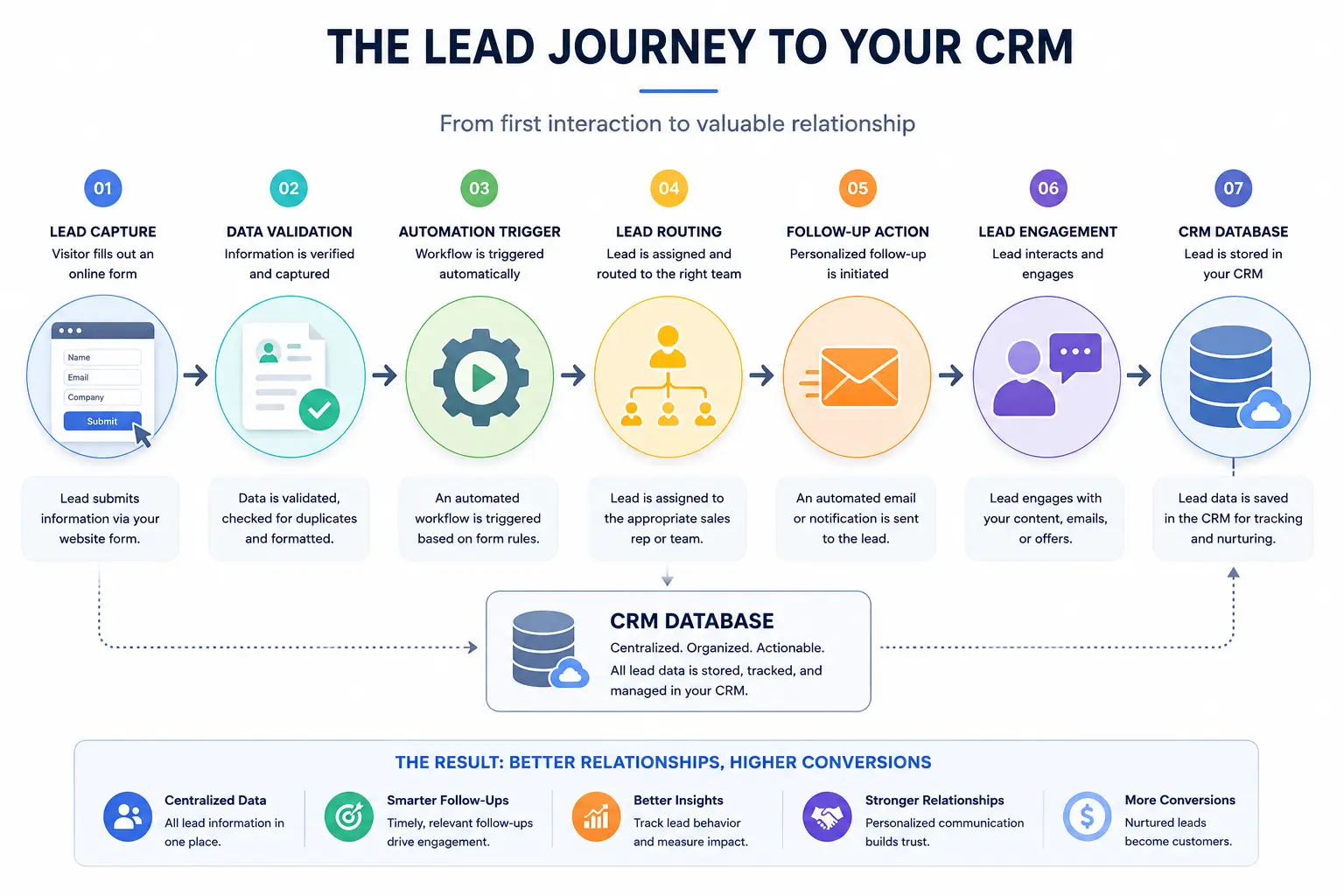
1.1 Visualizing the Full Path from Form Submission to CRM Entry
We optimize lead capture automation workflows by mapping every step a lead takes after they click submit. We follow the data from the website form to the marketing automation platform.
Then, we track its path into the CRM integration system. This visualization helps us identify unnecessary steps or redundant software layers. A shorter path usually leads to better data integrity and higher team productivity.
1.2 Benchmarking Technical Latency Across Integrated Platforms
Speed is a critical factor in modern lead generation. We optimize lead capture automation workflows by benchmarking technical latency across all integrated platforms.
High latency can kill a deal before it starts. If your CRM takes ten minutes to update, you might lose the prospect’s attention. We aim for near-instantaneous transfers to maintain momentum.
Tactic 1: We optimize lead capture automation workflows by establishing a baseline for speed-to-lead response times. We record the time between a form submission and the first automated touchpoint.
We then set a goal to reduce this time by 50% through better triggers. Fast responses signal to the buyer that your company is attentive and professional.
Tactic 2: We optimize lead-capture automation workflows by implementing error-log alerts for failed API requests. We set up automated notifications that trigger when data fails to sync.
This allows our technical team to fix issues immediately. Without these alerts, a broken connection could go unnoticed for days. Monitoring your workflow efficiency ensures that your pipeline remains full and functional.
2. Simplifying the Capture Experience to Increase Conversion Volume
The capture experience is the first real interaction a lead has with your brand. If the process is difficult, people will leave your site.
We focus on conversion optimization by removing unnecessary obstacles. A simple, clean experience builds trust and encourages users to share their information.
2.1 Reducing Form Friction with Progressive Profiling Techniques
We optimize lead capture automation workflows by reducing form friction with progressive profiling techniques. We avoid asking too many questions on the first visit.
Instead, we use progressive profiling to gather data over time. On the first visit, we might only ask for an email address. On the second visit, we ask for a job title or company size. This keeps form design simple while building a deep profile.
2.2 Using Real-Time Validation to Ensure High-Quality Data Entry
We optimize lead capture automation workflows by using real-time validation to ensure high-quality data entry. Bad data wastes time for both marketing and sales teams.
If a user enters an invalid phone number, the form prompts them to fix it immediately. This ensures our marketing automation tools have accurate details for follow-up. High-quality data leads to more effective customer segmentation later in the process.
Tactic 3: Hiding redundant fields for returning website visitors. We use browser cookies to recognize past visitors. If we already have their phone number, we do not ask for it again. This reduces friction and makes the user feel recognized.
Tactic 4: We optimize lead capture automation workflows by designing mobile-responsive forms for higher completion rates. We ensure all forms work perfectly on smartphones and tablets.
Many leads are captured while people are on the go. Large buttons and easy-to-tap fields are essential. A mobile-friendly approach significantly boosts user engagement and total submissions.
Tactic 5: Verifying email authenticity at the point of capture. We use services that check if an email address actually exists.
This prevents “test@test.com” entries from entering our database. It protects our sender reputation and keeps our email nurturing lists clean.
Tactic 6: We optimize lead capture automation workflows by A/B testing automated trigger delays for outreach. We test different wait times for the first automated email.
Sometimes an instant reply works best. Other times, a five-minute delay feels more human. We use data analytics to determine which timing produces the highest response rate for our audience.
3. Automating Intelligence Through Enrichment and Lead Scoring
Capturing a name and email is only the beginning. We need to know if the lead is a good fit for our services.
Automation allows us to gather this intelligence without manual research. We use these insights to prioritize the most promising opportunities for the sales team.
3.1 Appending Deep Firmographic Data with Instant Enrichment
We optimize lead capture automation workflows by appending deep firmographic data with instant enrichment tools. When someone signs up, we instantly pull their company revenue and industry.
This removes the need for long forms while giving us the data we need. We can then categorize leads based on their potential value. This is a key part of modern lead generation strategies.
3.2 Building Intent-Driven Scoring to Filter High-Value Prospects
We optimize lead capture automation workflows by building intent-driven scoring to filter high-value prospects. We assign points to leads based on their actions.
If they visit the pricing page, their score goes up. If they stop opening emails, their score goes down. We can then trigger specific email nurturing sequences based on these scores.
Tactic 7: Automating company revenue and industry lookups. We integrate enrichment APIs directly into our capture forms. This allows us to see the size of the opportunity immediately. Our sales reps can then prepare tailored pitches for large enterprise accounts.
Tactic 8: Setting negative scores for competitors and invalid leads. We identify competitors by their domain names and lower their scores. This prevents sales reps from wasting time on people who will never buy. This keeps the sales pipeline clean and focused on revenue.
Tactic 9: We optimize lead capture automation workflows by mapping behavioral signals to automated MQL status changes. When a prospect hits a specific score, the system automatically updates their status.
This triggers a hand-off to the sales team without any manual effort. It ensures that workflow efficiency remains high throughout the lifecycle.
4. Optimizing Sales Routing for Faster Response and Higher ROI
The way we hand off leads to sales is crucial. A slow or messy hand-off can frustrate prospects.
We use dynamic routing to ensure the right person handles every inquiry. This increases the chances of a successful outcome and improves the overall ROI of our marketing efforts.
4.1 Assigning Leads Dynamically Based on Rep Specialization
We optimize lead capture automation workflows by assigning leads dynamically based on rep specialization. We do not just send leads to a generic inbox.
If a lead is from the healthcare sector, it goes to our healthcare specialist. If it is a large enterprise deal, it goes to a senior account executive. This ensures the prospect talks to someone who understands their specific challenges.
4.2 Notifying Sales via Slack and SMS for Immediate Awareness
Emails can get buried in a busy inbox. We use instant messaging to alert sales reps about new high-value leads.
These alerts include key details like the prospect’s company and interest level. This allows the rep to respond while the lead is still on the website. Immediate awareness is a major competitive advantage in the digital age.
Tactic 10: We optimize lead capture automation workflows by deploying round-robin logic for equitable lead distribution. We use automated systems to share leads fairly among the team.
This prevents one person from getting overwhelmed while others have nothing to do. It keeps the sales team motivated and ensures every lead gets a quick response.
Tactic 11: We optimize lead capture automation workflows by creating automated re-engagement loops for stalled prospects. Sometimes a lead goes cold during the sales process.
We set up triggers to send a friendly follow-up if there is no activity for a week. This keeps our brand at the top of their mind. It helps us recover potential deals that might have been forgotten.
5. Integrating AI to Modernize Your Lead Capture Automation Workflows
Artificial intelligence is changing how we interact with prospects. We can now personalize communications at a massive scale.
AI helps us understand what a lead wants before they even ask. By integrating these tools, we stay ahead of the curve and provide a better experience.
5.1 Personalizing First-Touch Outreach Using Generative AI
We optimize lead capture automation workflows by personalizing first-touch outreach using generative AI tools. Generic “thank you” emails are often ignored.
We use AI to write personalized intro lines based on the lead’s LinkedIn profile or website. This makes the automated outreach feel like a 1-to-1 conversation. Personalized messages have much higher response rates than standard templates.
5.2 Forecasting Lead Quality with Predictive Behavioral Analytics
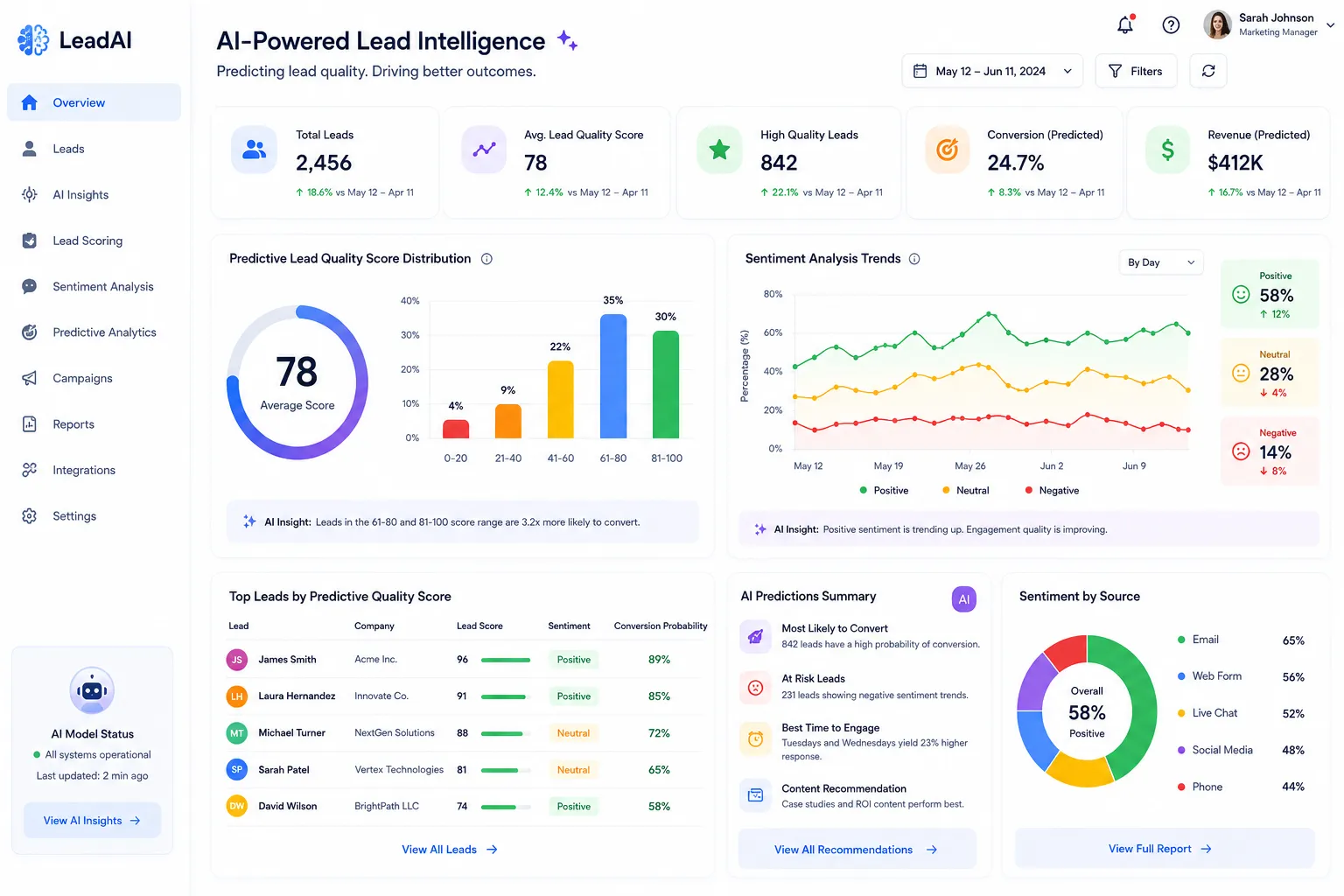
We optimize lead capture automation workflows by forecasting lead quality with predictive behavioral analytics. AI can look at thousands of past deals to find patterns.
This goes beyond simple lead scoring. It looks at the “sentiment” and “timing” of their interactions. We can then allocate more resources to the deals that have the highest probability of success.
Tactic 12: Creating AI-driven personalized icebreakers for sales emails. We automate the research phase for our sales team. The AI generates a unique sentence for every outbound email. This allows them to spend more time on actual selling and less time on administrative tasks.
Tactic 13: Adjusting follow-up frequency based on AI sentiment analysis. If a lead seems annoyed, the AI tells the system to slow down. If the lead seems excited, we increase the frequency of our touchpoints. We adapt our strategy to the prospect’s mood in real-time.
Tactic 14: Matching leads with reps using predictive performance data. We look at which reps have the best success with specific types of leads. The system then routes new leads to the rep most likely to close them. It turns data analytics into a direct revenue driver.
Tactic 15: We optimize lead capture automation workflows by summarizing prospect pain points via AI dashboards for reps. We use AI to read the notes from previous interactions and provide a summary for the sales rep.
This helps the rep understand the lead’s problems in seconds. They go into every call prepared with the right solutions. This improves the quality of the sales conversation significantly.
6. Supplemental Strategy for Managing Troubleshooting and Privacy Risks
High-tech workflows come with risks. We must ensure our systems are secure and compliant with laws.
A single data breach can ruin a company’s reputation. We also need to plan for technical failures to ensure business continuity.
6.1 Critical Questions for Maintaining Automation Workflow Health
We regularly ask ourselves if our tools are still meeting our goals. Are we collecting data we don’t need? Is the integration between our CRM and marketing software stable?
We schedule monthly reviews to check for errors. This proactive approach prevents small issues from becoming major disasters.
6.2 Managing Data Privacy and System Redundancy Protocols
Data privacy is a top priority for every business today. We ensure that our lead capture methods follow GDPR and CCPA rules.
We also build fail-safe storage systems. If an API goes down, we save the lead data locally so it is not lost. Once the system is back up, the data syncs automatically. This ensures our workflow efficiency remains high even during technical outages.
Building a robust system requires attention to detail. We use encrypted connections for all data transfers.
We also limit access to sensitive lead information to only those who need it. Privacy is not just a legal requirement; it is a way to build trust with our future customers.
| Optimization Area | Primary Benefit | Key Tool Used |
| Form Design | Higher conversion rates | Progressive Profiling |
| Data Enrichment | Better sales intelligence | Firmographic APIs |
| Sales Routing | Faster response times | Round-robin Logic |
| AI Integration | Scalable personalization | Generative AI |
Frequently Asked Questions
Why is speed-to-lead so important in automation?
Modern buyers often reach out to multiple vendors at once. The first company to respond usually has the best chance of winning the business.
Automation ensures your team responds within minutes rather than hours.
How does lead scoring help the sales team?
Lead scoring helps reps prioritize their daily tasks. Instead of calling everyone, they focus on the prospects who show high intent.
This makes their work more efficient and increases the total number of closed deals.
What is progressive profiling in form design?
It is a method of gathering information gradually. Instead of a 10-field form, you show 2 or 3 fields at a time across multiple visits.
This reduces friction and leads to higher completion rates for your website forms.
Conclusion
Optimizing your systems is an ongoing process. Technology changes, and so do buyer expectations.
By following these fifteen strategies, you can build a resilient and efficient sales engine. Remember to focus on the user experience while using backend tools to simplify your internal work.
When your marketing and sales systems work together, your business can scale without limits. We hope this guide helps you understand how to optimize lead capture automation workflows to drive more revenue and growth for your organization.


6 Key Insights into Choosing the Right Automatic Label Printer for Cosmetic Products
Using VR Demos to Showcase Product
17 Proven Strategies to Master Fast Payment Integration for Booths Effortlessly
Dominate Your Next Trade Show With 14 Innovative AI Tools for Booth Performance
19 Master Strategies to Explode Foot Traffic at Expo Booths
7 Critical Insights From Camera-Based Retail Heatmaps to Boost Store Revenue