

I remember when opening a second retail location meant spending all my time on the road. I would drive between stores just to check if the shelves were full. Today, the world of retail has changed for the better.
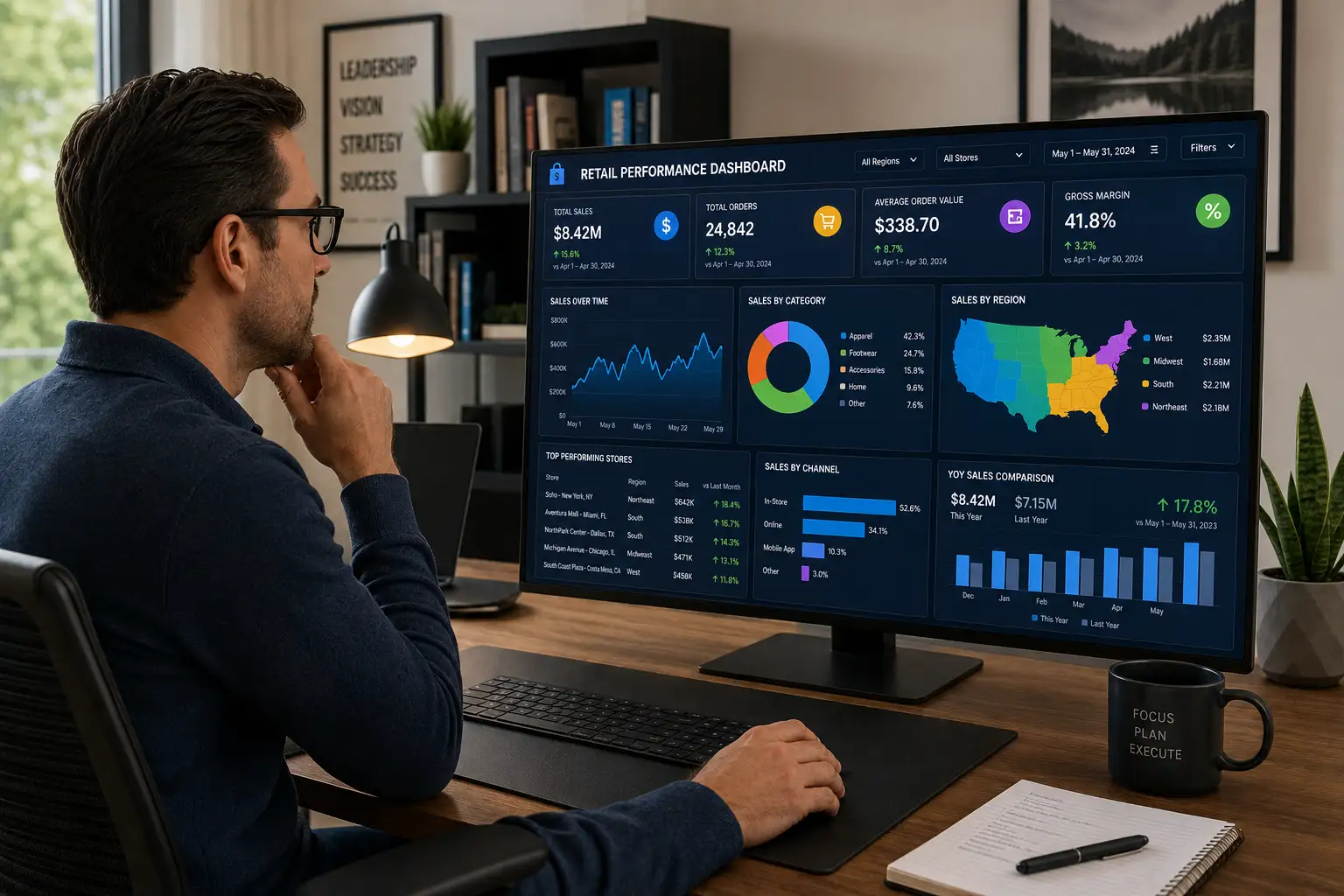
We can now use remote store performance analytics to manage dozens of locations from a single laptop. This technology allows us to see exactly what is happening on the sales floor without being there in person. It provides the clarity we need to make smart choices and grow our brands faster than ever before.
In this guide, I will share eleven tactics that changed how I view retail management. These strategies help us track sales analytics and understand customer behavior in real-time. By the end of this article, you will know how to set up a digital system that scales.
We will look at everything from foot traffic sensors to AI-powered security audits. Let’s dive into how you can revolutionize your store growth through the power of data.
1. Deploying Reliable Infrastructure for Remote Store Analytics
To succeed with Remote store performance analytics, we must start with a strong digital foundation. I found that using old, disconnected systems was my biggest mistake early on. We need a system where every piece of equipment talks to the others.
This begins with establishing cloud-based POS and ERP data integration. When your sales and resource planning tools live in the cloud, you can access them from anywhere in the world. You no longer have to wait for end-of-day reports to see your progress.
A centralized data architecture is vital for multi-unit syncing. I recommend keeping all your store data in one “bucket” instead of separate files. This allows us to compare how different locations are performing side-by-side.
It makes it easy to spot which store is leading in sales conversion rates. When your data is synced, you can trust that the numbers are accurate and up to date.
Real-time API integration is the secret to real-time reporting. APIs act like bridges that carry information between your software programs. For example, when a customer buys a shirt, the API tells your inventory system and your finance tool immediately.
This live connection helps us catch problems before they grow. It also allows us to monitor digital storefronts and physical shops at the same time. This creates a unified view of our entire business operations.
2. Measuring Remote Customer Behavior and Store Traffic
Understanding how people move through our stores is a game-changer. I used to guess which displays worked based on my gut feeling. Now, we use Remote store performance analytics to track customer behavior and foot traffic without being on-site.
Automated foot traffic counters are the first step in this process. These sensors tell us exactly how many people walk through the doors each hour. We can then compare this to our sales to find our conversion optimization opportunities.
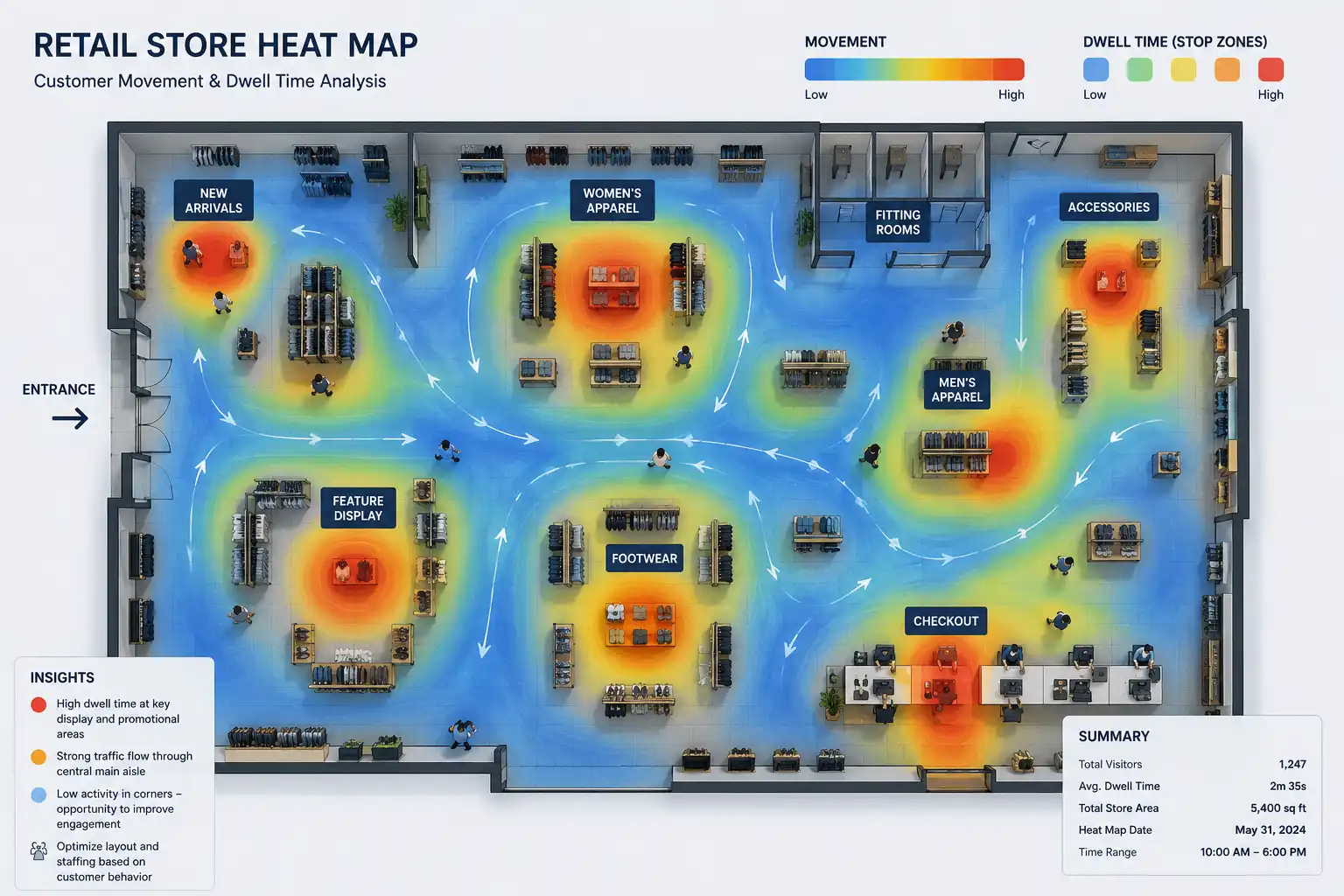
Remote heatmapping is another feature of Remote store performance analytics that I use to improve store layouts. It shows us where people stand the longest and which aisles they ignore. This data helps us place high-margin products in the best spots.
If a display is getting a lot of user engagement but few sales, we know the price or the product might be the issue. It allows us to fix the store layout from hundreds of miles away.
We also use virtual dwell time analysis via IoT sensors. These sensors measure how long a customer stays in a specific zone, like the fitting rooms or the checkout line. If the dwell time at the counter is too high, it shows poor checkout efficiency.
We can then decide to add more staff or open another register. Tracking these performance metrics helps us create a better experience for every visitor. It ensures that our traffic sources lead to happy, paying customers.
3. Optimizing Remote Labor Efficiency and Store Operations
Managing a team from a distance can be very tricky. Remote store performance analytics gives us the visibility we need to keep staff accountable from anywhere. To solve scheduling challenges, we now use live labor-to-sales alignment for remote scheduling.
We look at our sales analytics to see when the store is busiest. Then, we schedule more workers for those peak hours. This ensures we aren’t wasting money on labor when the store is empty.
This approach also helps us maintain brand standards digitally. We use AI-powered visual audits to check on operational compliance. Cameras can now “see” if a shelf is messy or if a safety hazard exists.
The system sends me a photo if something looks wrong. This means I don’t have to call the manager every hour to ask for updates. The technology does the watching for me, which saves everyone time.
By monitoring these operations remotely, we can set clear goals for our teams. We track performance metrics like average transaction value and items per basket. When my team knows I am looking at the data, they stay more focused on their tasks.
It creates a culture of accountability that works even when I am not in the building. It turns channel performance into a team sport where everyone wants to win.
4. Monitoring Remote Inventory Levels and Stock Performance
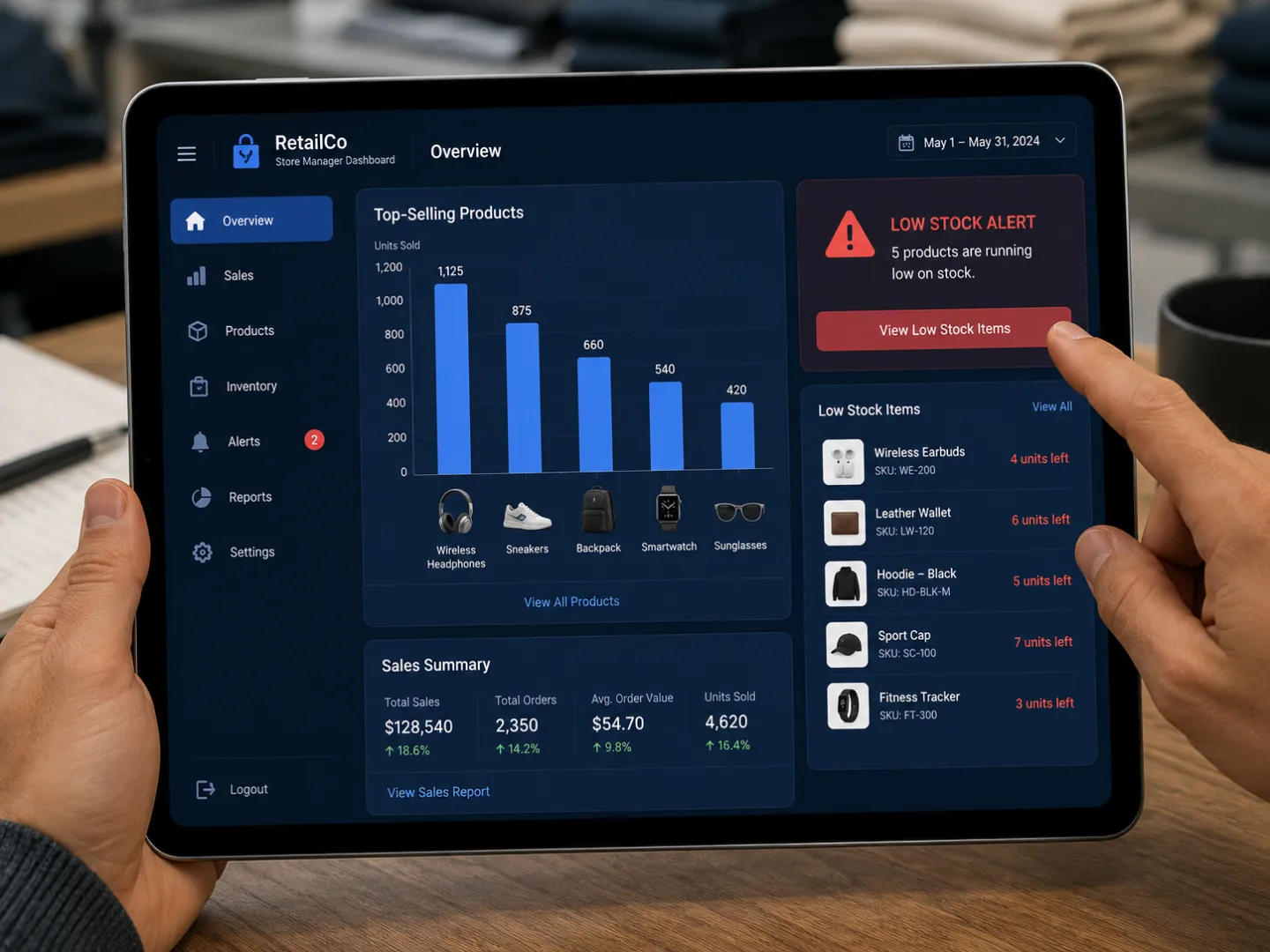
Nothing kills a sale faster than an empty shelf. I used to rely on my staff to tell me when we were low on items. Now, we use Remote store performance analytics to stay ahead of inventory challenges.
Automated tracking systems send stock-out notifications directly to my phone. If we sell out of a popular item, I know it within seconds. This level of inventory management is essential for maintaining a healthy supply chain.
Data-driven demand forecasting is another tactic we use for remote locations. We look at past product performance to predict what we will need next month. The software considers holidays, local events, and even the weather.
This helps us avoid overstocking items that won’t sell. By keeping the right amount of stock, we keep our cash flow healthy and our customers happy.
We also look at geolocation analysis to see if certain items sell better in different cities. A store in a sunny area might need more shorts, while a mountain store needs coats. By analyzing these trends remotely, we can move inventory between stores to maximize sales.
This strategy ensures that every piece of merchandise has the best chance of being sold. It turns product performance into a science rather than a guessing game.
5. Strengthening Remote Loss Prevention and Security Systems
Shrinkage and theft can destroy a retail business quickly. When I am not at the store, I need to know our assets are safe. We use Remote store performance analytics alongside remote fraud detection to protect our profits.
Our system flags transaction tracking events that look suspicious, like frequent refunds or “no-sale” drawer openings. I can review these events from my computer at any time. This discourages internal theft and helps us spot errors in training.
Automated security alerts are also part of our strategy. If a door opens after hours or a sensor trips, I get an immediate alert. We use incident video verification to see what happened.
Instead of driving to the store for a false alarm, I can check the live feed. This saves me hours of sleep and keeps our stores secure 24/7. It provides peace of mind that is worth every penny.
Using data for loss prevention also helps us identify patterns. Remote store performance analytics can reveal that theft happens more often during certain shifts or near specific doors. We can then use this info to move cameras or change staff positions.
This proactive approach keeps our performance metrics high and our losses low. It ensures that the growth we work so hard for is actually reflected in our bank account.
6. Advancing Your Global Remote Management Strategy
Running a retail business from afar is no longer a dream. It is a reality that many of us live every day. By using these eleven tactics, we can scale our businesses without losing control.
We can manage channel performance across different states or even countries. The key is to trust the data and use Remote store performance analytics to stay connected to the floor.
I have seen my own business grow because I stopped trying to be everywhere at once. I started letting the analytics guide my decisions. When we use Remote store performance analytics, we gain a bird’s-eye view of our entire world.
We can see the big picture and the tiny details all at once. This balance is what leads to long-term success and true retail revolution. Businesses that invest in Remote store performance analytics today will be the ones leading their markets tomorrow.
Frequently Asked Questions
Is Remote store performance analytics expensive to set up?
It can vary depending on your store size. However, many cloud-based POS systems offer these features as part of their standard monthly plans. The money you save on travel and labor usually pays for the system quickly.
Do I need to be a data expert to use these tools?
No, you do not. Most modern Remote store performance analytics platforms use simple dashboards with clear charts. If you can read a basic bar graph, you can use these tools to grow your store. Most companies also provide training to get you started.
Can I use these tactics if I only have one store?
Absolutely. Even single-store owners benefit from Remote store performance analytics. It allows you to take a day off or work on your marketing while still keeping an eye on your daily operations. It builds a foundation for when you decide to open your second location.
For more information on retail trends, you can check out the latest reports from the National Retail Federation. You can also explore how modern POS systems are changing the industry. Staying informed is the best way to keep your business ahead of the competition.


AI Heatmap Analysis for Retail Stores: 5 Data-Driven Strategies to Maximize Revenue
17 Proven Tactics to Dramatically Improve Your Booth Strategy for Next Events
15 Proven Methods on How to Consolidate Event Data Efficiently to Maximize Analytics ROI
7 Best Offline Foot Traffic Sensor Technologies to Maximize Retail Performance
6 Breakthrough Strategies to Master Store Layout Heatmap Analysis and Skyrocket Sales
10 Professional Secrets to Own a Strong Lead Database After Events Without Failure