

Stepping into the world of cosmetic manufacturing often means embracing efficiency. We understand the challenge of perfectly labeling diverse products.
That’s why selecting the best automatic label printer for cosmetic products is crucial. It ensures your brand maintains its pristine image while boosting production.
We’re here to share six key insights. They will assist you throughout this important decision-making process.
1. Decoding the Technology Behind Cosmetic Label Printing
Choosing the right labeling system starts with understanding the technology. Different printers provide distinct advantages.
We need to match these benefits to your specific production needs. Let’s look at the primary types available today.
Integrated Print-and-Apply Systems
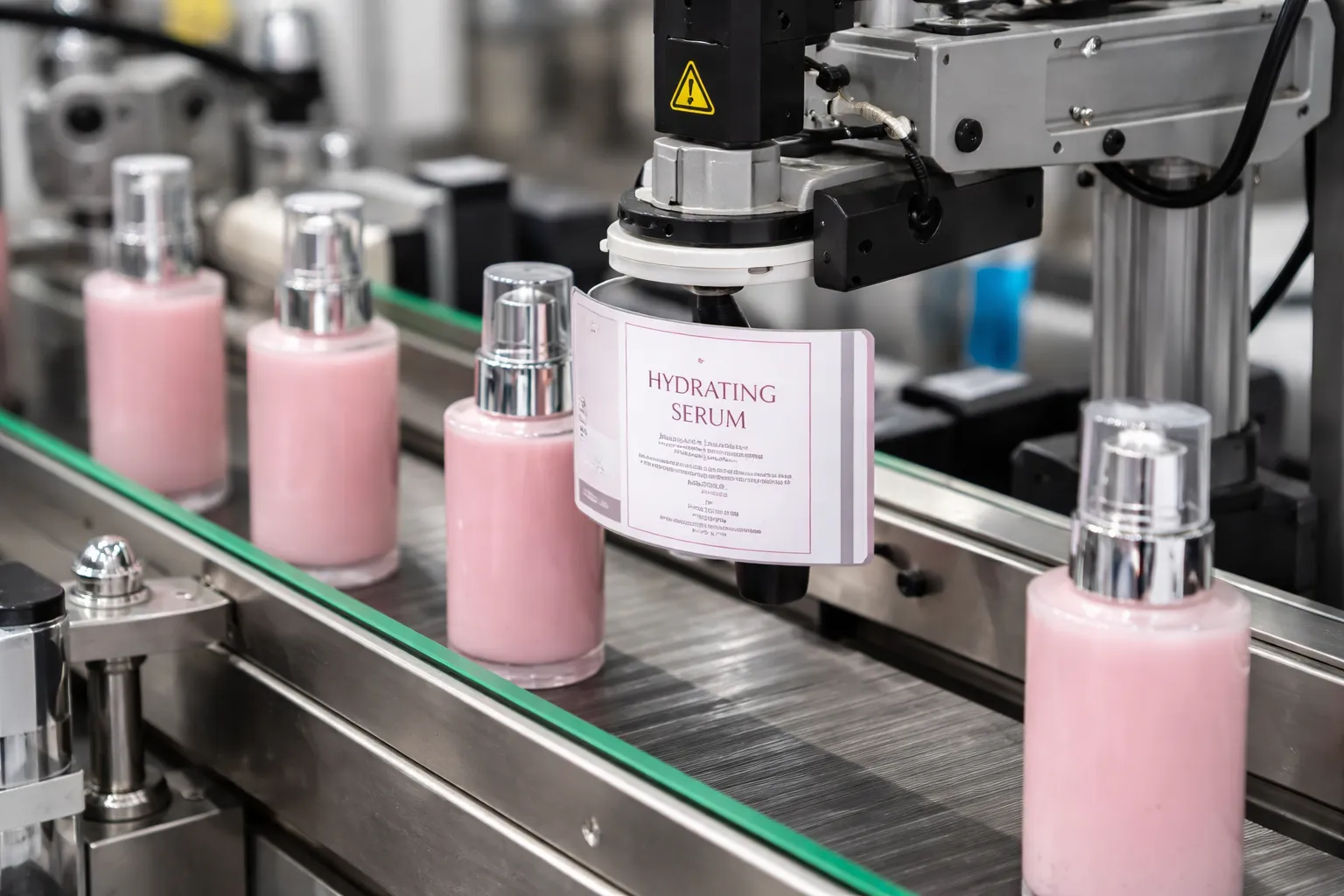
These systems offer complete functionality. They print labels on demand. Then they immediately apply them to your cosmetic containers.
The integration cuts down time and minimizes errors. It is ideal for operations needing variable data like batch codes or expiration dates.
We often recommend these for dynamic product lines. They ensure each label is fresh and accurate. This prevents pre-printed label waste. It also offers excellent flexibility for production changes.
High-Resolution Industrial Label Printers
Precision plays a vital role in cosmetics. High-resolution industrial printers deliver crisp, clear graphics. They handle complex designs and tiny text with ease.
Thermal transfer and direct thermal technologies are commonly used in these printers. They ensure your product branding always looks its best.
These units are separate from applicators. You print labels in bulk. Then you use a separate applicator or manual process.
This can be cost-effective for stable, high-volume runs. It also provides flexibility if you need to use different applicators.
Automatic Label Applicators
Automatic label applicators focus solely on applying labels. They are designed for speed and accuracy. These machines take pre-printed label rolls. Then they apply them consistently to your cosmetic products.
We often use them with generic or branding-heavy labels. There are various applicator types. They include wipe-on, tamp-blow, and air-blow methods.
Each suits different product shapes and line speeds. Pairing the right applicator with your product is key for flawless results.
2. Adapting Automation to Your Unique Packaging Shapes
Cosmetic products come in countless shapes. Your automatic label printer for cosmetic products must be versatile enough to handle everything from slender vials to broad jars.
We ensure the equipment can adapt to your entire product range. This maximizes your investment.
Solutions for Cylindrical Bottles and Vials
Cylindrical items are very common in cosmetics. Wraparound label applicators excel here. They apply labels smoothly around the entire circumference.
We find that systems with adjustable roller setups provide the best results. They handle various diameters without complex retooling.
Accuracy is vital for these shapes. Even slight misalignment is immediately apparent. Look for systems offering precise rotation and application control. This ensures a professional finish every time.
Equipment for Jars, Palettes, and Flat Surfaces
Jars and palettes present different challenges. They often require top or bottom labeling. We use flat-surface applicators for these products.
They precisely place labels on even surfaces. Systems with vacuum belts or pressure rollers ensure smooth application. This prevents bubbles or wrinkles.
The stability of the product during labeling is key here. We recommend systems with robust conveyor guides. These hold the product firmly in place. This guarantees consistent label placement on every item.
Specialized Systems for Squeezable Tubes
Squeezable tubes demand specialized handling. Their flexible nature can complicate labeling. We often look for systems with custom jigs or cradles.
These hold the tube rigid during application. They prevent distortion and ensure proper label adhesion.
Some advanced systems even offer orienting capabilities. They can align the tube for label placement relative to a seam or cap. This level of precision elevates your product’s overall aesthetic. It also enhances product branding.
3. Critical Features That Protect Your Brand’s Aesthetic
Your cosmetic product’s label is its first impression. It sends a powerful message about your brand.
Therefore, the automatic label printer for cosmetic products you choose must uphold the highest aesthetic standards. We focus on features that guarantee a flawless look.
Accuracy and Precision Standards
Labels must be applied perfectly. This means consistent placement on every single product. We look for systems with very tight tolerance levels.
They should ensure labels are straight, centered, and aligned. Even a millimeter off can detract from perceived quality.
High-quality servo motors and advanced control systems contribute to this. They provide precise movement and speed. This ensures your printing technology consistently delivers professional results. It maintains your brand’s integrity.
Advanced Sensor Technology for Clear Labels
Clear or transparent labels are popular in cosmetics. They give a “no-label” look. Applying these requires specialized sensors.
We use photoelectric sensors that can detect the edge of clear materials. Standard sensors often struggle with this, leading to misfeeds.
These advanced sensors ensure accurate label dispensing. They prevent gaps or overlaps when working with invisible backing paper. This maintains the clean, sophisticated look your brand deserves.
Resistance to Oils, Chemicals, and Moisture
Cosmetic products often contain oils and chemicals. Labels must withstand these substances. They also need to resist moisture from handling or storage.
We recommend printers using durable printing technology. Look for labels with strong adhesives and protective coatings. These prevent smudging, fading, or peeling.
The material compatibility of your labels is crucial here. We ensure your chosen labels are tested against your product formulations. This guarantees longevity and protects your product branding in real-world conditions.
4. An Incremental Guide to Seamless System Integration
Integrating a new automatic label printer for cosmetic products into your line needs careful planning. We approach this incrementally.
This ensures a smooth transition and maximizes production efficiency. These steps will help ensure a successful setup.
Defining Your Throughput and Production Speed
First, we assess your current and future production needs. How many units do you need to label per minute or hour?
This determines the speed requirements for your printer and applicator. Overdoing specifications wastes money, while undershooting them slows processes. We aim for a system that can comfortably meet peak demands.
Testing Label Adhesion and Ink Durability
Compatibility between label materials is crucial. We thoroughly test label adhesion on your actual containers. This takes different environmental conditions into account.
We also check ink durability. It must withstand rubbing, moisture, and chemical exposure. This step prevents future issues like peeling or fading labels.
Selecting a Coding Method for Regulatory Compliance
Many cosmetic products require batch codes or expiration dates. We need to choose a coding method. This could be thermal transfer overprinting or inkjet coding.
It must integrate seamlessly with the label applicator. This ensures all regulatory information is accurately printed. It supports barcode printing for traceability too.
Designing Your Conveyor and Workflow Layout
The physical layout of your production line impacts efficiency. We design the conveyor and workflow around the new labeling system.
This includes ensuring proper product spacing and orientation. An optimized layout minimizes manual intervention. It also prevents jams. This boosts your overall production efficiency.
Setting Calibration and Quality Control Standards
Finally, we establish strict calibration and quality control. This includes regular checks for label placement accuracy. We also monitor print quality.
Training staff on these standards is crucial. It ensures ongoing high-quality output. This proactive approach maintains consistency and reduces waste.
5. Analyzing the Financial Impact of Automated Labeling
Investing in an automatic label printer for cosmetic products is a significant decision. We always look at the long-term financial benefits.
These go far beyond the initial purchase price. Automation often leads to substantial savings and growth opportunities.
Labor Efficiency and Waste Reduction
One of the greatest impacts is on labor. Automated systems significantly reduce the need for manual labeling. This releases staff time for higher-priority work.
We also see a dramatic reduction in mislabeled products and material waste. Precision application means fewer rejected items. This makes a measurable difference to your bottom line. It makes it a truly cost-effective solution.
Scalability for High-Volume Retail Success
As your cosmetic brand grows, so does your production volume. Manual labeling simply cannot keep up. An automatic label printer for cosmetic products offers the scalability you need.
It can handle increased throughput without added labor costs. This prepares your business for high-volume retail success. It positions you for efficient expansion into new markets. It’s an investment in future growth and stability.
6. Strategic FAQs: Addressing the Risks and Realities of Automation
We often hear common questions about implementing automation. Let’s tackle some of the key concerns and practicalities.
By understanding these aspects, you can make informed choices that reduce risk and increase gains.
What is the difference between Wipe-On and Tamp-Blow?
Wipe-on applicators literally “wipe” the label onto the product as it passes by. They are fast and simple.
Tamp-blow applicators use a vacuum pad to hold the label. They then “tamp” it close to the product.
Finally, they “blow” it into place with air. This method is more precise. It’s better for delicate or recessed surfaces.
Can one system handle different container diameters?
Yes, many modern automatic label printers for cosmetic products are highly adjustable. They can handle a range of container diameters.
Look for systems with adjustable guides and roller speeds. Quick changeovers between product sizes are common. This offers excellent flexibility for varied product lines.
Which label materials suit specific beauty categories?
The best label material depends on the cosmetic product. For example, waterproof vinyl or BOPP is ideal for products in wet environments like shower gels.
Clear film labels work well for showing product color. Paper labels finished with varnish are appropriate for dry, internal applications. We recommend testing various options. They must suit your product and its environment.
Tabletop Units vs. Full Inline Systems?
Let’s compare these two common types of labeling solutions:
| Feature | Tabletop Units | Full Inline Systems |
| Volume | Low to Medium | Medium to High |
| Speed | Slower, semi-automatic | Fast, fully automatic |
| Integration | Standalone, manual loading | Integrated with conveyor lines |
| Cost | Lower initial investment | Higher initial investment |
| Footprint | Small, portable | Larger, fixed installation |
| Ideal For | Startups, small batches, R&D | Established brands, mass production |
Closing the Loop: What are the risks and costs of delaying automation?
Delaying automation carries several risks. These include higher labor costs and slower production. You might also face inconsistent label quality. This can harm your brand image.
The cost involves lost sales due to the inability to scale. It also means increased waste and inefficiencies. Embracing an automatic label printer for cosmetic products early positions you for growth and market leadership.
Conclusion
Choosing the right automatic label printer for cosmetic products is more than just buying machinery. It’s about investing in your brand’s future.
It enhances your product branding and boosts production efficiency. We have explored key technologies, crucial features, and financial impacts. We also addressed common concerns.
By carefully considering these insights, you can select a system that grows with your business. It will ensure your cosmetic products always look their best. This positions your brand for lasting success in a competitive market.


Top 3 Interactive Technologies for Beauty Booths: Maximizing Engagement and ROI
AI Cameras to Analyze Visitor Behavior: The Comprehensive Guide to Business Intelligence
Using Booth Chatbots to Assist Visitors at Events
E-commerce Personalization: Orchestrating High-Conversion Experiences in the AI Era
Captivate, Connect, Convert: Mastering Interactive Touch Screens for Exhibitions
Why a Professional Skin Analysis Device is the Must-Have Booth Tool