
I have spent years watching beauty brands launch in busy malls and department stores. Setting up a stunning booth is only the first step toward success.
If you want to know whether your beauty booth investment is actually working, a strong KPI for booth evaluation is essential for making smart decisions. In this article, I will share the most important metrics you should track to ensure your booth shines. We will look at everything from daily sales to how long a customer stays to talk with your staff.
Tracking the right data helps you understand your customers better. It allows you to see which parts of your display are working and which are not.
With clear beauty booth KPIs in place, even a low-traffic corner can become a powerful sales engine. Let’s dive into the essential variables that will help you measure your beauty booth performance accurately.
Analyzing the 10 Most Critical KPIs for Beauty Booth Evaluation
When I evaluate a beauty booth, I look at ten specific areas. These variables give me a full picture of the booth’s health. I divide them into three main categories: sales, engagement, and digital growth.
Primary Sales and Revenue Growth Metrics
- Sales Conversion Rate: This is the percentage of people who walk into your booth and actually buy something. A strong KPI for beauty booth evaluation starts with tracking your sales conversion rate every single day.
A high conversion rate means your staff is doing a great job at closing. It also shows that your products are meeting the immediate needs of your visitors.
- Average Transaction Value: I like to track how much each customer spends. If they only buy one small item, your team might need training on upselling.
Increasing this value directly boosts your overall product sales and your profit margin.
- Sales per Square Foot: Booth space is expensive, especially in premium malls. This metric tells you if you are using your small space efficiently. It helps you decide if the booth size is right for the location.
- Revenue per Operating Hour: Some hours are busier than others. By tracking hourly revenue, you can see when you need more staff. It also helps you identify slow periods where you might need more promotional effectiveness.
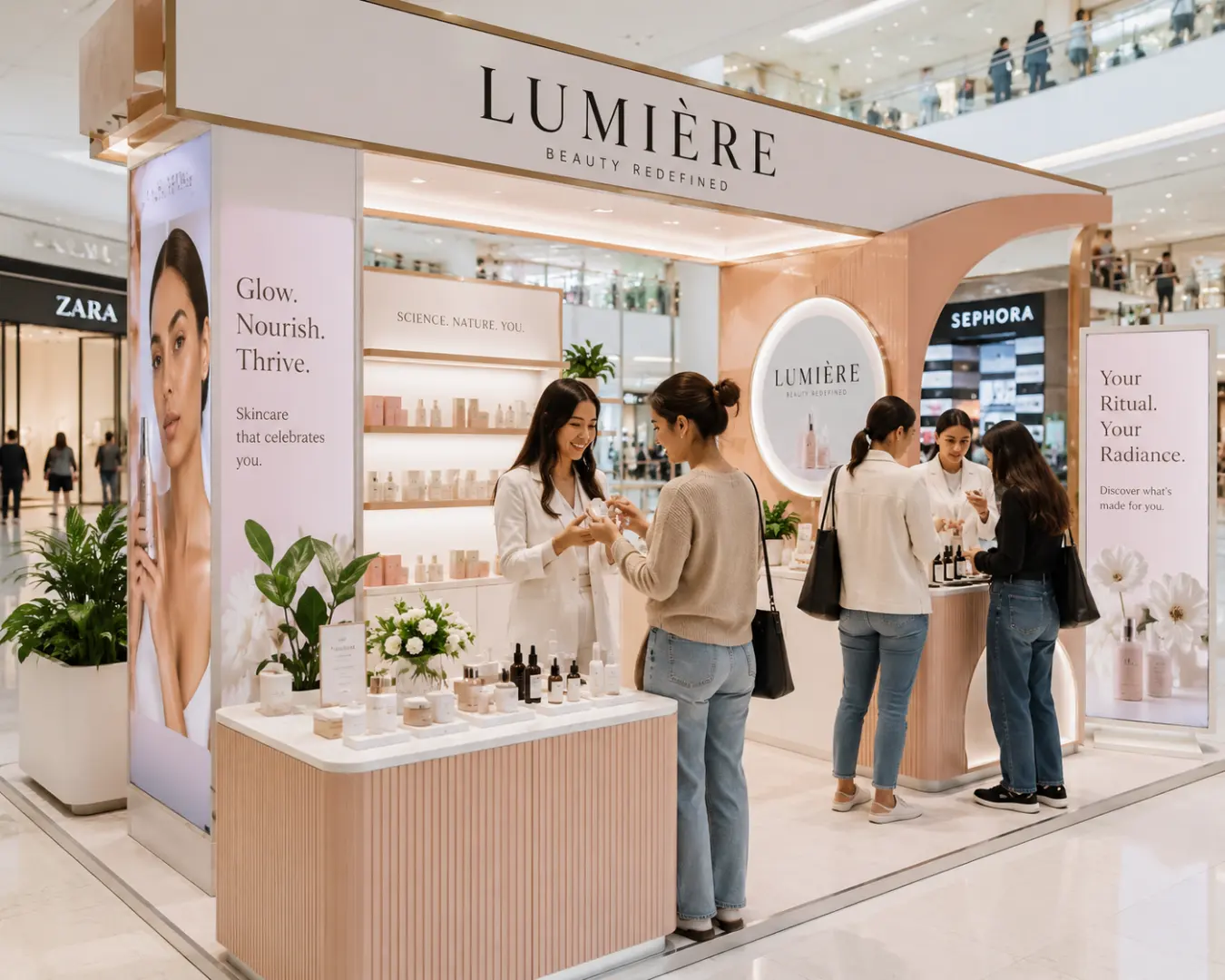
Consumer Engagement and Sensory Interaction Tracking
- Capture Rate: This measures how much of the total foot traffic actually stops at your booth. If many people walk by without looking, your visual appeal might be too low.
You want a booth that catches the eye from a distance. The right KPI for beauty booth evaluation helps you identify when staff performance is dragging down results.
- Average Dwell Time: This is how long a person stays at your booth. I find that a longer average service time often leads to better service quality.
However, it must be balanced so other customers do not feel ignored.
- Trial and Sampling Rate: In beauty, touching and smelling the product is vital. I track how many people try a sample.
High trial rates usually lead to higher customer satisfaction because the buyer knows what they are getting.
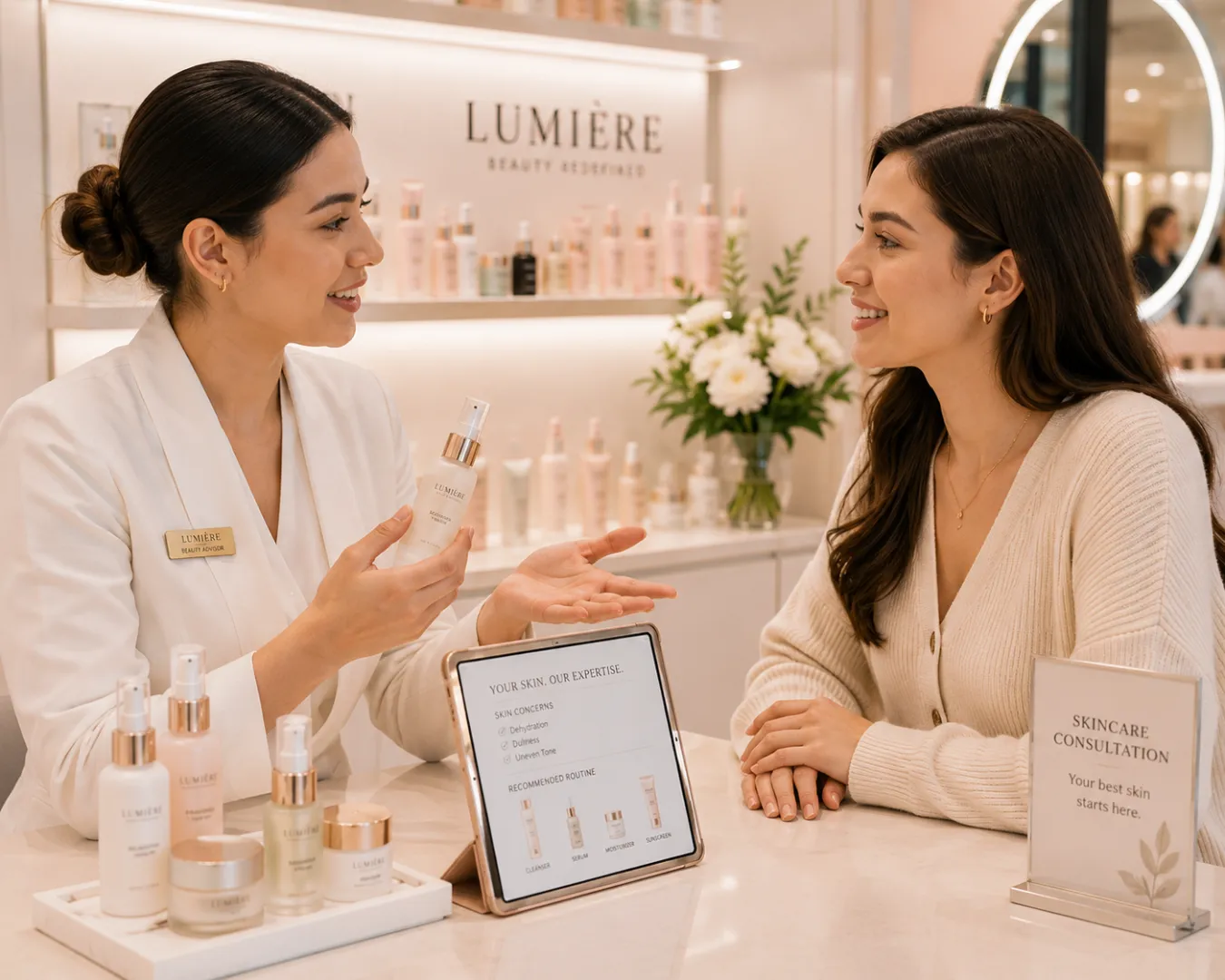
- Professional Consultation Count: This tracks how many deep conversations your staff has with clients. A high appointment rate for consultations shows that your staff performance is strong. It builds trust and leads to a better repeat customer rate.
Digital Visibility and Customer Retention Growth
Your KPI for beauty booth evaluation should include both physical and digital metrics for a complete picture.
- Social Media Content Yield: Does your booth look “Instagrammable”? I check how many people take photos and tag the brand. This increases brand awareness without costing extra money in advertising.
- New CRM Lead Acquisition Rate: Not everyone buys on their first visit. Collecting emails or phone numbers is crucial for client retention. A high lead rate ensures you can reach out to customers later with new offers.
Diagnostic Techniques to Improve Your KPI for Beauty Booth Evaluation
If your numbers are low, do not panic. I often use diagnostic steps to find out why a booth is underperforming. The first step is to look at the staff performance and the environment.
Identifying Root Causes for Low Sales Conversion
Low conversion usually stems from two things: the product or the people. I check if the most popular items are in stock.
Then, I observe the team. Are they greeting every guest with a smile? Sometimes, service quality drops because the staff is tired or bored.
Optimizing Beauty Advisor Productivity and Closing Skills
I believe in continuous training. Your beauty advisors need to be experts on the products. If they cannot answer questions, the customer satisfaction will plummet.
I suggest role-playing different sales scenarios to help them feel more confident in closing a sale.
Refining Visual Merchandising to Increase Capture Rates
If the foot traffic is high but the capture rate is low, I change the display. Lighting is very important in the beauty industry.
I ensure the best-sellers are at eye level. Improving the visual appeal can sometimes double your visitors overnight.
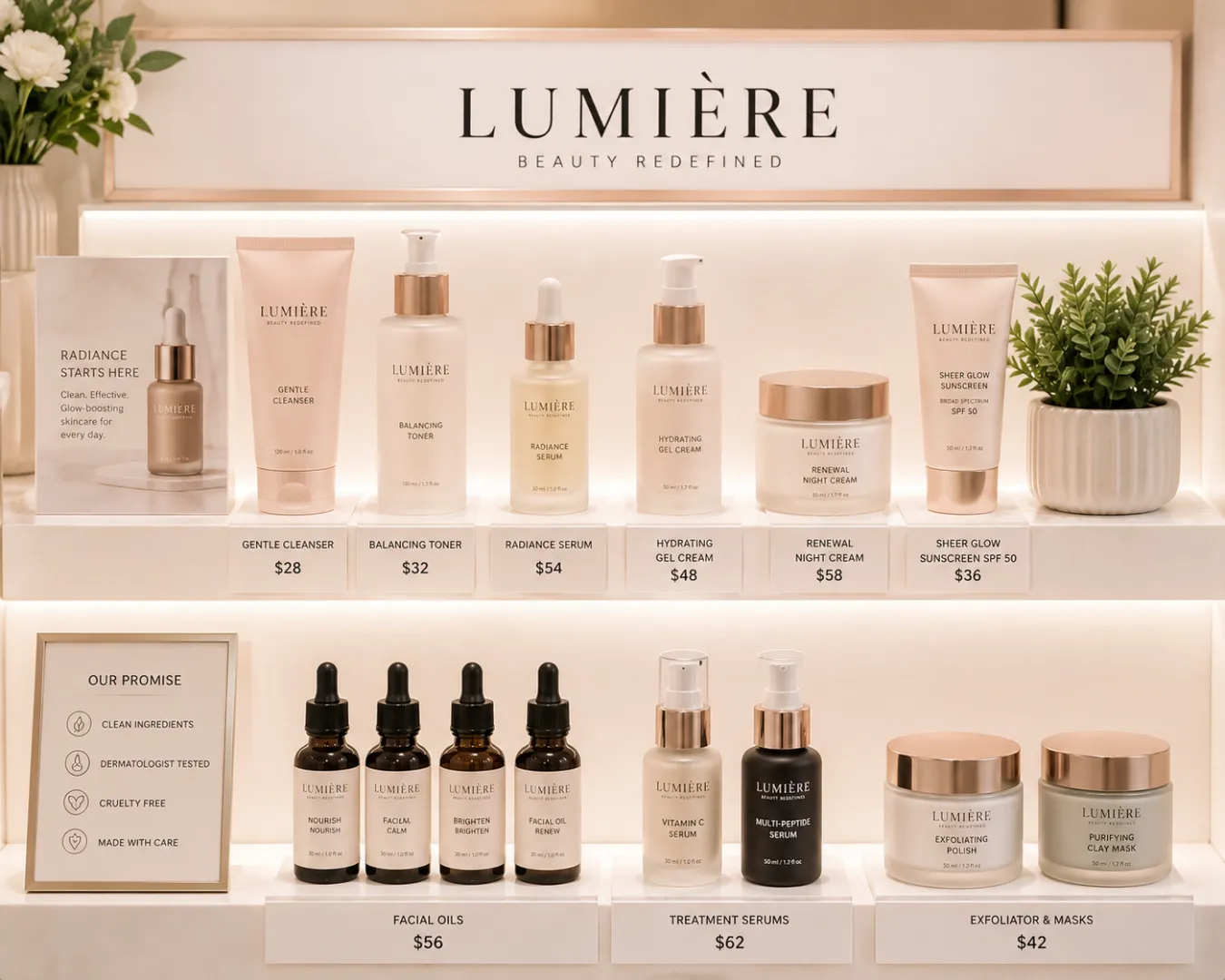
Adjusting Evaluation Criteria for Different Retail Formats
Not all booths are the same. I adjust my expectations based on where the booth is located. Adapting your KPI for beauty booth evaluation to the retail format is essential for accurate benchmarking.
Comparing Pop-Up Activation Metrics versus Permanent Department Counters
Pop-ups are often about brand awareness. I look more at social media tags and new leads.
For permanent counters, I focus on the repeat customer rate. Permanent spots rely on loyal locals who come back every month for their favorites.
Adapting KPIs for High-Traffic Mall Pods versus Niche Boutique Spaces
In a mall, the foot traffic is huge. The goal is to grab attention quickly.
In a niche boutique, the traffic is lower, but the conversion rate should be much higher. I expect more detailed service quality in a quiet boutique setting.
Critical Questions for Improving Beauty Booth Evaluation Accuracy
I often ask myself hard questions to make sure my data is honest. Numbers can sometimes hide the real story of what is happening at the booth.
Does a High Dwell Time Always Lead to Quality Conversions?
Not always. Sometimes people stay long because they are confused or the staff is slow.
I compare average service time with total sales. If people stay 20 minutes but don’t buy, the consultation process might be too long or too complex.
Which Beauty KPIs Should be Grouped for Executive Stakeholders?
Executives usually want to see the profit margin and total product sales. However, I also include customer satisfaction scores.
This shows that the brand is healthy for the long term, not just making a quick dollar today. Every KPI for beauty booth evaluation variable should be reviewed with both sales and service data together.
How Does Physical Sampling Compare to Digital Lead Generation?
Physical sampling is great for immediate promotional effectiveness. Digital leads are better for client retention.
I like to see a balance. A customer who takes a sample today should also be added to the CRM list for tomorrow.
Can a Booth be Considered Successful Without Immediate Sales?
Yes, especially if the goal is brand awareness. If thousands of people see the booth and learn the name, it is a win.
However, you must eventually see a rise in online sales or repeat customer rate to prove it worked.
Avoiding Common Pitfalls in Beauty Brand Assessment
It is easy to get distracted by “vanity metrics.” These are numbers that look good but do not actually help your business grow. I use each KPI for beauty booth evaluation metric to spot trends before they become expensive problems.
Preventing Over-Reliance on Vanity Metrics in Booth Evaluation
A huge number of “likes” on a photo is nice, but it doesn’t pay the rent. I always link social engagement back to foot traffic or product sales.
If a booth is popular on TikTok but empty in person, something is wrong with the location or the offer.
Ensuring Long-Term Brand Health Through Consistent Measurement
Consistency is key. I measure these variables every week. This helps me see trends before they become big problems.
High hygiene standards must stay high every single day to protect the brand’s reputation. A consistent KPI for beauty booth evaluation framework is what separates thriving booths from stagnant ones.
In conclusion, creating a KPI for beauty booth evaluation requires a balance of hard numbers and human interaction. I focus on sales, but I never ignore how the customer feels.
By tracking these ten variables, you can ensure your beauty booth is a profitable and beloved part of your brand. Keep your staff trained, your displays bright, and your data organized for the best results. A well-measured booth is a successful booth.
Frequently Asked Questions
How often should I review my beauty booth KPIs?
I recommend checking your basic sales data daily. However, a deep dive into the full KPI for beauty booth evaluation should happen once a week. This allows you to spot trends and make changes to your promotional effectiveness quickly.
What is a good capture rate for a beauty booth?
In a busy mall, a capture rate of 5% to 10% is usually considered very good. If you are below 2%, you should probably look at improving your visual appeal or your booth’s location.
Does staff performance affect the repeat customer rate?
Absolutely. Customers come back because they liked the product, but they also come back because of the service quality. Friendly, helpful staff are the biggest drivers of client retention in the beauty industry.


11 Strategic Remote Store Performance Analytics Tactics to Revolutionize Retail Growth
6 Breakthrough Strategies to Master Store Layout Heatmap Analysis and Skyrocket Sales
6 Critical Strategies for Mastering IoT Foot Traffic Sensors: The Ultimate 2026 Accuracy Guide
9 Proven Metrics to Master Your Beauty Booth ROI Calculation and Dominate Trade Shows
7 Best Offline Foot Traffic Sensor Technologies to Maximize Retail Performance
15 Proven Methods on How to Consolidate Event Data Efficiently to Maximize Analytics ROI