

We all want better insights from our digital products. However, data often sits in messy piles across different platforms.
I have seen many teams struggle to make sense of their user behavior. Learning How to Consolidate Event Data Efficiently is the best way to fix this problem. When we bring everything together, our analytics become much more powerful.
We can finally see the full customer journey without any gaps. This guide will show you exactly how to unify your information for the best results.
Teams that know How to Consolidate Event Data Efficiently spend less time fixing broken pipelines. We need to focus on data integration that actually works. Many companies waste time on manual exports that break easily.
We want to build a system that grows with your business. By following these 15 methods, you will save time and money. Your reporting systems will provide clear answers to your toughest questions.
Let’s dive into the first steps of building a solid foundation for your data.
Standardizing the Foundation for Efficient Event Data Collection
We must start with a clean slate. If we collect bad data, we get bad results.
I always recommend spending time on the planning phase first. This prevents “data debt” from piling up later. Here are three ways we can keep our data clean from the start.
1. Implementing a Universal Tracking Plan to Prevent Data Pollution
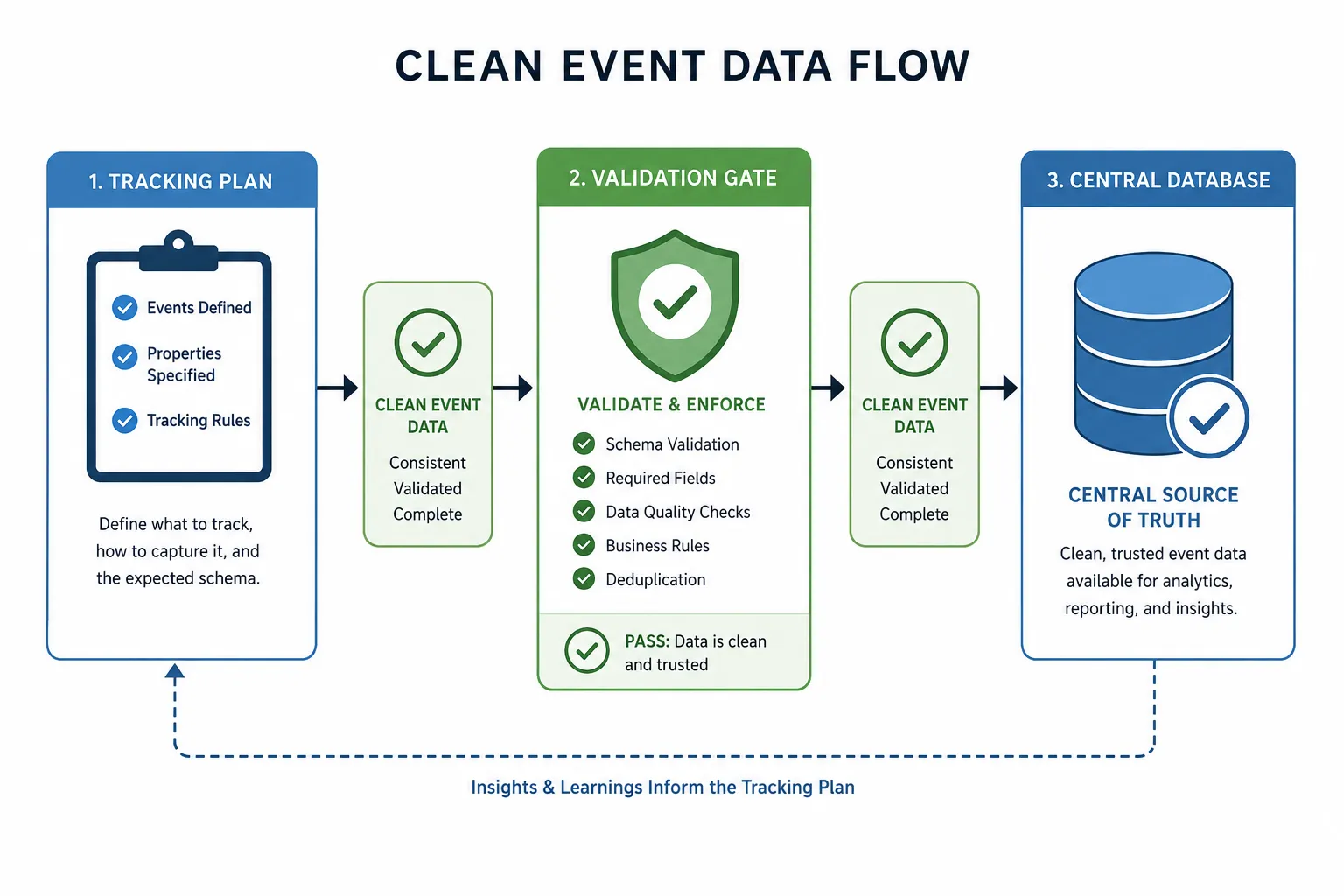
The first step in learning How to Consolidate Event Data Efficiently is building a universal tracking plan. We need a single source of truth for all our events.
I suggest creating a tracking plan in a shared document. This plan lists every event we want to track. We define what the event does and when it fires.
This stops different teams from tracking the same thing in different ways. A clean plan ensures data consistency across your entire organization. It makes event management much simpler for everyone involved.
2. Standardizing Event Naming Conventions Using Object-Action Syntax
We should use a clear naming style for every event. I prefer the “Object-Action” syntax.
For example, use “Order Completed” instead of “purchased_item” or “buy_button_click.” This makes your analytics reports easy to read. Anyone on your team should understand what an event means just by looking at the name.
Consistent naming helps our data aggregation tools group things correctly. It removes the guesswork from your daily reporting tasks.
3. Automating Schema Validation to Filter Malformed Events
We often face issues with broken data formats. I recommend using automation tools to check data as it arrives.
These tools look at the “schema” or structure of the event. If the data looks wrong, the system blocks it. This keeps your database management clean and organized.
We do not want “junk” data taking up space in our cloud storage. Automated checks save us hours of manual cleaning later on.
Building a Scalable Architecture for Modern Data Integration
Understanding How to Consolidate Event Data Efficiently means choosing the right architecture from day one. We need a strong house for our data to live in.
As your traffic grows, your old systems might slow down. I have found that modern architectures handle high volumes much better.
We want a setup that processes millions of events without breaking a sweat. This requires a shift in how we think about moving information.
4. Transitioning to ELT Models for Faster Warehouse Processing
We used to use ETL, which stands for Extract, Transform, and Load. Now, we prefer ELT.
This means we load raw data into our cloud storage first. We do the transformation later inside the warehouse. This method is much faster for modern reporting systems.
It allows us to keep a copy of the original data. We can change our minds about how to process it later without losing anything.
5. Balancing Real-Time Streaming and Batch Processing Latency
We do not always need data in the same second it happens. I suggest using real-time processing only for urgent tasks.
For example, use it for fraud detection or live alerts. For standard analytics, batch processing is often cheaper and more stable.
We can run batches every hour or every day. This balance keeps our database management costs under control. It ensures we have the right data at the right time.
6. Decoupling Storage and Compute to Optimize Resource Usage
We should choose tools that separate storage from computing power. This is a big benefit of modern cloud storage providers.
We can store petabytes of data cheaply. We only pay for high-speed processing when we run big queries.
This flexibility is vital for data integration at scale. It prevents us from paying for expensive servers that sit idle. We save money while maintaining high performance.
Mastering Identity Resolution and Schema Normalization
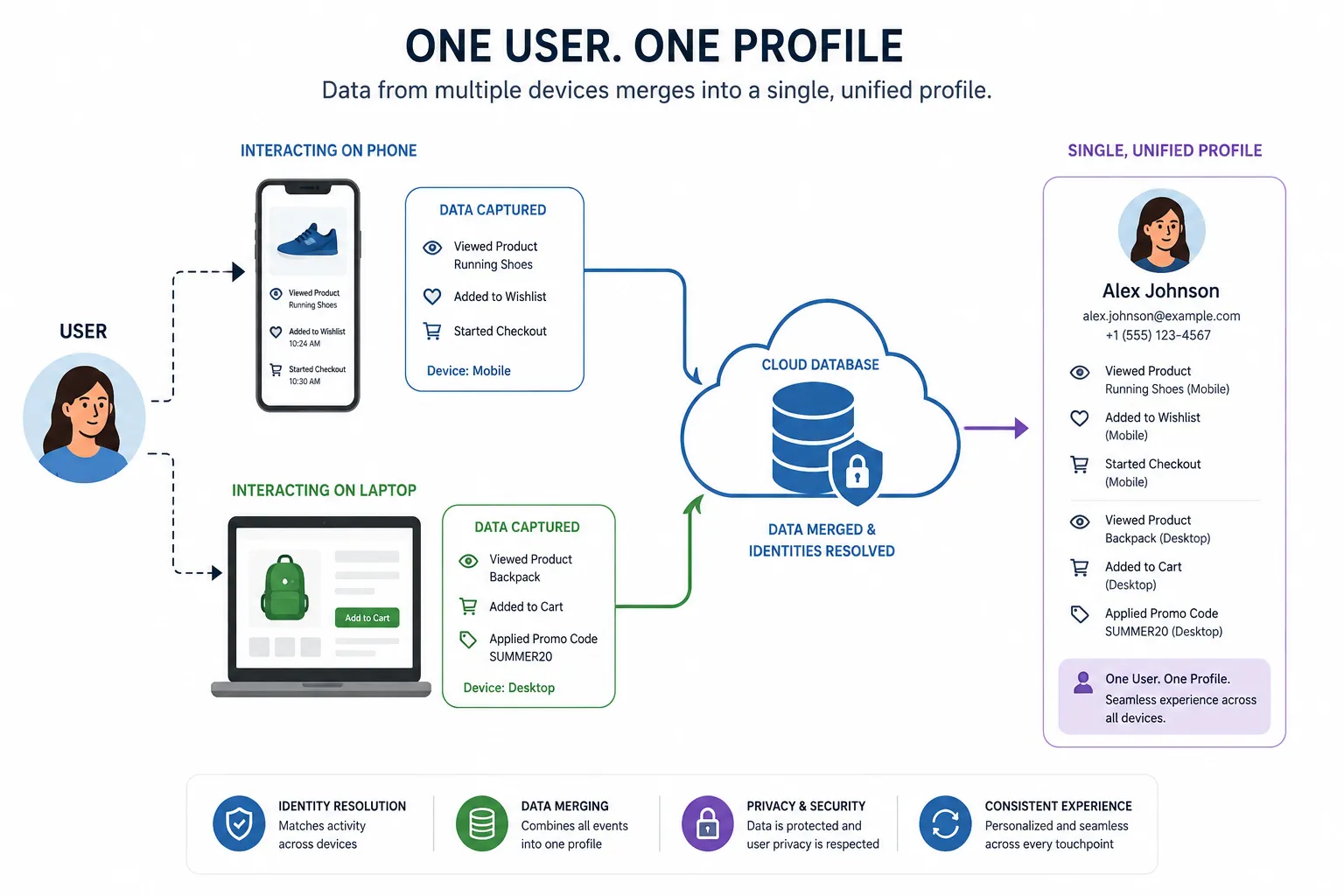
How to Consolidate Event Data Efficiently starts with resolving user identity across every platform. We often see one user look like three different people.
They might use a phone, a laptop, and a tablet. I believe identity resolution is the “secret sauce” of event data. We need to link these actions to a single profile.
This gives us a true view of how people use our products.
7. Utilizing Deterministic and Probabilistic User Stitching
We use deterministic stitching when we have a solid ID, like an email. This is the most accurate way to link users.
We use probabilistic stitching when we have to guess based on IP addresses or device types. I recommend starting with deterministic methods first.
This ensures high data consistency in our reporting systems. It helps us understand the true path a customer takes before buying.
8. Automating Cross-Platform Schema Mapping for Unified Reporting
Our mobile apps and websites often send data in different shapes. We need to map these different fields to a single standard.
I use automation tools to translate “user_id” from iOS and “uid” from the web into one field. This makes data aggregation much smoother.
We can then look at our total user base in one dashboard. It simplifies our analytics and saves us from building complex custom queries.
9. Managing High-Cardinality Properties to Maintain Query Speed
We sometimes track properties with too many unique values, like exact timestamps. This is called high cardinality. It can slow down our database management systems.
I suggest grouping these values into broader categories when possible. For instance, turn a specific second into an “hour of the day.”
This keeps our analytics fast and responsive. We want our team to get answers in seconds, not minutes.
Reducing Warehouse Overhead Through Performance Optimization
Knowing How to Consolidate Event Data Efficiently helps you reduce warehouse costs without losing insights. We must watch our spending as we collect more data.
Storing every single click can get expensive very fast. I focus on efficiency to keep our ROI high. We should only keep and process the data that actually helps us make decisions.
10. Applying Data Tiering to Archive Low-Frequency Historical Logs
We rarely look at detailed event logs from three years ago. I recommend moving old data to “cold” cloud storage.
This storage is much cheaper than active databases. We can still access it if we really need to, but it does not slow down our daily work.
This is a smart move for long-term database management. It keeps our main reporting systems lean and quick.
11. Pruning Low-Value Events to Reduce Storage Overhead
When you understand How to Consolidate Event Data Efficiently, pruning low-value events becomes second nature. We often track events that nobody ever looks at.
I suggest auditing your event management plan every six months. If an event has not been used in a report for a year, stop collecting it.
This reduces the noise in our analytics. It also lowers our data integration costs. We should focus on quality over quantity every time.
12. Using Materialized Views for Rapid Aggregation of High-Volume Data
The goal of How to Consolidate Event Data Efficiently is to give every team a single source of truth. We can use materialized views to speed up our most common reports. These views pre-calculate the results of complex data aggregation tasks.
Instead of counting millions of rows every morning, the warehouse does it once. I find this helps our reporting systems feel much faster.
It gives our stakeholders the data they need without long wait times. This is a great way to optimize our resources.
Choosing the Right Tools to Automate Event Consolidation
The right tools make it far easier to learn How to Consolidate Event Data Efficiently at scale. We do not have to build everything from scratch.
There are many great automation tools available today. Choosing the right stack makes our lives much easier. I always look for tools that play well together.
13. Auditing Managed CDPs Versus Custom Open-Source Pipelines
We can use a Customer Data Platform (CDP) to handle data integration for us. These platforms are easy to set up but can be expensive.
I recommend them for smaller teams that need to move fast. For larger teams, a custom pipeline might be cheaper in the long run.
We must weigh the cost of the tool against the cost of engineering time. Both options can help us How to Consolidate Event Data Efficiently.
14. Leveraging dbt to Automate Complex SQL Transformations
We love using dbt for our transformation layer. It allows us to write SQL and treat it like code.
We can test our data consistency before it reaches the dashboard. This tool is a game-changer for database management.
It makes our reporting systems much more reliable. I recommend DBT for anyone who wants to professionalize their data stack.
15. Centralizing Data Catalogs for Better Team Collaboration
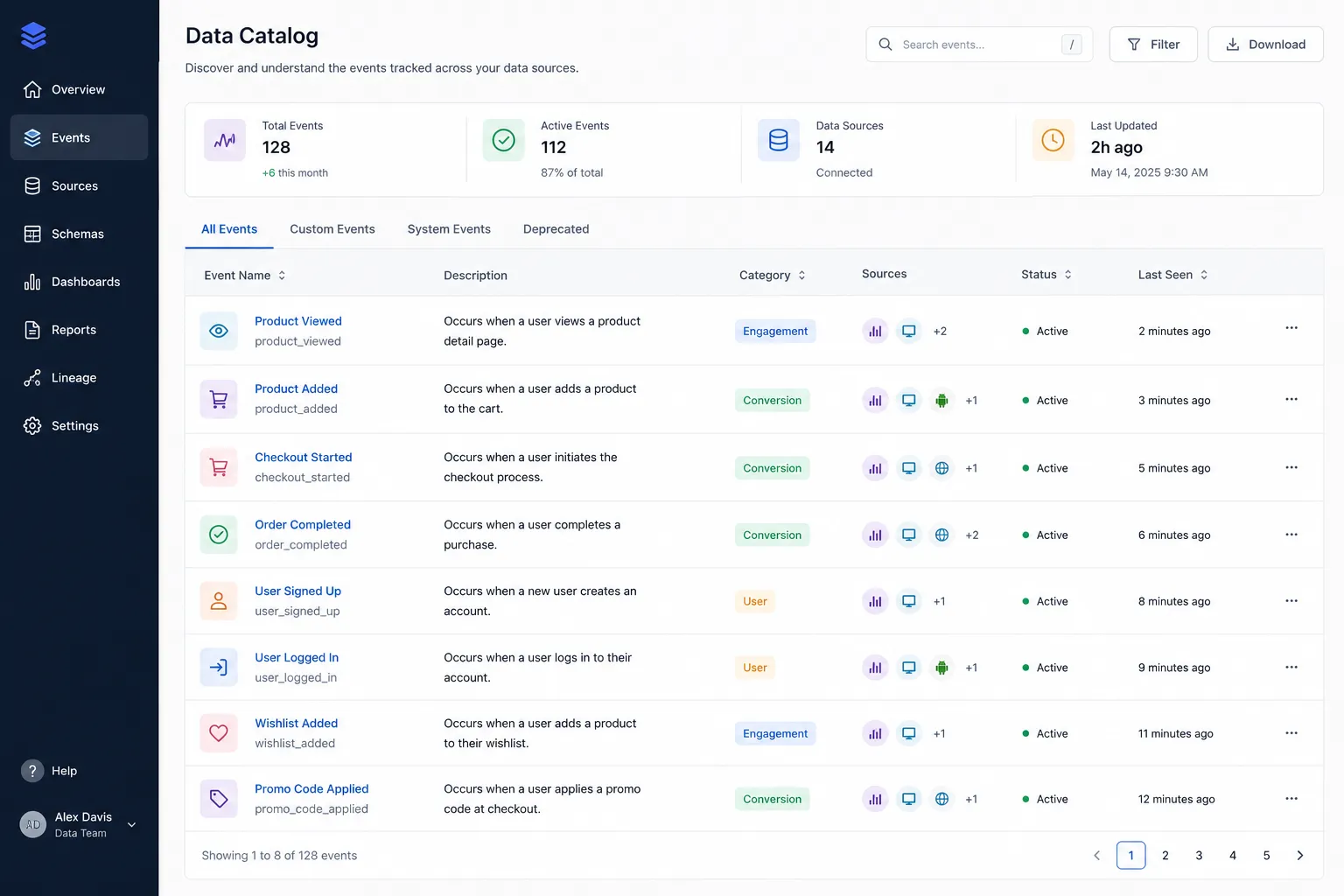
Data catalogs are a key part of knowing How to Consolidate Event Data Efficiently across large teams. We need a place where people can find out what data we have.
A data catalog acts like a library for your analytics. It describes what each table and column means.
I have found that this reduces the number of questions we get. It empowers everyone to use the data aggregation tools correctly. Good documentation is the key to a data-driven culture.
Navigating the Technical Risks and Frequently Asked Questions
Businesses that master How to Consolidate Event Data Efficiently see a measurable jump in analytics ROI. We must also think about the risks. Centralizing all your data creates a “single point of failure.”
If your warehouse goes down, your reporting systems go dark. I always suggest having a backup plan.
We also need to be very careful with privacy. In the US and abroad, laws like GDPR and CCPA are very strict. We must ensure our cloud storage is secure and compliant.
Frequently Asked Questions
Is it possible to consolidate event data without manual coding?
Yes, many no-code automation tools can help. Tools like Fivetran or Segment can move data without you having to write a single line of code. However, you might still need a little SQL for custom analytics later on.
What is the primary difference between event merging and data consolidation?
Event merging usually refers to joining two specific events into one. Data consolidation is much broader.
It involves bringing all data from many sources into one database management system. Consolidation is the whole process, while merging is just one small part.
Which event categories should be consolidated first for immediate ROI?
I recommend starting with “Bottom of the Funnel” events. Focus on purchases, sign-ups, and subscription changes.
These events have a direct link to money. Once those are clear in your reporting systems, you can move to top-of-funnel clicks.
Conclusion
How to Consolidate Event Data Efficiently is a continuous process, not a one-time setup task. We have covered a lot of ground today, and the work does not stop here.
We start with a plan, build a strong architecture, and use the right tools. I believe that data consistency is the foundation of any successful business today.
By keeping your cloud storage clean and your names clear, you will see a big jump in your ROI. Now you have a roadmap for How to Consolidate Event Data Efficiently to grow your business.


12 Powerful Ways to Quantify Total Booth Performance After Every Event
6 Critical Strategies for Mastering IoT Foot Traffic Sensors: The Ultimate 2026 Accuracy Guide
9 Proven Metrics to Master Your Beauty Booth ROI Calculation and Dominate Trade Shows
10 Professional Secrets to Own a Strong Lead Database After Events Without Failure
6 Breakthrough Strategies to Master Store Layout Heatmap Analysis and Skyrocket Sales
7 Best Offline Foot Traffic Sensor Technologies to Maximize Retail Performance