

In today’s fast-paced market, capturing audience attention is crucial. We find that traditional methods often fall short.
A powerful solution emerges through virtual reality. A well-executed VR demo offers an unparalleled way to present products.
It allows customers to engage with offerings in a deeply immersive and interactive manner. This transforms how businesses connect with their target audience. We explore how virtual reality experience can redefine your product showcases and drive meaningful engagement.
1. The Strategic Value of VR Demos in the Modern Sales Funnel
We see virtual reality as more than just a novelty. It is a key strategy for driving business growth.
Integrating VR into your sales process offers distinct advantages. It helps overcome common hurdles in product presentation.
1.1 Overcoming Physical and Geographical Barriers to Product Access
Physical products often present logistical challenges. Shipping large items or showcasing them globally can be costly.
A virtual reality experience removes these barriers. We can instantly transport prospects into a 3D environment.
They can explore products of any size, from any location. This expands market reach significantly.
1.2 Accelerating Decision-Making through Scale and Interactive Realism
Customers make faster decisions when they truly understand a product. VR demos provide a level of realism impossible with images or video.
Users can interact with digital twins of your products. They manipulate features and explore functions themselves.
This hands-on sensory engagement builds confidence quickly.
1.3 Enhancing Information Retention through Experiential Brand Memory
People recall experiences more easily than factual information. An immersive technology demo creates a powerful memory.
Users take an active role instead of being passive observers. This interaction forms a strong experiential brand memory.
It makes your product and brand highly memorable. A compelling VR demo leaves a lasting impression that traditional methods simply cannot match.
2. Core Formats and Technical Foundations for High-Impact Demos
Building a successful VR demo requires careful technical planning. The right VR demo format can make or break the entire product showcase experience. We must choose the right format and optimize performance.
This ensures a smooth and impactful user experience.
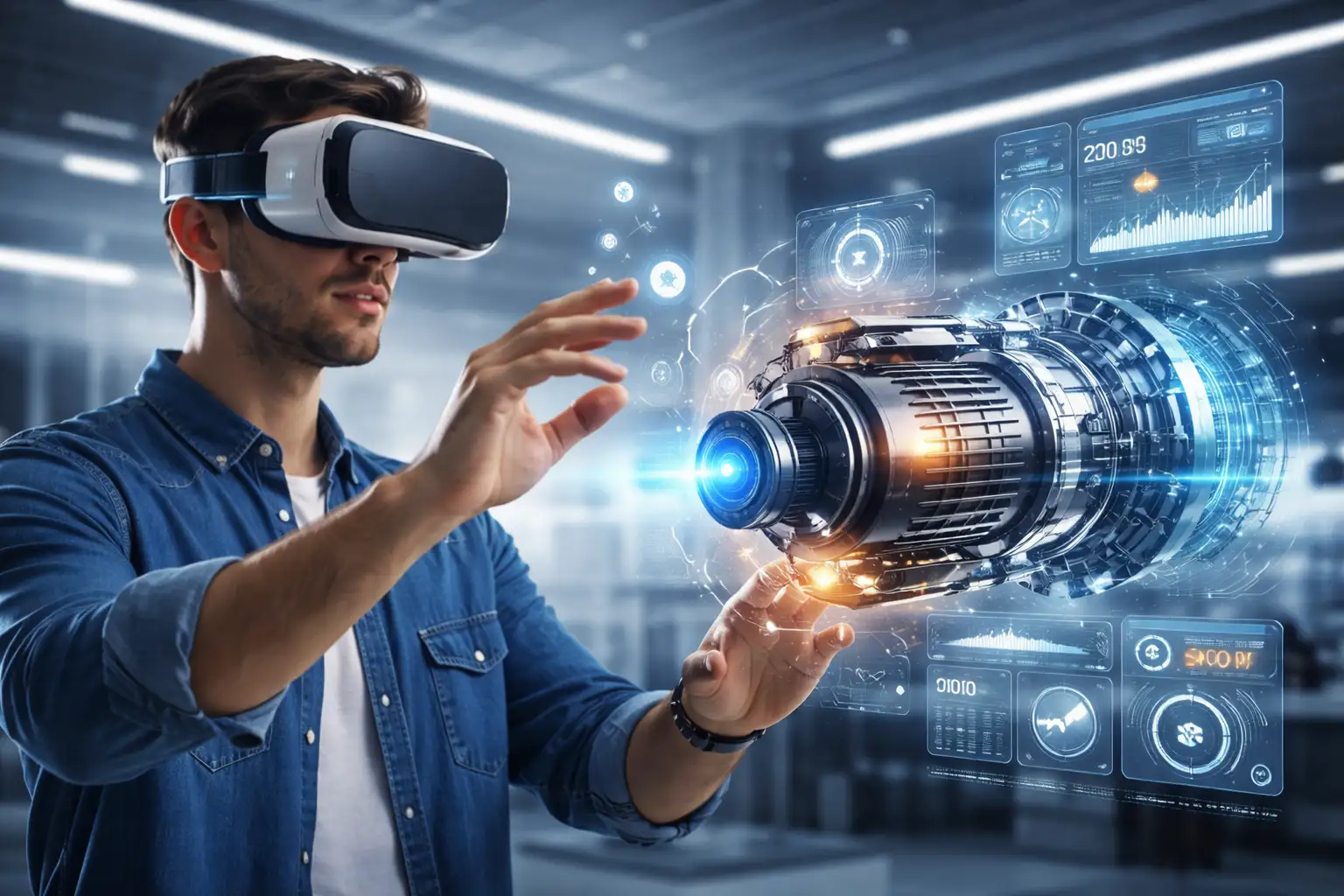
2.1 Choosing Between Digital Twins, Mixed Reality, and WebXR
Different VR formats serve different needs. Digital twins offer precise virtual replicas of physical products.
Mixed reality blends virtual content with the real world. WebXR provides browser-based experiences, lowering access barriers.
We help you select the best approach for your specific product and audience.
2.2 Optimizing Frame Rates and Latency for Maximum User Comfort
User comfort is paramount in any VR headset experience. Low frame rates or high latency can cause simulator sickness.
We ensure high frame rates, typically 90 frames per second or more. This delivers a fluid and comfortable interactive simulation.
A smooth experience encourages users to stay engaged longer.
2.3 Designing Intuitive Interactions for First-Time VR Users
Many users will be new to virtual reality experience. Interactions must be simple and intuitive.
We design controls that are easy to learn and master. Clear visual cues and natural gestures guide users.
This ensures a positive first impression for everyone.
Standardizing High-Fidelity Textures and Physically Based Rendering
Visual quality makes a huge difference in realism. We use high-fidelity textures and physically based rendering (PBR).
PBR accurately simulates how light interacts with materials. This creates a highly realistic 3D environment.
It makes virtual products look and feel authentic.
3. Executing a Professional VR Experience at Live Events and Trade Shows
Deploying a VR demo at events requires careful logistical planning. We focus on maximizing engagement and efficiency.
This ensures every attendee has a positive interaction.
3.1 Mirroring and Casting the Virtual View for Spectator Engagement
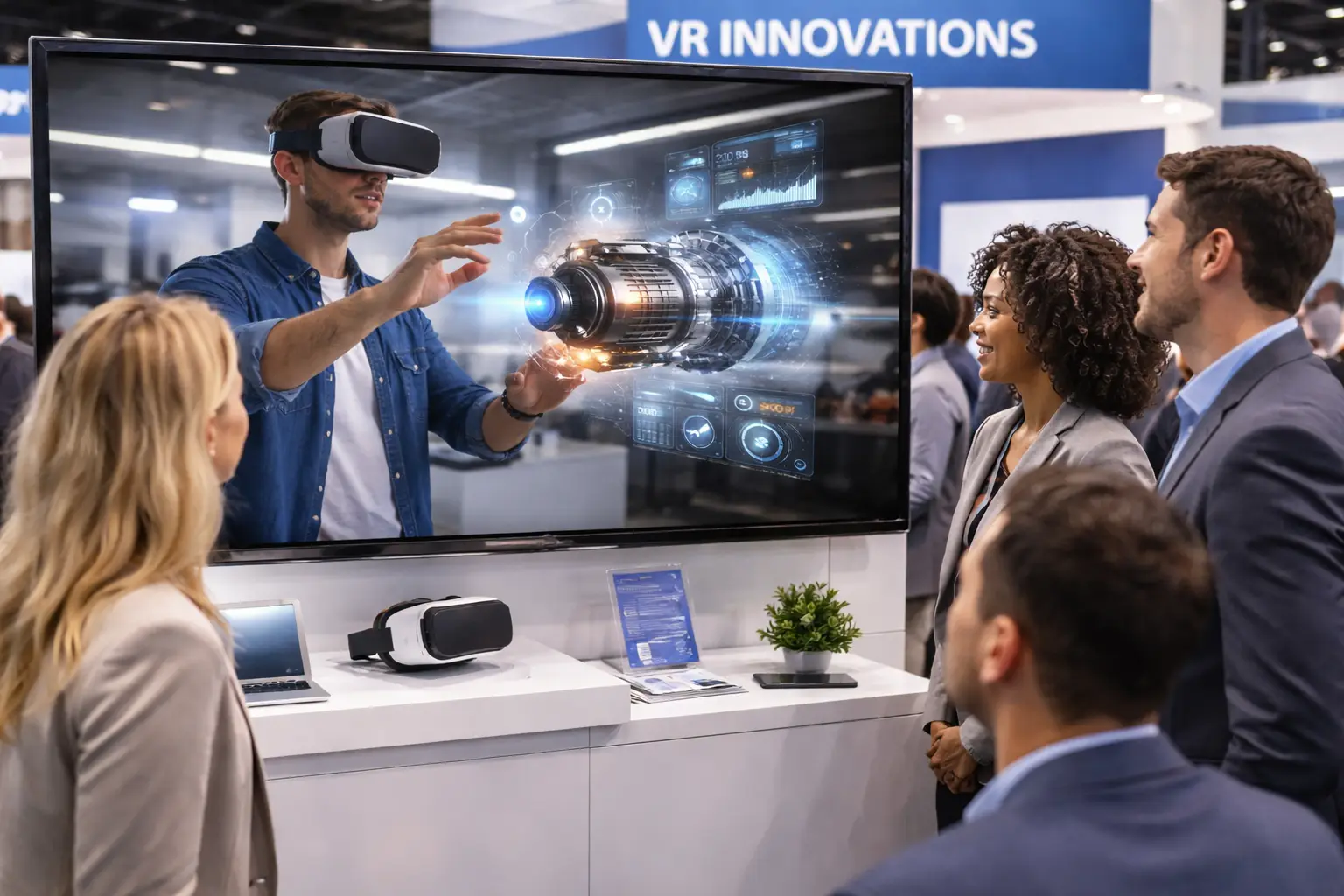
A single user in a VR headset can feel isolated. We use mirroring or casting to share the virtual view.
This displays the user’s experience on an external screen. Spectators can follow along, building excitement.
It turns an individual experience into a shared one.
3.2 Managing Hardware Logistics, Hygiene, and User Turnover
Event logistics are critical for a seamless operation. We plan for efficient user turnover, cleaning, and sanitization.
Proper hygiene protocols are essential between users. Having charged VR headsets ready prevents downtime.
This ensures many people can experience the demo.
3.3 Integrating VR Interaction Data with Sales CRM and Lead Capture
VR demos generate valuable data. We integrate interaction data with your CRM.
This includes user behavior, features explored, and time spent. Such insights inform follow-up strategies.
It helps us capture leads effectively and personalize future outreach.
Best Practices for Network Reliability and Standalone Hardware Management
Reliable performance depends on robust infrastructure. We recommend stable Wi-Fi or wired connections for tethered setups.
For standalone hardware, efficient content delivery is key. Pre-loading content and managing battery life are vital.
These steps minimize technical issues during live events.
4. A Structured Roadmap to Developing a Successful VR Product Showcase
Developing a strong VR product showcase involves a well-defined development journey. We guide you through each stage.
This ensures a high-quality and effective final product.
4.1 Identifying the Core “Aha!” Moment for Virtual Interaction
Each product stands out with a unique selling feature. We pinpoint the “aha!” moment that defines your product.
This is the key interaction or feature to highlight in VR. Focusing on this moment maximizes impact.
It makes the demo memorable and persuasive. This is what separates a great VR demo from an average one.
4.2 Selecting Hardware Targets: Standalone Portability vs. Tethered Power
Hardware choice impacts portability and graphical fidelity. Standalone VR headsets offer excellent portability and ease of use.
Tethered systems provide superior graphics and processing power. We help determine the best VR headset for your specific demo needs.
4.3 From CAD to Immersive Asset: The Content Optimization Pipeline
Converting existing CAD models into VR assets requires optimization. We streamline this content optimization pipeline.
This involves reducing polygon counts and creating optimized textures. The goal is a visually rich yet performant 3D environment.
It runs smoothly on the chosen hardware.
Prototyping Interaction Mechanics for Error-Free User Journeys
Interaction design is iterative. We prototype and test interaction mechanics thoroughly.
Early testing identifies and fixes potential issues. This prevents user frustration.
It ensures a smooth and error-free user journey. This step is vital for a positive virtual reality experience.
5. Mitigating Risks and Closing the Loop on Immersive ROI
Investing in immersive technology should yield clear returns. Every VR demo investment should be evaluated against measurable business outcomes. We focus on minimizing risks and maximizing your return on investment.
This includes addressing user comfort and measuring success.
5.1 Strategies for Eliminating Simulator Sickness and Navigation Friction
Simulator sickness can hinder adoption. We employ best practices to prevent it.
This includes smooth locomotion, comfortable turning options, and stable camera views. Intuitive navigation reduces friction.
We design experiences that are comfortable for all users.
5.2 Measuring Success: Cost Savings vs. Increased Conversion Rates
We track key performance indicators (KPIs) to measure success. These include cost savings from reduced travel or physical samples.
We also monitor increased conversion rates or faster sales cycles. These metrics demonstrate the tangible ROI of your immersive technology investment.
5.3 Transitioning from Physical Samples to Scalable Virtual Showrooms
Virtual showrooms offer a scalable alternative to physical samples. We help businesses transition to this model.
Digital twins allow for endless variations and immediate access. This reduces production costs and environmental impact.
It creates a highly flexible sales tool.
See more technologies in the beauty industry at QR Booking System for On-site Beauty Service Reservation
6. Supplemental Expert Insights and Tactical FAQs
We often encounter common questions about VR demos. Understanding these helps businesses plan their VR demo strategy more effectively. Here are some expert insights to help you navigate this exciting technology.
6.1 Is a VR demo significantly better for conversion than 3D video?
Yes, often significantly. A VR demo offers active participation and sensory engagement. Users interact with the product.
A 3D video, while visually rich, is a passive viewing experience. The “doing” in VR typically leads to higher understanding and better conversion rates.
6.2 What defines “spatial presence” in a product demo?
Spatial presence is the feeling of “being there” in the virtual 3D environment. It is achieved through realistic visuals, spatial audio, and motion tracking.
When users feel physically present, they experience the product more genuinely. This enhances engagement and belief in the product.
6.3 What are the primary hardware categories for B2B demos?
The primary categories are standalone VR headsets and PC-tethered systems. Standalone headsets (like Meta Quest Pro) offer portability and ease of setup.
PC-tethered systems (like HTC Vive Pro 2 or Valve Index) provide higher graphical fidelity and processing power. The choice depends on specific needs.
6.4 How does WebXR compare to native VR applications?
WebXR delivers VR experiences through web browsers. It offers easy access with no app downloads required.
Native VR applications are installed directly on a device. They typically offer higher performance, deeper integration, and more complex features.
WebXR is great for broad accessibility; native apps for cutting-edge experiences.
In conclusion, a thoughtfully designed VR demo can revolutionize your product showcases. We have seen how it breaks down barriers, accelerates decisions, and creates lasting brand memories. The business case for a well-executed VR demo has never been stronger.
By understanding the core technologies, planning meticulous execution, and focusing on user comfort, businesses can unlock significant value. The immersive technology landscape offers powerful tools for engagement and growth.
We are confident that embracing virtual reality will provide a competitive edge. It allows your audience to experience your products in truly memorable ways.


Innovative Exhibition Engagement Solutions for High-Impact Trade Shows
Using Booth Chatbots to Assist Visitors at Events
7 High-Performance Contactless Payment Solutions for Booths to Maximize Your Revenue
How to Optimize Lead Capture Automation Workflows and Scale Pipeline: 15 Strategic Ways for Better Management
Dominate Your Next Trade Show With 14 Innovative AI Tools for Booth Performance
AI Cameras to Analyze Visitor Behavior: The Comprehensive Guide to Business Intelligence