

Retail is undergoing faster change than ever before. We see stores popping up in remote areas and digital hubs. This growth brings new risks to our sensitive information.
Managing remote store data security management effectively is the only way to stay safe today. I have seen many businesses struggle with these challenges. Retail is undergoing faster change than ever before.
This guide will show you how to build a strong shield for your brand. We will look at 15 strategies to keep your data safe in 2026.
1. Establishing a Centralized Architecture for Remote Data Protection
I believe every strong security plan starts with a clear view. We cannot protect what we cannot see. Many stores operate as separate islands.
This makes it hard to manage data protection across the whole brand. We need to bring all these parts together into one system. This helps us spot threats before they cause damage.
Remote store data security management starts with defining the scope of every network node. You must know every device connected to your system. This includes registers, handheld scanners, and back-office PCs.
When we map these nodes, we create a map for safety. This map shows us where the data flows every day.
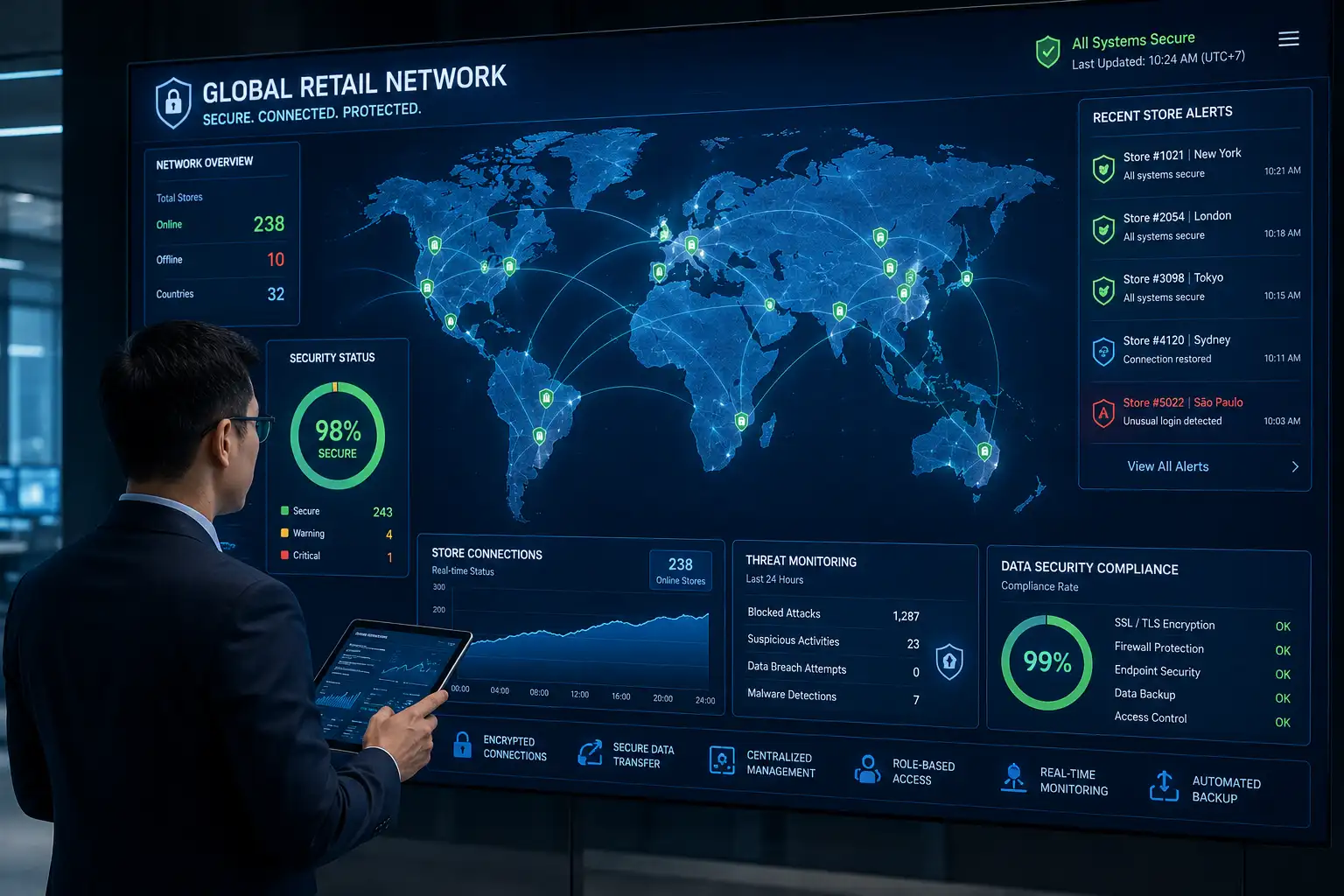
Tactical Tip 1: Comprehensive Data Lifecycle Mapping
We need to know how data moves from start to finish. I suggest tracking data from the moment a customer pays. Follow that data as it moves to the cloud.
This mapping helps us find weak spots in our data integrity chain. We can then fix those spots quickly.
Tactical Tip 2: Centralized Visibility via Unified Dashboards
Remote store data security management requires centralized visibility via unified dashboards. They give us a single view of all remote stores.
You can see security alerts in real-time. This helps your team respond to issues faster. A central view reduces the chance of a small error becoming a big breach.
Tactical Tip 3: Transitioning to Identity-Based Security Models
Old security focused on the office walls. Today, we focus on the person. Remote store data security management uses identity-based models to keep cloud security flexible and strong.
We use user authorization to verify every person. This means we check who is logging in, not just where they are.
2. Hardening Network Pathways and Encrypted Data Transit
The digital bridge between your branches and headquarters is a target. Hackers want to steal data while it moves.
We must use a secure data transfer method for every transaction. I recommend using strong encryption for all data in transit. This turns your information into a code that thieves cannot read.
Securing these pathways requires modern tools. Traditional setups are often too slow for 2026. We need systems that can scale with our business.
We also need to make sure our remote access security is always active. Always protect connections and never leave them open.
Tactical Tip 4: Upgrading from Traditional VPNs to SASE
Secure Access Service Edge, or SASE, is a game changer. I find it much better than old VPNs. It combines network functions with security in the cloud.
This makes your remote store connections faster and much safer. It simplifies how we manage Remote store data security management across many sites.
Tactical Tip 5: Implementing Secure SD-WAN for Real-Time Encryption
Remote store data security management requires SD-WAN for real-time encryption of every data packet. We can prioritize important tasks, like credit card processing.
This keeps our business running smoothly without risking our data protection goals.
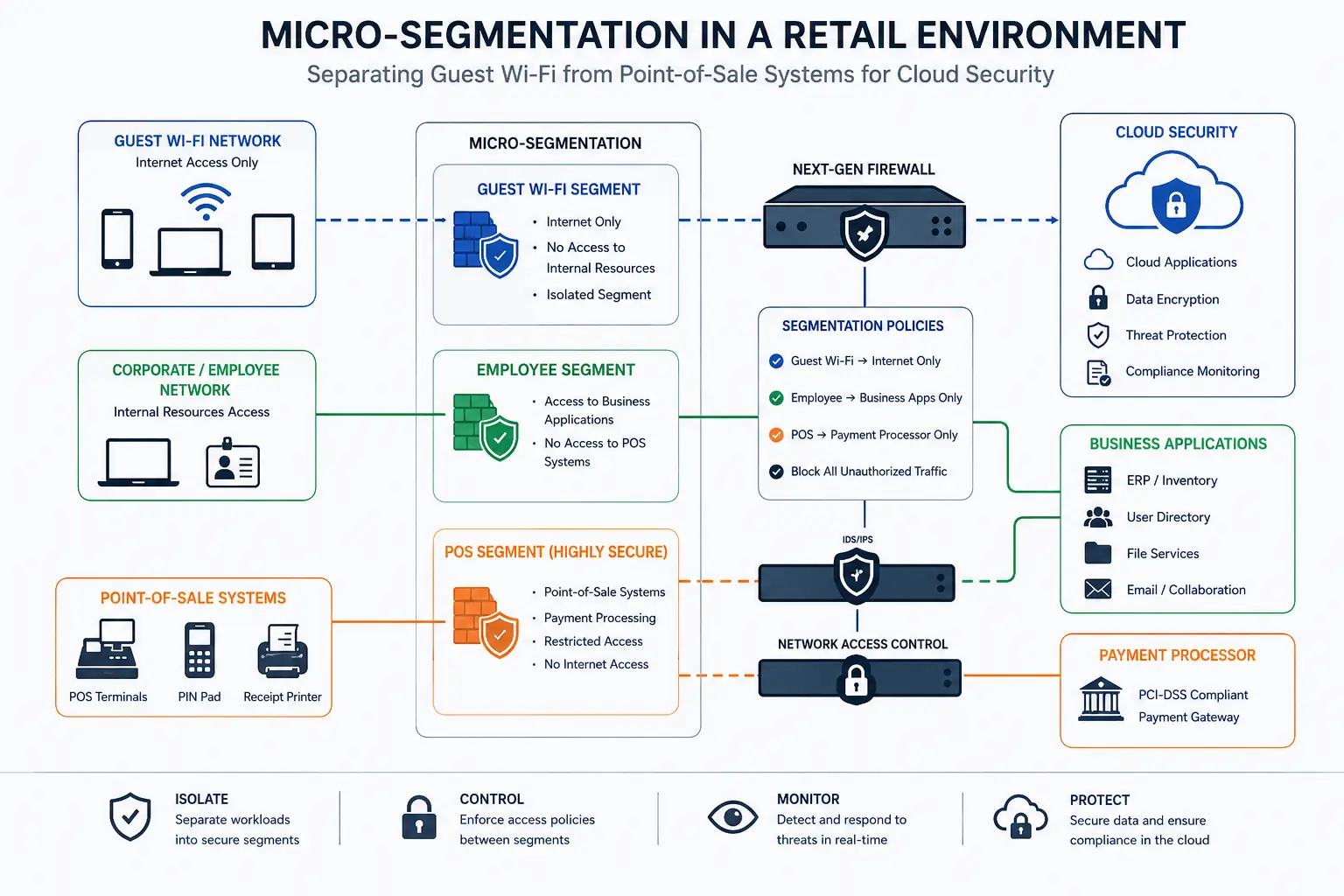
Tactical Tip 6: Executing Network Micro-Segmentation
Remote store data security management uses micro-segmentation to contain threats within one zone. If a hacker gets into one part, they cannot reach the others.
It stops a small problem from spreading. This is a key part of modern access control strategies.
3. Protecting Local Store Hardware and Peripheral Endpoints
Remote store data security management includes protecting local hardware from physical tampering. I have seen people try to tamper with store hardware.
We must protect our registers and servers from physical touch. This includes locking down USB ports and securing server rooms. Even the best security policies fail if someone can steal a hard drive.
Mitigating physical risks requires a hands-on approach. We need to train our store staff to watch for strange devices. We also need to use vulnerability management to find hardware weaknesses. Keeping our store hardware safe is a daily job for everyone.
Tactical Tip 7: Mandatory Point-to-Point Encryption (P2PE)
Remote store data security management requires P2PE for all payment terminals to protect card data. This protects credit card data from the moment it is swiped.
The store never sees the actual card numbers. This reduces our risk and helps with privacy compliance. It is a must-have for any modern retail store.
Tactical Tip 8: Physical Port Hardening and USB Lockdown
I always tell my clients to block unused USB ports. Hackers can use these ports to install bad software. We can use physical locks or software blocks.
This simple step stops many common attacks. It is an easy way to boost our remote access security.
Tactical Tip 9: Biometric Controls for Local Server Access
Remote store data security management means using biometrics to control access to server rooms. This includes fingerprints or facial scans to enter server rooms.
This is much safer than just using keys or codes. It ensures that only the right people have user authorization to touch our tech.
Tactical Tip 10: Automated Remote Patching and Configuration
Remote store data security management requires automated patching to fix vulnerabilities quickly. We cannot wait for a manager to run an update.
Automated patching fixes bugs as soon as they are found. This is a vital part of our vulnerability management plan for 2026.
4. Achieving Regulatory Compliance and Data Resilience
Laws about data are getting stricter every year. We must follow these rules to avoid big fines.
This means staying on top of privacy compliance for every location. We also need a plan for when things go wrong. A good disaster recovery plan can save your business from a total loss.
True resilience requires more than backups. It is about how fast we can get back to work. We must test our systems often to ensure they work.
I believe that being prepared is the best way to stay calm during a crisis. Our customers trust us to keep their data safe and available.
Tactical Tip 11: Future-Proofing for PCI-DSS 4.0 Compliance
Remote store data security management demands PCI-DSS 4.0 compliance and immutable cloud backups. We need to update our systems to meet these new rules.
This includes better multi-factor authentication and more frequent scans. I suggest starting these updates now. Do not wait until the deadline to secure your payments.
Tactical Tip 12: Deploying Immutable Cloud Backup Solutions
We need backups that cannot be changed or deleted by hackers. These are called immutable backups. They are a core part of a strong disaster recovery strategy.
If ransomware hits your store, you can restore your data quickly. This protects your data integrity and keeps the lights on.
Tactical Tip 13: Routine Remote Disaster Recovery Stress Testing
I recommend testing your recovery plan every few months. We need to know if we can really recover from a crash.
These tests help us find gaps in our incident response plan. It is better to find a mistake during a test than during a real emergency.
5. Scaling Intelligence Through AI and Staff Awareness
AI is our newest ally in the fight against cybercrime. We can use AI to watch our networks 24/7. It uncovers hidden patterns beyond human observation.
However, we also need to focus on our people. A well-trained staff is our best “human firewall” against social engineering.
Proactive surveillance means looking for trouble before it starts. We use AI for vulnerability management and threat hunting. We also spend time on authentication training for all employees.
When everyone is alert, the whole company is safer. This is how we scale our security efforts.
Tactical Tip 14: Integrating AI-Driven Anomaly Detection
Remote store data security management depends on AI-driven anomaly detection to spot threats fast. If something looks odd, the system alerts us.
This could be a strange login at 3 AM. It could be a large data transfer that should not happen. AI helps us stay one step ahead of the bad guys.
Tactical Tip 15: Scalable Remote Security Awareness Training
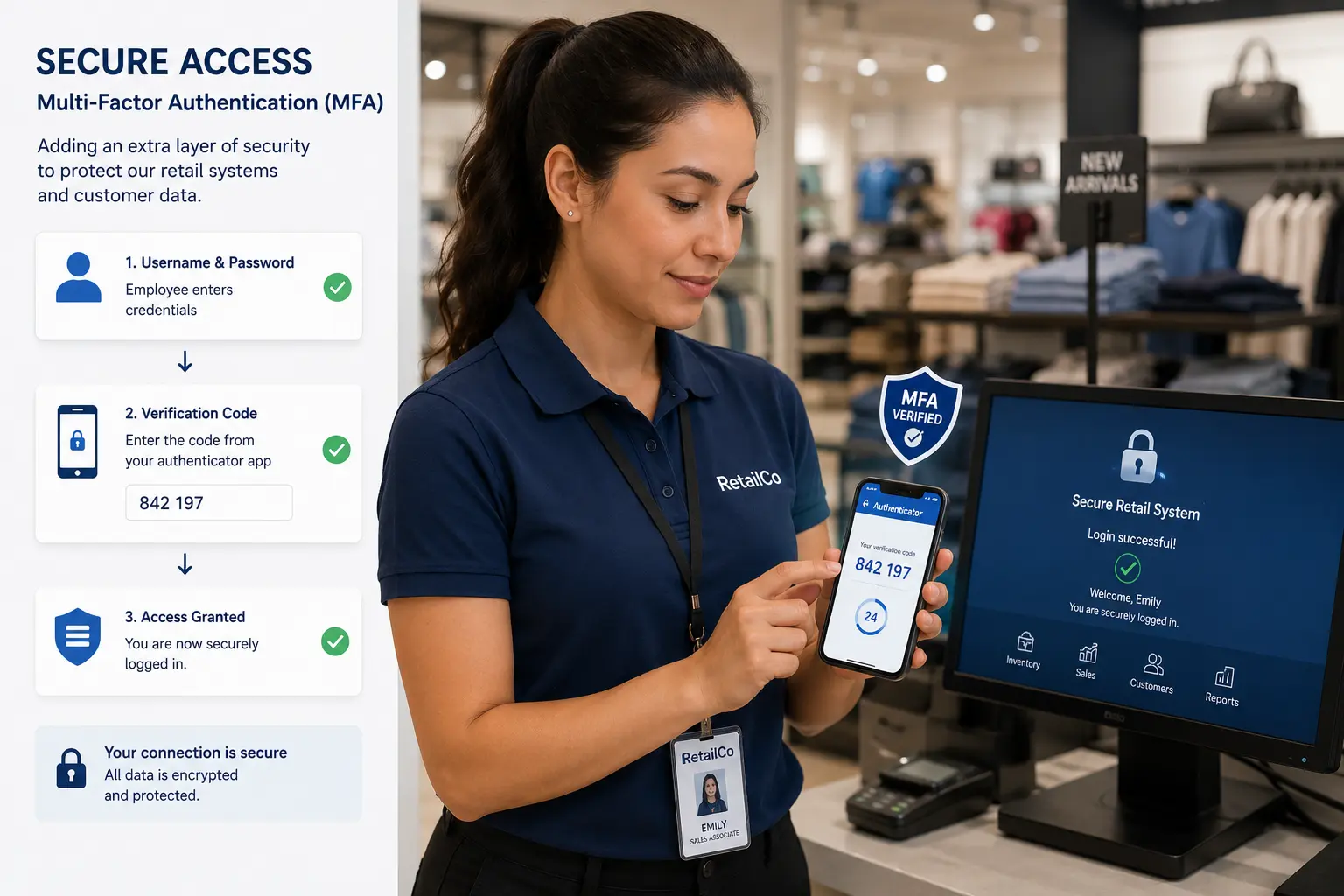
I suggest using short, fun training videos for your staff. We need to teach them about phishing and strong passwords.
They should also know the basics of multi-factor authentication. This training should be easy to access from any store location.
6. Strategic Implementation Analysis and Operational FAQs
Choosing the right model for your business is key. Some companies like to manage everything themselves. Others prefer to use a service provider.
We must look at our goals and our budget. I find that a mix of both often works best for distributed enterprises.
Management Model Comparison
| Feature | In-House Management | Managed Service (MSSP) |
| Control | Full control over all settings. | Shared control with experts. |
| Cost | High initial hardware costs. | Predictable monthly fees. |
| Expertise | Requires hiring specialized staff. | Access to a large team of pros. |
| Scalability | Can be slow to grow. | Very easy to add new stores. |
Addressing Core Inquiries on Remote Store Vulnerabilities
What is the biggest risk for remote stores?
I believe the biggest risk is poor access control. If a hacker gets one set of credentials, they can often move through the whole network.
We stop this by using strong authentication and micro-segmentation.
How does AI help with store security?
AI watches for things that do not belong. It can spot a hack in seconds. This allows us to start our incident response much faster.
It takes the pressure off our human IT teams.
Is cloud security better than local security?
Cloud systems often have better tools than a local store server. They offer easy updates and secure data transfer.
I recommend moving your sensitive data management to the cloud for better protection.
We have covered a lot of ground today. Protecting your stores is a big job, but you can do it.
By using these 15 strategies, you will build a safe future for your brand. Remember to keep your software updated and your staff informed. Good security is a journey, not a destination.
I wish you the best of luck in keeping your data safe. Staying ahead of risks is the best way to grow your business with confidence. The future of retail is bright if we keep it secure.
Effective Remote store data security management is the foundation of your success.


9 Essential Enhancements to Optimize Your Booth Engagement Measurement Tools
7 High-Performance Contactless Payment Solutions for Booths to Maximize Your Revenue
QR Booking System for On-site Beauty Service Reservation
Dominate Your Next Trade Show With 14 Innovative AI Tools for Booth Performance
6 Key Insights into Choosing the Right Automatic Label Printer for Cosmetic Products
Why a Professional Skin Analysis Device is the Must-Have Booth Tool