
Cosmetic Product Development is one of the most exciting — yet complex — processes in the beauty industry. Whether you are an entrepreneur launching your first skincare line or a brand owner expanding your portfolio, understanding this process is essential to bring a safe, effective, and marketable product to life.
In this guide, we break down the 7 key steps in cosmetic product development, from initial concept to final launch — so you know exactly what to expect at every stage.
Step 1: Define Your Product Concept
Every successful cosmetic manufacturing journey begins with a clear product concept. You need to answer three core questions:
-
Who is your target consumer? (age, skin type, lifestyle)
-
What problem does your product solve?
-
What is your Unique Selling Proposition (USP)?
This stage shapes every decision that follows — from formula to packaging to marketing. A product without a clear concept lacks direction.
Pro tip: Write a one-page product brief covering your concept, category (serum, moisturizer, cleanser), and key benefits. Share this with your formulator and marketing team from day one.
Step 2: Conduct Market Research & Competitor Analysis
Market research is the backbone of any effective cosmetic manufacturing strategy. This step helps you validate your concept and identify opportunities in the market.
Research focus:
-
Current beauty trends (clean beauty, K-beauty, science-backed skincare)
-
Gaps in the existing market
-
Competitor pricing, claims, and formulations
-
Regulatory requirements in your target markets (US, EU, ASEAN)
Understanding regulations right from the early stages of cosmetic development will save time and money later on.
Step 3: Formula Development
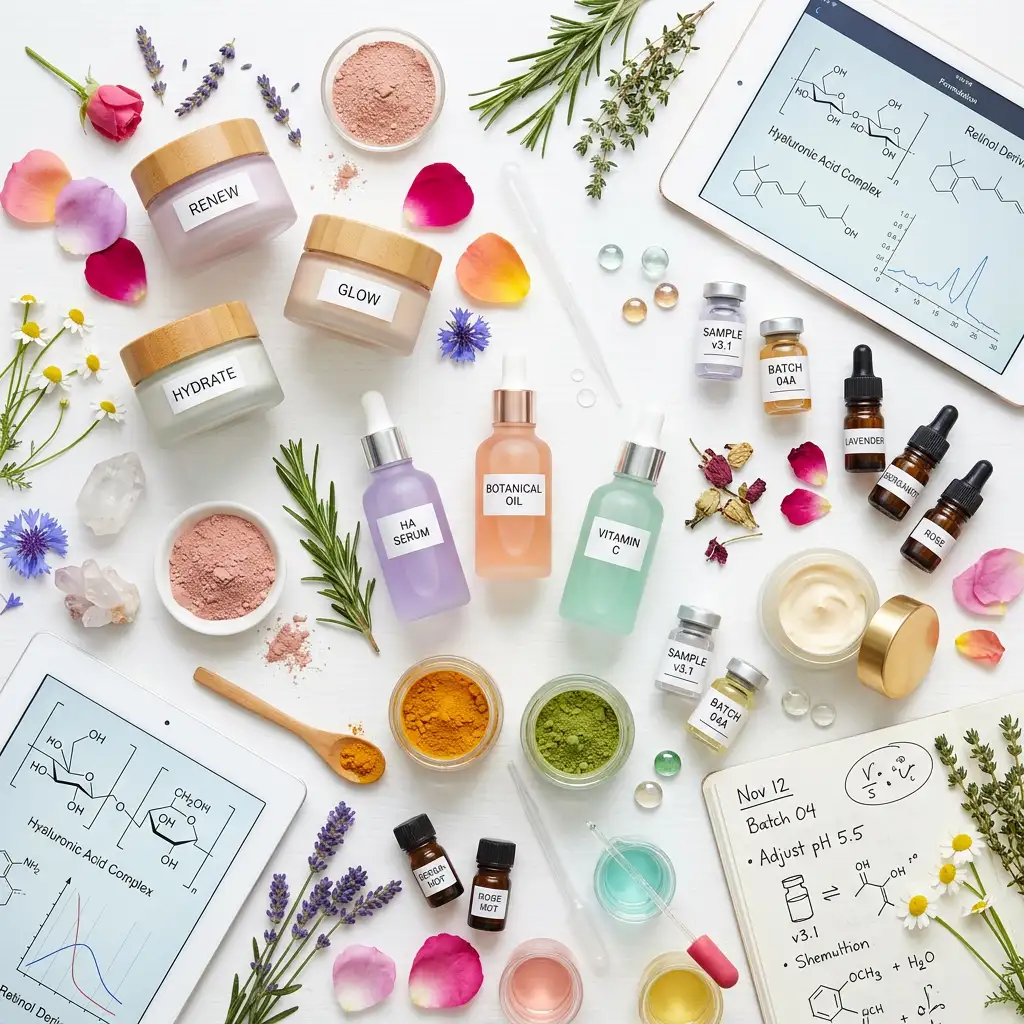
Formula development is the scientific heart of cosmetic manufacturing. This is where your concept becomes a real product.
Key decisions:
-
Choose active ingredients (retinol, vitamin C, hyaluronic acid, peptides)
-
Select a base formula (emulsion, gel, oil, powder)
-
Determine texture, scent, and color preferences
-
Decide on preservative system and pH level
Work with a cosmetic chemist or contract lab. Multiple formula iterations are normal before approval.
Step 4: Stability & Safety Testing
No cosmetic manufacturing process is complete without rigorous testing. This protects your consumers and your brand.
Testing includes:
-
Stability Testing — Product performance under temperature, light, and humidity (12–52 weeks)
-
Challenge Testing — Preservative effectiveness
-
Patch/Skin Sensitivity Testing — Ensures formula is non-irritating
-
Dermatologist Testing — Optional but recommended
Skipping this step can damage brand reputation permanently.
Step 5: Packaging Design & Selection
Packaging is a critical element in cosmetic product development. Poor packaging can degrade your formula, reduce shelf life, or cause leakage.
Consider:
-
Material compatibility: Does packaging react with your formula?
-
Functionality: Pump, dropper, airless jar, tube
-
Sustainability: Eco-friendly or refillable packaging
-
Label compliance: Meets legal requirements for your market
Packaging reflects your brand identity while meeting regulatory and functional standards.
Step 6: Regulatory Approval & Compliance
Compliance with regulations is essential in the development of beauty products. Requirements vary from country to country:
-
USA: FDA regulations (cosmetics don’t require pre-market approval, but ingredients and claims are regulated)
-
EU: EC No 1223/2009 — Cosmetic Product Safety Report (CPSR) required
-
ASEAN: ASEAN Cosmetic Directive (ACD) — notification-based system
-
China: NMPA registration — rules differ for general vs. special-use cosmetics
Work with a regulatory consultant early to avoid costly reformulations or market rejections.
Step 7: Manufacturing & Product Launch
The final step in cosmetic manufacturing is scaling your approved formula into commercial production and launching it
Manufacturing options:
-
OEM (Original Equipment Manufacturer): Produces your product to your formula
-
ODM (Original Design Manufacturer): Provides ready-made formula for branding
Launch checklist:
-
Pilot batch to confirm quality
-
QC testing on pilot batch
-
Finalize mass production and lead times
-
Prepare marketing strategy, sales channels, and launch date
A successful product launch comes from careful planning, testing, and attention to every prior step.
See more: How to Build a Cosmetic Brand With a Low Budget
Final Thoughts
Cosmetic Product Development is a multi-step journey requiring creativity, scientific rigor, regulatory knowledge, and business insight. By following these 7 steps — from concept and research to testing, compliance, and launch — you can reduce risk and increase the chance of success.
Whether working with a contract lab, in-house team, or full-service partner, the key is to plan thoroughly, test rigorously, and never compromise on safety or quality.


How to Name a Cosmetic Brand That Stands Out in 2026
Financial Planning for Salon Growth: 6 Proven Strategies for Big Wins
Is Car Wash Business Worth It in 2026?
Automating Salon Operations: 9 Proven Ways to Boost Efficiency & Profits
Franchising a Beauty Salon: 7 Powerful Tips for Rapid Growth
50+ Best Business Ideas 2026 (Ranked by Startup Cost, Risk & Profit Potential)