

Managing a retail business used to mean being physically present in the store every single day. I remember the stress of driving between different locations just to check stock levels. Today, technology has changed the game for everyone.
Implementing a Remote Store Management System allows you to oversee every detail of your business from anywhere in the world. This tool gives you the freedom to scale your brand while keeping your operations tight and efficient. In this guide, I will share the strategies I used to stay ahead of the competition.
Why Modern Retailers Depend on a Remote Store Management System
The retail landscape moves faster than ever before. If you wait for weekly reports to make decisions, you are already too late. Modern success requires instant action and clear data.
A Remote Store Management System provides the pulse of your business in real-time. Without it, you are essentially flying blind in a market that never sleeps. The question is no longer whether you need one, but how fast you can get it up and running.
Driving Agility through Real-Time Operational Data
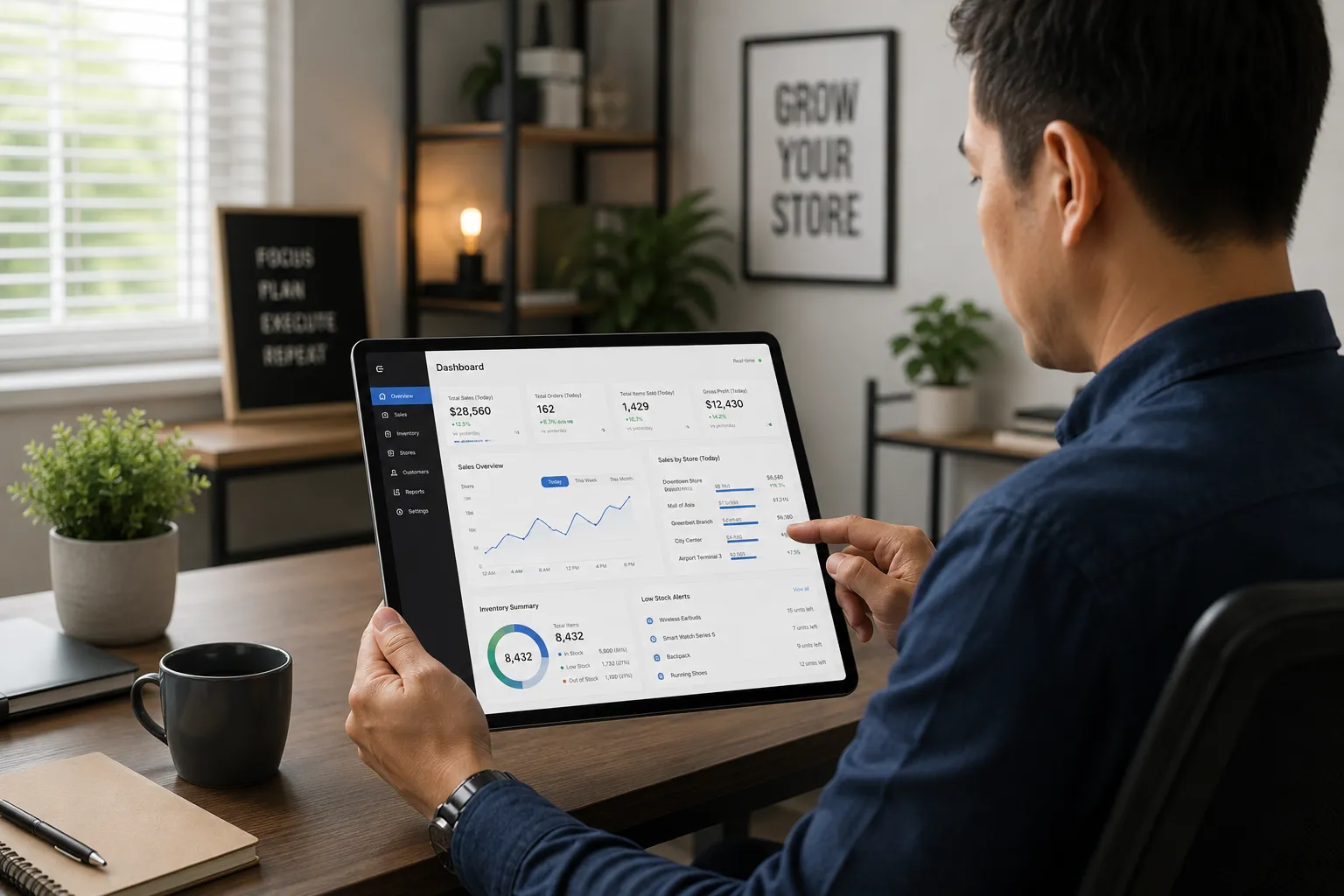
Agility is your biggest weapon in a crowded market. With real-time updates, you see sales as they happen. If a specific item flies off the shelf, you can order more immediately.
You do not have to wait for a manager to call you. This speed prevents lost sales and keeps your customers happy. It also allows you to adjust pricing or promotions on the fly.
Drastically Reducing On-Site Management Overheads
Traditional management is expensive and time-consuming. You often pay for travel, extra office space, and middle managers. A digital system cuts these costs down significantly.
You can monitor performance without leaving your house. This lean approach saves money that you can reinvest into marketing or new products. Lowering overhead costs is the fastest path to higher margins.
Unlocking Multi-Store Scalability without Geographic Limits
I always wanted to grow my brand across state lines. Geographic limits used to stop me. Now, a Remote Store Management System makes multi-location expansion simple.
You can open a store in a different city and manage it through your cloud-based platform. You see the same data for every location in one spot. This consistency ensures your brand quality remains high no matter where you open.
Essential Components of a High-Performance Remote Infrastructure
Management systems vary in their design and capabilities. You need specific tools to ensure your remote operations run smoothly. Without these components, you might miss critical issues happening on the shop floor.
Integrating Cloud-Based POS for Instant Inventory Visibility
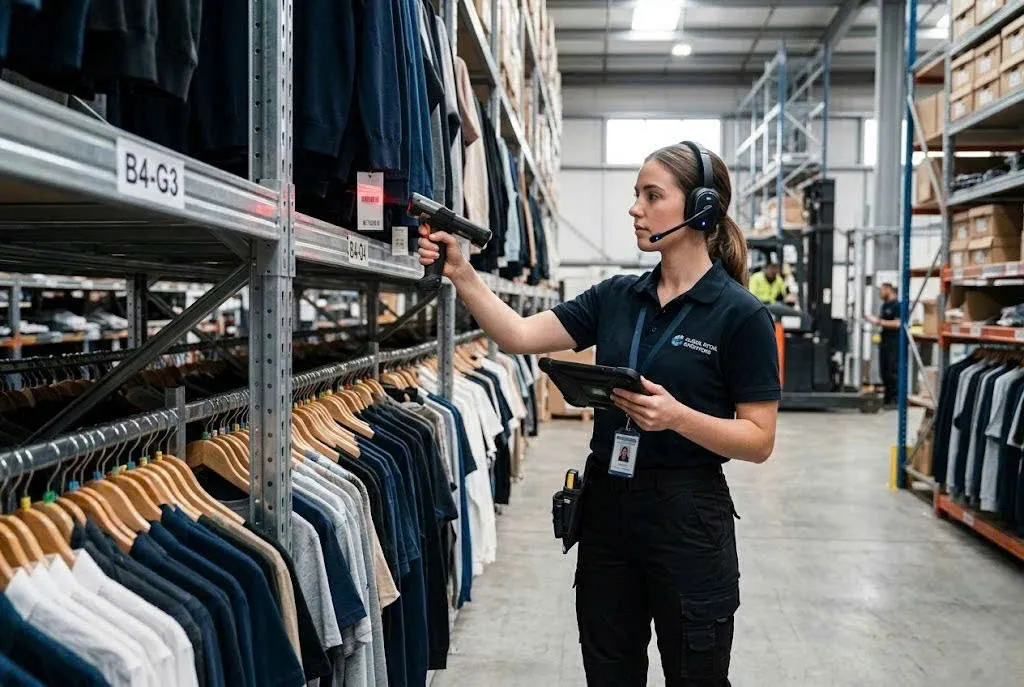
Your Point of Sale (POS) system is the heart of your Remote Store Management System. It must be cloud-based to provide value. When a clerk rings up a sale, your stock levels should update instantly.
This real-time stock synchronization prevents overselling products. It also makes inventory management much easier for your team. You will always know exactly what is in the back room.
Deploying Visual Intelligence through Advanced Remote Surveillance
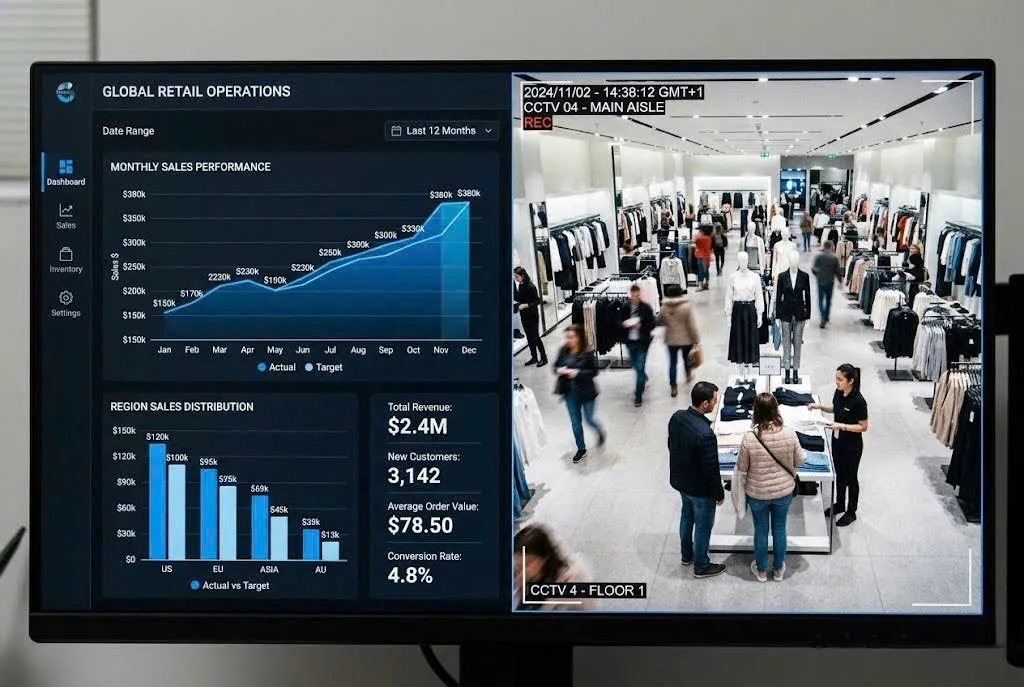
Remote access is not just about numbers and charts. A good Remote Store Management System also lets you see your store environment visually. AI-enhanced video monitoring helps you watch for theft or safety issues.
These cameras act as your eyes when you are miles away. Visual verification tools also help you check if displays are set up correctly. This ensures your store looks perfect for every customer.
Utilizing IoT Sensors for Remote Climate and Security Control
Smart facility management is a huge part of modern retail. Your Remote Store Management System can connect IoT sensors to monitor the temperature of your coolers. If a fridge breaks, you get notifications and alerts on your phone immediately.
This saves thousands of dollars in spoiled goods. You can also control lighting and locks remotely. This level of control keeps your store safe and lowers energy bills.
Centralizing Data into a Mobile-Friendly Executive Dashboard
You need a unified command center for your business. A mobile-friendly dashboard lets you check sales tracking while you drink your morning coffee. This dashboard should include report generation tools.
You can see which employees are performing best. You can also view analytics and insights about customer trends. Having all this info in one place makes you a smarter owner.
Proven Steps to Implement Your Remote Management Workflow
Moving to a remote model requires a plan. You cannot just flip a switch and expect everything to work. Follow this process to achieve a smooth transition.
A well-configured Remote Store Management System is the backbone of this transition. The more carefully you set it up, the more confident your team will be using it day to day.
Conducting a Technical Audit of On-Site Internet Infrastructure
Your internet connection determines how well your system performs. You must have redundant connectivity at every store. If the primary web goes down, you need a backup.
Test your upload and download speeds regularly. A slow connection will cause lag in your real-time updates. This can frustrate both your staff and your customers.
Migrating Legacy Databases to Encrypted Cloud Storage
Data security is your top priority during a transition to a Remote Store Management System. Move your old customer and sales files to a secure cloud-based platform. Ensure sensitive information is secured with encryption.
A secure data transition prevents leaks that could ruin your reputation. Make sure your new system uses strong user authentication to keep hackers out.
Establishing Digital Standard Operating Procedures for Your Staff
Your team needs to know how to work without you standing over them. Create digital SOPs that they can access on tablets. Use cloud-based task management to assign daily chores.
This promotes accountability across the team. It also ensures that every store follows the same rules and quality standards.
Setting Remote Performance Metrics for Continuous Accountability
How do you know if your staff is doing well? Automation is required for KPI reporting. Set clear goals for sales, stock control, and customer service.
Use your Remote Store Management System to track these numbers daily. This allows for fair employee management. You can reward high performers and help those who are struggling. Data brings clarity to leadership decision-making.
Top Retail Management Solutions to Power Your Distance Operations 2026
The choice of software is a significant decision. The market in 2026 offers many specialized tools. You must find the one that fits your specific business size and niche.
| Business Type | Key Solution Feature | Primary Benefit |
| Large Multi-Location Chains | Enterprise Resource Planning (ERP) | Robust Resource Planning |
| Boutiques & Small Shops | Streamlined Retail Toolkits | Affordability and Growth |
| High-Value Inventory | Visual Verification Systems | Loss Prevention |
| Niche Specialty Stores | Tailored Vertical Solutions | Industry-Specific Features |
Leveraging enterprise systems is best for complex chains. These platforms offer supplier integration to handle huge orders. They also manage complex order processing across many warehouses.
For smaller shops, pick an app that focuses on simplicity. You want a tool that is easy for your staff to learn. Always check if the software offers remote access from a mobile app.
Safeguarding Your Business Against Remote Management Risks
Remote work brings new challenges that you must address. You cannot ignore the human side of your business. You also must prepare for technical failures.
Even the best Remote Store Management System will face obstacles. What separates successful retailers is how quickly they anticipate and respond to those challenges.
Bridging the Personal Gap to Maintain Employee Morale
Working for a remote boss can feel lonely for some staff. You must maintain a remote leadership presence. I use video calls for weekly meetings.
I also send positive feedback through the system’s messaging tool. Keeping morale high prevents turnover. Your employees should feel like they are part of a team, even if you are not there.
Hardening Cybersecurity to Prevent Remote Data Breaches
Remote access can create holes in your security. A Remote Store Management System with built-in endpoint protection and VPN support is essential. Enforce two-factor authentication for staff access.
This keeps your sales tracking and customer data safe. Effective cybersecurity demands ongoing management. It is a constant process of updating and checking your defenses.
Ensuring Operational Continuity During Regional Network Outages
What occurs in the event of a power loss? You need offline mode functionality in your POS. This allows you to keep taking sales even without the internet.
Once the web returns, the system should sync the data automatically. This ensures you never miss a sale during an emergency. It also keeps your report generation accurate.
Expert Insights and Common Questions
Transitioning to this model often brings up many questions. I have gathered the most common ones to help you feel confident in your choice.
Can a fully remote system completely replace the need for an on-site manager?
In my experience, you still need a leader on the floor. However, their role changes. They become more of a facilitator than a supervisor.
The system does the heavy lifting with data. This allows the on-site leader to focus on customer service and staff coaching. You can manage more stores with fewer high-level managers.
What types of retail businesses benefit most from a Remote Store Management System?
Almost any retail niche can benefit. Boutiques, grocery stores, and electronic shops all see great results. Multi-location businesses see the biggest ROI.
If you have more than one store, a Remote Store Management System is essential. It stops the “he-said, she-said” problems by providing one source of truth for your data.
How does remote software ROI compare to traditional local setups in 2026?
The ROI is much higher today. You save money on labor, travel, and loss prevention. Most businesses see the system pay for itself within the first six months.
The insights you gain into customer behavior also help you sell more products. It’s a clear advantage for your financial performance.
Building a successful retail brand requires the right technology. I found that stepping away from the daily grind allowed me to think bigger. My Remote Store Management System gave me the tools to grow without losing control.
If you implement these eighteen strategies, you will dominate your niche. You will have more time, more money, and a more efficient business. Start your transition today and watch your retail empire flourish.


Dominate Your Next Trade Show With 14 Innovative AI Tools for Booth Performance
AI Cameras to Analyze Visitor Behavior: The Comprehensive Guide to Business Intelligence
15 Ironclad Strategies for Remote Store Data Security Management in 2026
The 6-Step Blueprint to Master Retail Heatmap Software and Revolutionize In-Store ROI
10 Revolutionary Strategies: How AI Improves E-commerce Customer Experience
Top 3 Interactive Technologies for Beauty Booths: Maximizing Engagement and ROI