

Are you eager to start creating your own cosmetic products? Well, you are at the right place. Learning how to formulate cosmetic products can be overwhelming at first.
Many people give up before they even start. However, with the right information, anyone can start creating effective and safe cosmetic products.
In this article, you will learn the essential things you need to know. Let’s start creating incredible cosmetic products together. You can start creating cosmetic products today with confidence.
Why Most Beginners Fail How To Formulate Cosmetic Products Before They Even Start
The Myth That You Can Just “Mix Ingredients Together”
Are you one of the people who think that you can just mix ingredients? Well, this is the most common mistake that most beginners make. They think that mixing different ingredients will produce a working product. However, this is just the opposite.
How to formulate cosmetic products is a science. It is essential to know the interaction of different chemicals. Ingredients are not just mixed. They are balanced. They are combined in the right ratio.
This is essential for the product to work. Don’t fall into this trap. Learn the right information. Learn the science behind it. Learn the right process.
What No One Tells You About Safety, Stability, and Shelf Life
Safety is essential. The first factor to be taken into consideration when developing cosmetic products is safety. It should be a safe product. Your product must not be harmful to skin contact.
The other important aspect is stability testing. Your product is supposed to be stable. There should not be a separation of your product. The product is not supposed to turn color.
The other crucial point is shelf life. Your product must be effective. Your product is not supposed to go out of shape.
How Skipping the Science Phase Wastes Hundreds of Dollars
It is easy to make impulsive decisions when buying ingredients. You may end up buying every trendy ingredient out there without understanding the reason for the purchase.
Skipping the science phase will cause you to purchase ingredients that may not go well together. You may end up buying ingredients that you will never use.
A good understanding will save you money. It will save you time as well. A good understanding will allow you to invest wisely in your craft.
What You Actually Need to Know Before Formulating Anything
How Cosmetic Formulation Really Works (The Basics You Can’t Skip)
Cosmetic formulation is the process of combining specific ingredients. These ingredients will work together to bring about the expected result.
You will combine the water phase and the oil phase. You will add emulsifiers to the formula. The emulsifiers will hold the two liquids together. You will add preservatives to the formula.
The preservatives will keep the formula free from microbes. You will add active ingredients to the formula. These ingredients will bring the expected benefits.
This is the basic formulation process. This process is used in the creation of many products. A good understanding of the process is the first step to creating the best products.
The Difference Between DIY Beauty and True Cosmetic Formulation
DIY beauty is the use of kitchen ingredients in the creation of beauty products. You can make a face mask from honey. You can make a face mask from avocados.
Cosmetic formulation is the use of ingredients of industrial quality. These ingredients will be combined in the formulation process. The formulation process is the use of the laws of science.
Cosmetic formulation is the use of ingredients in the creation of products that can be used or shared.
Key Terms Every Beginner Must Understand: Emulsifier, Phase, pH, Preservative
Emulsifier: This is a substance that assists in the combination of oil and water. It does not allow these two to be separated.
Phase: Various stages of various components of a formulation. As an example, a water phase or an oil phase.
pH: This is used to determine the acidity or alkalinity of something. The skin pH is at some specified level. This pH level should be used in products to make them safe to be used on the skin.
Preservative: This is a material in a formulation used to stop mould, yeast growth, and bacterial growth. It is a requirement in a formula that has water.
The Essential Ingredients Every Beginner Formulator Needs to Know
Water Phase vs. Oil Phase — Why Mixing Them Wrong Ruins Your Product
A major proportion of the formulations of cosmetics is an oil and water mixture. The two constituents are, in fact, naturally separate in any mixture. Water: water, humectants, water-soluble actives
Water phase: Water content and humectants, oil content, and water content up to the limit of the oil phase. Water phase Oils, butter, and oil-soluble actives are contained in the oil phase.
Emulsifiers: The Ingredient That Holds Everything Together
Creams and lotion formulations cannot do without emulsifiers. Emulsifiers are an interface between the oil and water molecules. Emulsifiers are of various types, and they are used differently.
Preservatives: Why Skipping Them Is a Health Risk, Not a Natural Choice
Any product that is in the presence of water must have a preservative. Unless you preserve them, bacteria, mold, and yeast will develop. This is capable of causing skin infections. It makes an unsafe product.
It is what most formulators (natural) attempt to avoid. This is a false and hazardous notion. There are no compromises on effective preservatives in the development of a safe product. Select universal preservatives.

Active Ingredients vs. Functional Ingredients — Knowing the Difference
Functional ingredients denote ingredients that carry out a particular, straightforward activity. The product will interact with functional ingredients. Such may include emulsifiers, thickeners, and preservatives. This gives the effect of being thick and chewy.
The active ingredients perform special functions. This can include Vitamin C in order to lighten or hyaluronic acid in order to moisturize. It helps you to come up with good formulas. This will help you deal with product efficacy.
Your First Cosmetic Formulation: A Step-by-Step Process That Actually Works
How to Write a Proper Formula (With Percentages, Not Guesses)
It is important to always present your own formula in percentages. This enables your formula to be scaled. This is because you are guaranteed that you can repeat the process of the batch.
Use 100% as your common foods list. You may now designate the percentages for every ingredient. It can contain 70, 20, and 5 percent of water, oil, and emulsifier, respectively.
How to Set Up a Safe, Clean Home or Small Lab Workspace
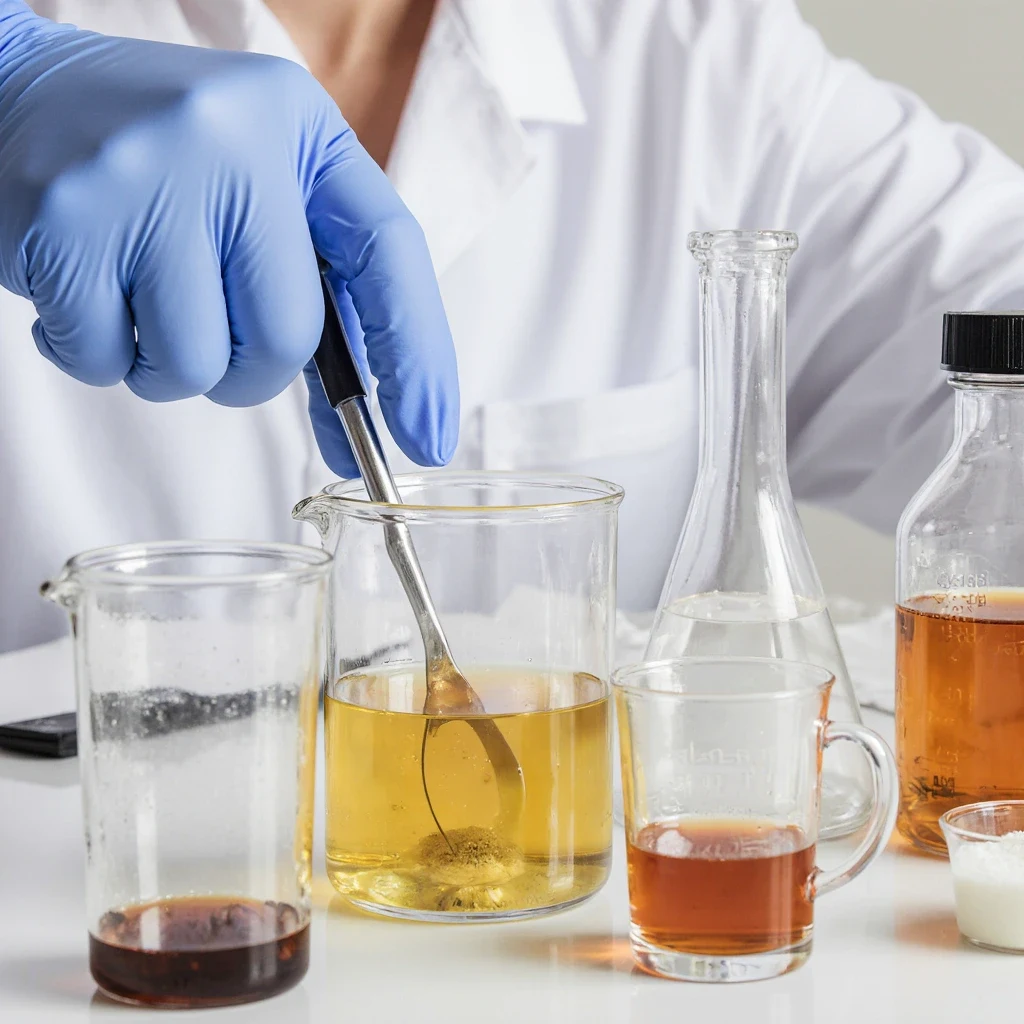
One must have a clean working environment. This needs special tools and equipment. This demands that you clean all your utensils and containers. This includes the use of gloves and safety glasses. This involves the fact that you must be well-ventilated.
The Correct Order to Add Ingredients — And Why Sequence Matters
The sequence of addition of the ingredients is significant. It influences the end-product stability. Generally, you are supposed to heat your water phase and oil phase individually, after which the two are mixed during mixing.
Sensitive active ingredients that are added during the final phases of the cool-down phase are recommended. But you should never do anything but what your emulsifier directs.
How to Test pH, Viscosity, and Stability Before You Call It Done
One of the quality control parameters is testing.
pH Adjustment: Measure the PH of the product. Adjust it to take it nearer to the natural pH of the skin, which is slightly acidic, whereby pH varies between 4.5 and 5.5.
Viscosity: Investigate the viscosity of the product. Measure a viscometer or just observe the product. Do the required modifications.
Stability Testing: At various temperatures, put the product. Look at the product to observe changes in product separation, color, or odour. This will give a clue to the life of the product in shelves.
For more information about cosmetic production, see 7 Steps in Cosmetic Product Development: A Complete Guide
The Most Common Beginner Formulation Mistakes (And How to Avoid Them)
Using Too Many Actives Without Understanding Interactions
It is alluring to create a product that has all the good. Nevertheless, one should take into account that the excessive use of activities may be another problem. The number of actives that can interact is too many. They have the power to cancel each other.
Irritation can be caused by some actives. The solubility of every active ingredient should be researched. Know how all the active interact. Use fewer actives. You have to learn to utilize them before the inclusion of additional actives in the product.
Ignoring Preservation Testing Until It’s Too Late
Novices can fail to recognize the value of preservation testing. They can take the assumption that the preservative they selected works. However, this is a major risk. Multiplying bacteria can occur, and the product owner is unaware of the same.
This poses a health hazard to the users. The preservation challenge test should also be done. Provided the opportunity, forward the product to a testing center. This would be the most appropriate method of determining whether the preservative is effective or not.
Choosing Ingredients by Trend Instead of Function
Relaxing ingredients are also trendy. Nevertheless, the selection of ingredients should be based on function. Does the product do the job? Does it deliver the proposed benefits? Does it save you money? Don’t follow the trends. Eat foods and pay more attention to ingredients.
What Happens When You Skip Patch Testing and Stability Checks
Don’t skip the patch testing. Patch testing has the potential to result in an allergy. It is always good to patch test your products in a small part of your skin before using them.
It is worth noting that performing stability checks as your product will fail. Depending on the easy separation or going bad of your product. Such stability tests are saving your life that can fall short of expected health complications. With these checks, you are spared humiliation, too.
How to Choose the Right Base Formula for Your Product Type
Lotions vs. Creams vs. Serums — Which Base Is Right for Beginners
Serums – Light content, water-based, and are high in active levels. Good for beginners.
Lotions – Light emulsions are characterized by high water content in relation to creams. Good for beginners.
Creams – Creams consist of thicker oily emulsions. More troublesome to deal with. Begin with an ordinary serum or light lotion. These are easier to work with. Later on, move to creams.
How to Formulate Cosmetic Products for Different Skin Types Without Overcomplicating It
Begin with an ordinary skin medication. This will be an equitable formula. Then proceed later on to other skin types. Light oils should be selected in the case of oily skin.
In the case of dry skin, moisturizing oils should be used. With sensitive skin, some oils to avoid are used. Never attempt to create a universally successful product. Different skin types have to be offered different products.
Starting With a Simple Formula: The 80/20 Rule of Cosmetic Formulation
That is where the rule of 80/20 applies. You are to devote 80 percent of your energies to 20 percent of the formula. This comprises the base ingredients, the emulsifier, and the preservative. These are your product pillars.
The fundamentals must be learned. Added gradually, the working ingredients. This is how you would foreshadow your success.
Where to Source Safe, Reliable Cosmetic Ingredients in the US
Trusted US Suppliers Beginners Actually Use
As a beginner, you should always seek to get information on the suppliers you can use to get the best quality of ingredients that you can use to make your cosmetics.
There are many suppliers that you can use to get high-quality ingredients. These suppliers offer high-quality ingredients that you can use to make your cosmetics.
How to Read a Certificate of Analysis (CoA) Before You Buy
Before you can buy any ingredient, you should always ask the supplier to provide you with a certificate of analysis. This certificate provides information on the ingredient that you can use to make your cosmetics.
Ingredients to Avoid as a Beginner (High Risk, Low Reward)
As a beginner, you should always avoid using some of the ingredients that can make your work more challenging or that can expose you to a lot of risk.
Scaling Up — When Your Formula Works, What Comes Next
How to Document and Reproduce Your Formula Consistently
Once you have developed a formula that you can use to make your cosmetics, you can then document the process to ensure that you can reproduce the same results every time you make the product.
Understanding FDA Cosmetic Regulations for Small Batch Makers in the US
Cosmetics are regulated by the FDA. You need to be familiar with their guidelines. Cosmetics need to be safe for their intended use. Information on the label must be accurate.
You need to avoid making drug claims. Compliance with the regulations will help you as well as your customers. You need to research the FDA guidelines for cosmetics.
When to Consider Working With a Contract Manufacturer
Your business will grow with time. You will need help with the increasing demands. A contract manufacturer can help you with high-volume production.
They can manufacture large batches of your product. This will save you a lot of time and energy. You should consider a contract manufacturer if your demands are high.
Tools and Resources That Actually Accelerate Your Learning
Free and Paid Formulation Courses Worth Your Time
There are many courses online about cosmetic formulation. These courses can be very useful for beginners. Look for courses taught by experienced formulators or institutions.
Some courses offer free content for beginners. Paid courses will give you comprehensive knowledge about formulation. Education is an investment for you. It will help you learn faster.
Formulation Software and Calculators Beginners Use
Many software programs can help you with formulation. These programs can help you with percentage calculations. Some software can also change the batch size.
Some can even track your inventory. These software programs can be very useful for beginners. They can help you with accurate formula writing.
Communities and Forums Where Real Formulators Share Knowledge
You can also learn from other formulators. Websites like Formulation & Science can be very useful for beginners. These sites offer a wealth of information about formulation. You can learn from experienced formulators. You can also share your knowledge with them.
Frequently Asked Questions (FAQs)
Q1: Is it safe to make cosmetic products at home?
It is safe to make cosmetic products at home, provided you do it the right way. You have to ensure proper sanitation, the use of good-quality ingredients, and adherence to proper formulation techniques and guidelines.
Q2: What is the most important skill for a beginner cosmetic formulator?
Attention to detail and the willingness to learn are the most important skills for a beginner cosmetic formulator.
Q3: How long does it take to create a stable cosmetic formula?
It takes a variable amount of time to develop a stable cosmetic formula. It could take a few weeks to develop a simple lotion formula, whereas it could take longer to develop a formula with multiple active ingredients.
Learning how to formulate cosmetic products is a very fulfilling and enjoyable experience. It requires patience, attention to detail, and a scientific approach to the subject matter. It requires you to avoid the common mistakes new cosmetic formulators make and to focus on the basics to create safe, effective, and beautiful cosmetic products.


GMP Cosmetic Manufacturing Compliance Guide: FDA, ISO 22716 & MoCRA Mistakes to Avoid
Top Custom Cosmetic Manufacturers in Vietnam (2026 Guide)
The Ultimate Guide to Cosmetic Formulation for Beginners
Opening Multiple Salon Locations: 6 Expert Tips for Faster Growth
How to Name a Cosmetic Brand That Stands Out in 2026
Cosmetic Brand Business Plan: How to Build One That Works