
The beauty industry has seen a boom, and people are using online platforms to find and buy their favorite brands. If you have been thinking about starting your own beauty brand, now is a good time to do it. Knowing how to sell cosmetics online can be daunting, but with a clear plan and roadmap, you can build a successful e-commerce business. This guide will take you through all the necessary steps, starting with conceptualizing the product, making sales, and growing.
Step 1 – Choose Your Cosmetic Products and Niche
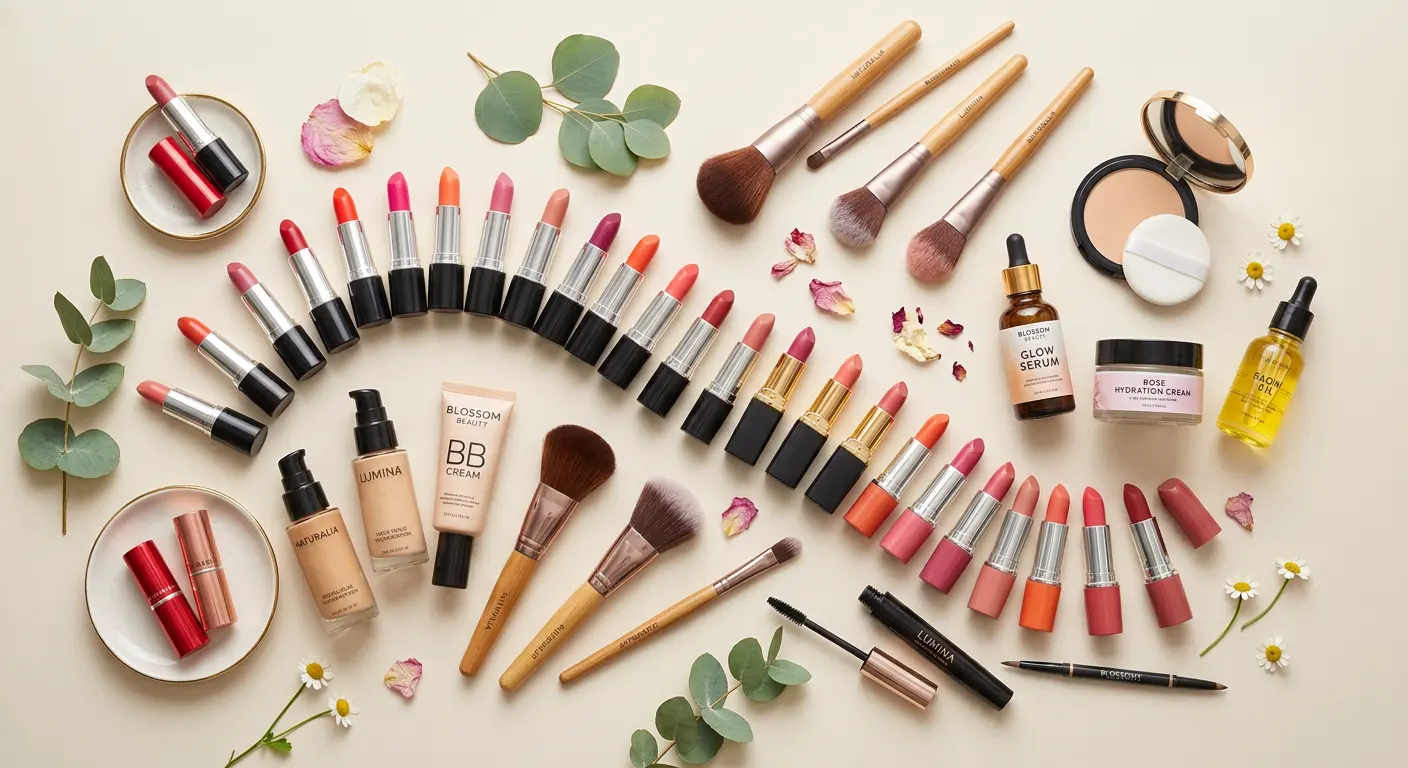
Defining what you have to offer in terms of products and who you offer them to is the first step in learning how to sell cosmetics online. First, you want to identify the niche segments of profitable cosmetic products that truly appeal to you. This may be organic skincare down to the special makeup of a particular skin type.
Identify profitable product categories
Study of the most demanded categories of cosmetics. Think of such segments as clean beauty, anti-aging skincare, all-inclusive makeup shade, or well-being-oriented body care. Brands that understand where consumer spending is increasing and where interest meets market opportunity will determine their ability to sell cosmetics online.
Research trends & customer needs
Study beauty market trends and identify what customers desire but are not getting from available brands. Do consumers want sustainable packaging, vegan formula, or problem-solving products in particular? Remaining at the forefront of trends makes your brand present and progressive.
Validate product ideas
Test the product ideas by engaging potential customers or conducting small tests. Budget: Does the real need match what you intend to propose? Ideas can also be tested using social media polls, pre-launch waitlists, or small pilot batches before risking full production.
Step 2 – Understand Legal Requirements and Compliance
Knowing how to sell cosmetics online legally is as important as knowing how to sell them. The regulation of cosmetics in the US is overseen by the Food and Drug Administration (FDA). Knowledge of the legal environment secures your business and consumer confidence.
Cosmetics regulations in the US (FDA, MoCRA 2022)
Note that the Modernization of Cosmetics Regulation Act of 2022 (MoCRA) has brought about an impressive shift regarding adverse event reporting, facility registration, and product listing. It is no big deal that whoever is learning to sell cosmetics online in the US market must be well-versed in FDA regulations.
Licensing & registration requirements
Get the particular licensing and registration requirements of your business at the federal and state levels. Other states have other requirements that are not based on federal regulations. Bringing your business entity on board, obtaining a seller permit, and understanding the selling tax requirements are all important steps.
Labeling, ingredients, and safety standards
Product labeling, ingredient disclosure, and safety standards are subject to strict quality control to ensure consumer safety. Label all products with their names. You should put the ingredient list in INCI, the manufacturer, and warnings on the labels as needed. Safety and proper labeling will save money by avoiding costly recalls and legal action.
International shipping compliance
If you intend to ship internationally, you should know that each country has its own regulations regarding cosmetics. The EU, UK, Canada, and China are (or will be) different in terms of ingredient approval, labeling language, and responsible person declaration. Target a market and study it well before going international.
Step 3 – Source Your Products
When you have figured out what you will sell, determine how you will get it. Sourcing is perhaps the most important decision for anyone deciding how to sell cosmetics online and make money.
Direct manufacturer vs. dropshipping vs. wholesale
You can make your own products, engage a contract manufacturer directly, use dropshipping, or buy them wholesale through established brands. Both approaches have advantages and disadvantages regarding control, cost, and inventory management. Contract manufacturing is the most customisable and requires the lowest initial investment, while dropshipping is the least customisable and requires minimal start-up capital.
Vet suppliers (quality, certifications, GMP, ISO 22716)
When making your own line, the first step is to thoroughly check your suppliers of raw materials to ensure they comply with quality criteria and certifications, as well as Good Manufacturing Practices (GMP) or ISO 22716 standards. Request documentation and factory audits (where possible), and ensure all certifications are valid and up to date.
Sample testing & quality control
It is always a good idea to conduct sample testing and establish a high level of quality control before placing large orders, including stability, safety, and performance tests. Third-party lab testing is an additional credibility factor and helps guarantee your products are safe for consumers.
Negotiate pricing & MOQ
Bargain price and minimum order quantities (MOQ) to achieve profitability. Most manufacturers are willing to negotiate, particularly for long-term collaboration. There is an understanding of your break-even point and target margins when entering into any supplier contract.
Step 4 – Set Up Your Online Store
There is a lot of excitement that comes with setting up your store as you learn to sell cosmetics online. This is where customers will learn about, window-shop, and buy your products.
Platforms: Shopify, WooCommerce, Amazon, Etsy
The most popular platforms for cosmetic e-commerce are: Shopify is the easiest to use; WooCommerce allows WordPress users to be flexible; Amazon has a huge number of customers; and Etsy has a lot of handcrafted or unique products. Choosing the right platform is an a priori decision for any student who wants to master selling cosmetics online.
Essential store pages
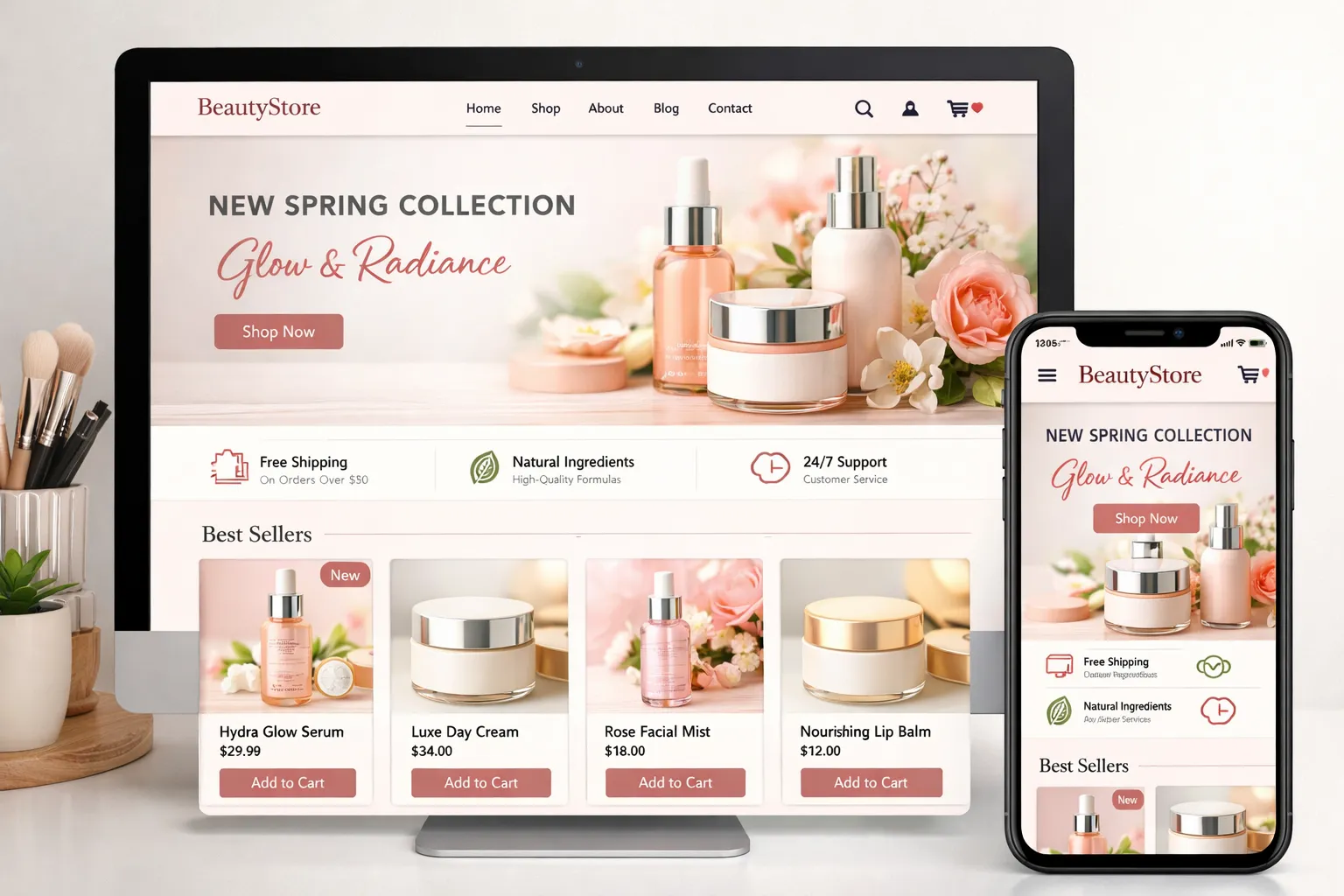
Make sure you have the necessary pages, such as “About Us,” “Contact,” “FAQ,” and “Privacy Policy,” and elaborate product pages with high-quality images and descriptions. These pages are trust-building, answer-generating, and SEO-optimized.
Payment gateways & checkout optimization
Install secure payment processors (Stripe or PayPal) to streamline your checkout experience. Movement of checkout minimizes card abandonment. Provide various payment methods, such as credit cards, digital wallets, and buy-now-pay-later options, to suit the diverse customer base.
Mobile-friendly design
The mobile-friendly design cannot be compromised, as most online beauty sales occur on smartphones. Make sure your shop loads quickly, is responsive across all screen sizes, and offers a smooth browsing and shopping experience on mobile devices.
Step 5 – Marketing & Sales Strategy
You only have to learn how to sell cosmetics online; the other half of the battle is building a great store. At this point, you have to convince people to buy your products and transform the visitors into regular customers.
Social media marketing (Instagram, TikTok, YouTube)
Cosmetic brands thrive through social media platforms such as Instagram, TikTok, and YouTube since they are more visual. Create tutorials, backstage content, and user-generated content. Frequent updates and trustworthy posts help build a loyal audience for your brand.
Influencer & affiliate marketing
You should consider collaborating with beauty influencers or launching an affiliate marketing program to reach broader audiences. Micro-influencers with highly niche audiences usually deliver superior return on investment compared to celebrities. Affiliate programs motivate partners to market your products in exchange for a commission.
Email marketing & newsletters
Lead cultivation and customer retention are supported by email marketing, including newsletters and promotional campaigns. Grow your list on the first day by offering sign-up bonuses, such as discounts or free samples. Divide and target with personal content to get the highest open rates and conversions.
SEO for product pages & blog content
Use search optimization on product pages and blog articles to enhance organic visibility. Producing content on topics such as how to sell cosmetics online helps attract entrepreneurs and wholesalers to your brand. A blog to keep up with the latest beauty advice, ingredient bibles, and tutorials attracts traffic and authority in your niche.
Paid advertising: Google Ads, Meta Ads
Paid advertising on such sites as Google Ads and Meta Ads should be used strategically with a target towards a particular demographic. Begin small, do test and experiment with creatives and audiences, and scale up what works. The retargeting campaign is especially popular to convert the visitors who did not buy during their first visit.
Step 6 – Order Fulfillment & Logistics
A lot of beginner lose this step in their learning to sell cosmetics online. To create an online reputable beauty brand, this is a must-have.
Packaging & labeling
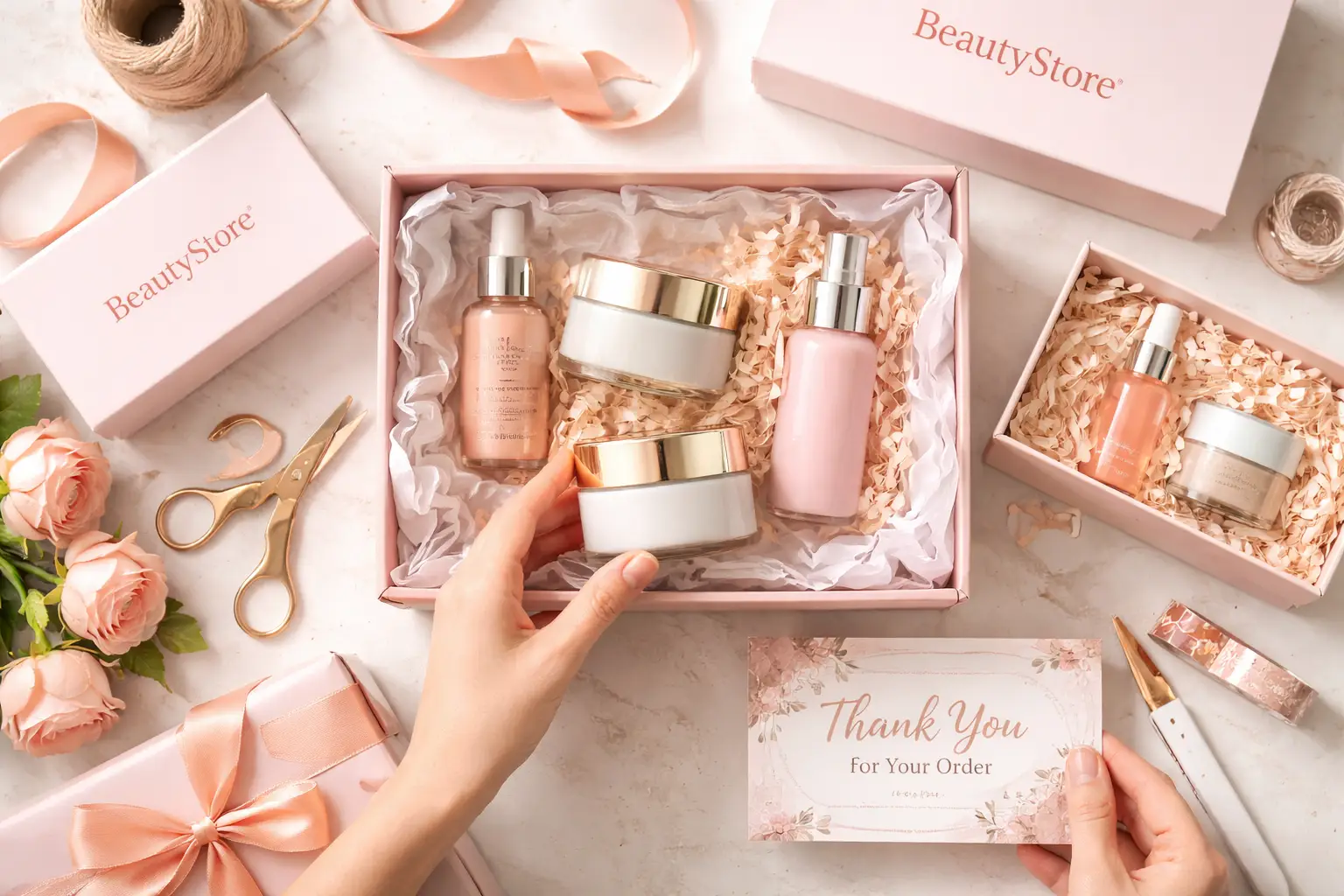
Spend on good-looking and safe cosmetic packaging that helps to keep your products safe throughout delivery, as well as solidifies your brand name. Customers touch your brand when it comes to your package design, which is the first physical interaction they are likely to experience. Keep it catchy, practical, and in line with all the labels’ requirements.
Shipping methods & carriers
Below is a list of shipping methods and modes of transportation that can be used to identify the most affordable and quickest delivery option for customers. Compare the rates of the largest carriers such as USPS, UPS, FedEx, and DHL. Free shipping is good to attract a larger average order size and decrease the rate of cart abandonment if the value of free shipping is set above some threshold.
Tracking & delivery notifications
Have the delivery notifications and tracking made clear so that customers can know. Active communication minimizes customer insecurities and ensures responsive communication. There is programmed shipping confirmation and tracking emails, which enhance the post-purchase experience.
Handling returns and refunds
Develop clear policies of returns and refunds, because this brings trust and confidence. Prioritize a policy that is easy to locate and comprehend. An effortless and uncomplicated returns policy makes customers who are dissatisfied loyal and results in fewer negative reviews.
Step 7 – Scaling Your Cosmetic Business
Once launched, concentrate on the strategy to expand the business. The most thriving brands that understand how to sell cosmetics online leverage both novelty and information on an increased scale.
Subscription boxes & repeat customers
Take into account subscription boxes to earn recurring revenue and customer loyalty. The subscription models give a certain predictability in the cash flow and increase customer relationships. Create monthly or seasonal boxes that tend to make customers aware of such new products and provide them with consistent value.
Launching new products
Keep innovating and introducing new products that are relevant to your brand and the needs of consumers. Incorporate customer feedback, sales, and trend research to make your product development roadmap. The marketing campaigns and press coverage opportunities also exist in the case of new launches.
International expansion
International expansion can be explored when you are strong in your domestic market and know about the new regulatory challenges. Begin with markets having similar regulation structures in order to minimize complexity. Weebly: Customize your web page, advertising, and packaging to every new market to ensure maximization of relevancy and attractiveness.
Using data & analytics to improve sales
Utilize web and marketing campaign data and analytics to learn customer behavior, grasp which products sell best, and how you can optimize your strategies to sell more. Google Analytics, Shopify reports, email platform dashboard, etc., are the tools that have an action that can be analyzed and constantly improved.
Common Mistakes to Avoid
Even seasoned businesspeople fail in their initial learning how to sell cosmetics online. Such knowledge will allow you to go through the traps more easily and safeguard the reputation of your brand.
Selling non-compliant products
Illegal sale of non-compliant cosmetic goods may cause legal complications and recall of the merchandise, as well as permanent damage to your brand reputation. Always ensure that your goods are up to the FDA, MoCRA, as well as any other international standards, before listing them to be sold.
Ignoring quality control or batch testing
A mistake as crucial as neglecting quality control or batch testing may put the company at risk of producing faulty products, receiving customer complaints, or even being improperly decommissioned. Have regular testing processes done on each production run to make sure that your products are up to your standards.
Poor social media engagement
Individuals who are not social media savvy may negatively affect the success of the interactions with your brand and your ability to create a transition around it. Comment and interact with followers and discuss beauty. Fairness and consistency are also important in building a base of online following.
Not tracking inventory properly
Failure to keep track of inventory will cause either a stockout or an overstocking and affect customer satisfaction and cash flow. Install an inventory software at the beginning and create reorder points in order to prevent going out of the bestsellers or tying up money in the slow movers.
Ignoring customer feedback
Failure to take into account the feedback made by the customer implies a lack of essential knowledge to improve the product and enhance the services. Ensure that you actively gather reviews, watch social mentions, and regularly conduct surveys of your customers. Feedback is among the cheapest ways of fine-tuning your products and expanding your brand.
For more insight about cosmetic marketing, see How to Build A Cosmetic Brand Logo Design That Stands Out
FAQ
Here are answers to some common questions about how to sell cosmetics online.
What are the steps to sell cosmetics online legally?
It is necessary to live by and navigate FDA legislation, such as MoCRA 2022, to know how to sell cosmetics online in the US in a legal manner. This entails correct product labeling, ingredient statement, product safety, and possibly listing your products and registering your facility. You will also require the application of licenses and business registration required at both the state and local levels.
Do I need a license to sell cosmetics online in the US?
Although no one federal cosmetic license is necessary, you will have to register your own business entity and take out relevant state and local permits regarding business. In MoCRA, some manufacturers and processors are also required to register their plants with the FDA and identify their cosmetic products. The standards differ depending on the state, and you should refer to your local regulatory body.
Which platform is best to sell cosmetics online?
The most appropriate platform will be based on what exactly you require and how much you can afford. Shopify is favored due to its simplicity of use, powerful capabilities, and scalability, which are suitable for everyone who is learning how to sell cosmetics online via a particular store. WooCommerce has greater customization to allow those familiar with WordPress a more customized platform than Amazon and Etsy, which have the added advantage of having an extensive existing marketplace, but with the increased competition.
How much does it cost to start selling cosmetics online?
The exact entry expenses are all over the place. The dropshipping can be initiated as low as a few hundred dollars. Making a tailor-made line of products in the form of contract manufacturing, with branding and a professional website, usually costs between 5,000 and 20,000 dollars or higher. Budget on product development, compliance, packaging, marketing, and platform fees.
Can small brands compete with large cosmetic companies online?
Yes, absolutely. Small brands possess unique opportunities, such as agility and authenticity, that big brands fail to serve niche clients. It can be achieved with the help of a good brand story, quality products, and intelligent digital marketing that can enable the small cosmetic brands to create loyal communities and compete with bigger players.
How do I ensure my cosmetic products meet FDA and MoCRA standards?
To stay within the FDA and MoCRA requirements, all your product ingredients must be safe and correctly listed, and all labeling must be accurate and applicable. This encompasses the avoidance of the use of banned ingredients and ensuring that claims are supported. You might also be required to register your manufacturing plant, list your products, and report procedures in adverse event reporting under MoCRA. It is very well recommended to consult a regulatory expert.
What marketing strategy works best for new cosmetic brands?
Since new cosmetic brands are new and have fewer followers, influencer partnerships, email marketing, and organic social media content are likely to have the most significant impact in the first stages. Instead, aim at creating true relationships with your audience by showing them your products in tutorials and the actual customer results, and increasing your email list on day one. Add paid advertising as your budget becomes larger to increase reach and conversions.
Conclusion
Nobody can start up a cosmetic business with more excitement and reward than launching one online. With this one-step guide, you are on a clear road on the way to an idea and a successful e-commerce brand.
Recap steps to sell cosmetics online
We have discussed all the fundamental guidelines on how to sell cosmetics online: selecting a niche, legal considerations, product sourcing, developing my online shop, marketing, fulfillment, and scaling the company. Every action is based on the previous one, and it forms a strong groundwork for future success.
Emphasize the importance of compliance, quality, and marketing
The three pillars necessary in achieving success during the learning process of how to sell cosmetics online include compliance, product quality, and proper marketing. Omitting either of these opens the gaps that make even the most successful brand go south. Make investments in all of them at the same time.
Call-to-action: encourage readers to start small, validate product ideas, and scale carefully
There is no need to worry about starting small and testing your ideas with your audience, only to grow and learn. With this comprehensive expansion of water marketing cosmetics online, you are most likely to achieve your dream of working for a reputable beauty brand in the online market. It is time to take your steps towards the success of your cosmetic e-commerce venture!


How to Optimize Sample Distribution at Trade Shows
How to Create a Memorable Customer Experience at Events
Trade Show Booth Size Guide: Dimensions, Rules, and Strategy
Professional Beauty Event Guide 2025–2026: Global Calendar, Tips & ROI Playbook
10 Common Trade Show Sales Mistakes When Selling at Beauty Booths
Beauty Booth Conversion Strategy: 35% Sales Lift