

You’re pregnant, summer is here, and you need sun protection but suddenly every sunscreen label feels like a minefield. Finding a truly safe suntan lotion pregnancy guide requires more than grabbing the first SPF 50 off the shelf. This guide breaks down exactly what to look for, what to avoid, and which doctor-approved options actually work.
Why Most Sunscreens Aren’t Safe During Pregnancy
Most women don’t realize that many popular sunscreens contain chemical filters that can be absorbed through the skin and enter the bloodstream. During pregnancy, anything that enters your system has the potential to reach your developing baby — which is why your OB-GYN may have already mentioned being careful about skincare products.
The Chemicals OBs Actually Warn You About
The two most commonly flagged ingredients are oxybenzone and octinoxate. Both are chemical UV filters found in a huge percentage of mainstream sunscreens — including many well-known brands. Multiple studies have detected oxybenzone in blood, urine, and even breast milk after topical application, which has raised red flags among dermatologists and OB-GYNs alike.
Other ingredients worth avoiding include homosalate, avobenzone, and octocrylene—all of which the FDA has flagged for insufficient safety data during pregnancy.
Doctor’s Note
In 2021, the FDA updated its sunscreen guidelines, stating that only two active ingredients — zinc oxide and titanium dioxide — can currently be classified as “generally recognized as safe and effective” (GRASE). These are the two ingredients most OBs recommend for pregnant women.
How Oxybenzone and Octinoxate Affect Fetal Development
Research published in peer-reviewed journals has shown that oxybenzone can act as an endocrine disruptor — meaning it may interfere with hormone signaling in the body. During fetal development, hormonal balance is absolutely critical. While the evidence in humans is still developing, animal studies showing hormonal disruption are concerning enough that most maternal-fetal medicine specialists recommend avoiding these chemicals entirely during pregnancy.
Why “Broad Spectrum” Doesn’t Mean Pregnancy-Safe
“Broad spectrum” simply means a sunscreen protects against both UVA and UVB rays. It says nothing about the safety of the ingredients used to achieve that protection. A sunscreen can be broad spectrum, dermatologist-tested, and reef-safe — and still contain oxybenzone. Always check the active ingredients list separately from any marketing claims on the front of the bottle.
What Makes a Sunscreen Truly Safe for Pregnant Women
Now that you know what to avoid, let’s talk about what to actually look for. Not all sunscreens offer the same protection, and you can make the safest choice for pregnancy when you understand the difference between mineral and chemical formulas while shopping for suntan lotion.
Mineral vs. Chemical Sunscreen: Why It Matters When You’re Expecting
Chemical sunscreens work by absorbing UV rays and converting them to heat — which requires the active ingredients to be absorbed into the skin. Mineral sunscreens, on the other hand, work by physically sitting on top of the skin and reflecting UV rays away from the body. Because mineral filters (zinc oxide and titanium dioxide) sit on the skin’s surface instead of absorbing into the body, many people consider them far safer during pregnancy.
Pro Tip
Look for “non-nano” zinc oxide on the label. Non-nano particles are too large to penetrate the skin barrier, making them an even safer choice for pregnancy.
Ingredients to Look For (and What They Actually Do)
- Zinc oxide — The gold standard for pregnant women. Broad-spectrum protection, acting directly on the skin’s surface. Look for products with a concentration of 15–20%.
- Titanium Dioxide — Another mineral option. Works well alone but offers slightly less UVA protection than zinc; often combined with zinc oxide.
- Aloe Vera, Jojoba Oil, Shea Butter — Common in mineral formulas; soothing for sensitive, hormonally reactive pregnancy skin.
- Vitamin E (Tocopherol) — Antioxidant that helps with skin elasticity — a nice bonus during pregnancy.
- Oxybenzone, Octinoxate, Homosalate — Chemical filters to avoid entirely during pregnancy.
- Retinol / Vitamin A derivatives — Not a UV filter but commonly found in anti-aging sunscreens; avoid during pregnancy.
- Fragrance / Parfum — Can trigger skin reactions during pregnancy when hormonal shifts make skin more sensitive.
SPF Level Recommendations From Dermatologists and OBs
Most dermatologists recommend at least SPF 30 for daily use, and SPF 50 for extended outdoor exposure. The American Academy of Dermatology specifically recommends SPF 30 or higher for pregnant women, as pregnancy can increase photosensitivity — meaning your skin is more likely to burn and develop melasma (the “pregnancy mask”) when exposed to UV rays.
Top Doctor-Recommended Safe Suntan Lotion Pregnancy Picks
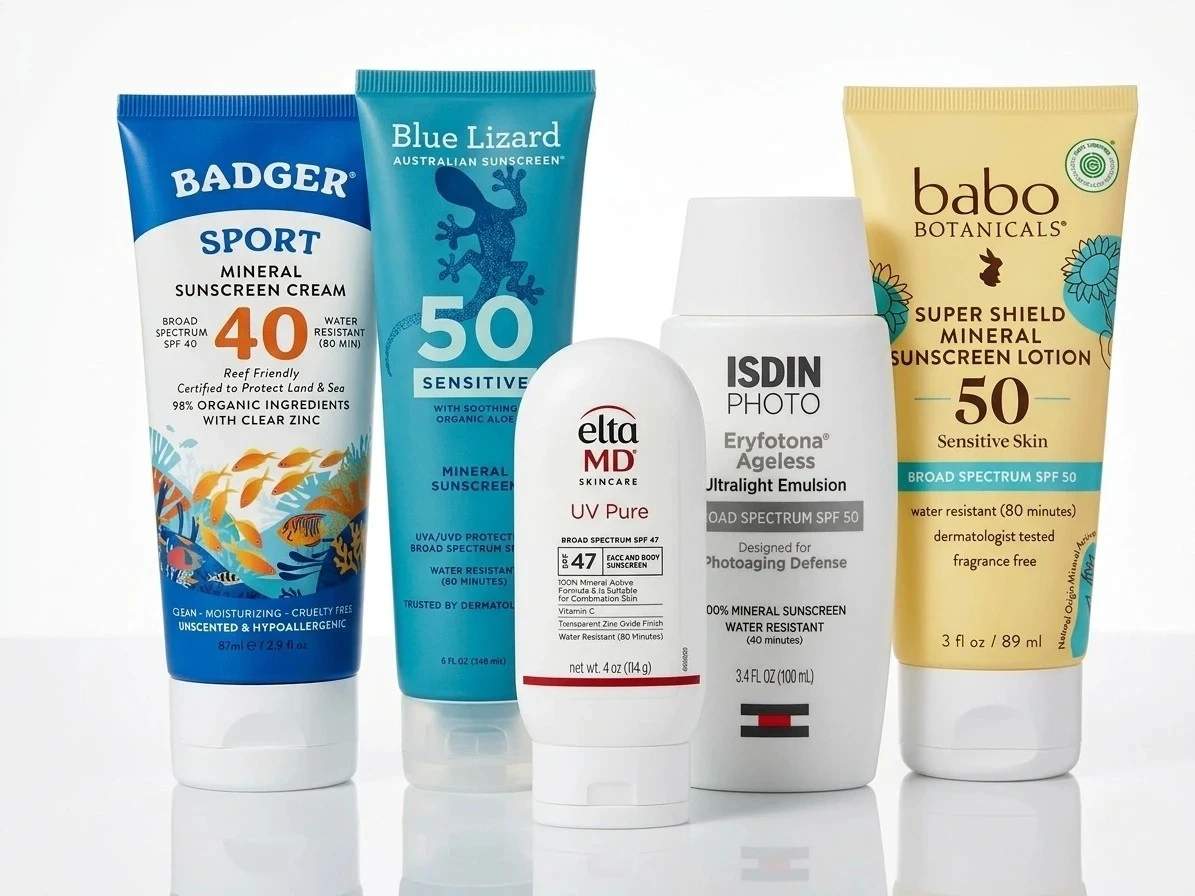
The following picks are all mineral-based, free from the chemical filters flagged by the FDA, and consistently recommended by dermatologists and OB-GYNs for use during pregnancy. All contain zinc oxide as the primary active ingredient.
Best Overall
EltaMD UV Pure Broad-Spectrum SPF 47
A dermatologist favorite with 9% zinc oxide and 7% titanium dioxide. Lightweight, fragrance-free, water-resistant (40 minutes), and gentle enough for all three trimesters. Works seamlessly under makeup and doesn’t leave a heavy white cast.
Sensitive Skin
Babo Botanicals Sheer Mineral Sunscreen SPF 50
Formulated specifically for sensitive skin with 20% non-nano zinc oxide. Free from fragrances, parabens, and chemical UV filters. Made with organic plant actives — a top choice for women experiencing hormonal skin flare-ups during pregnancy.
Best Tinted
ISDIN Eryfotona Ageless Tinted Mineral Sunscreen SPF 50
A tinted formula with 100% mineral filters that doubles as light coverage. Excellent for daily wear when you want sun protection without the white cast. Particularly popular for managing melasma discoloration that often develops during pregnancy.
Best Budget
Blue Lizard Sensitive Mineral Sunscreen SPF 50+
An accessible, well-priced option with zinc oxide and titanium dioxide. No oxybenzone, no fragrance. Widely available at drugstores. The UV-sensitive bottle cap that changes color in sunlight is a handy reminder to apply — and reapply.
Outdoor / Beach
Badger Active Mineral Sunscreen SPF 40
A certified organic formula with 22.5% non-nano zinc oxide. Water-resistant for 80 minutes — ideal for beach days and outdoor activities. Made with just five clean ingredients, it’s one of the most minimal and transparent formulas available.
How to Read a Sunscreen Label When You’re Pregnant
Sunscreen labeling can be confusing even for non-pregnant consumers — and the marketing terms on the front of the bottle rarely tell the whole story. Here’s how to cut through the noise and quickly evaluate whether a product is actually safe to use during pregnancy.
Red Flag Ingredients to Avoid Immediately
Flip the bottle over and go straight to the “Active Ingredients” section. If you see any of the following, put it back on the shelf: oxybenzone, octinoxate, octisalate, octocrylene, homosalate, or avobenzone. These are all chemical UV filters with insufficient safety data for use during pregnancy. The inactive ingredients list matters too — scan for retinol, retinyl palmitate, fragrance, and parabens.
What “Reef-Safe” and “Clean Formula” Actually Mean
“Reef-safe” means the formula is free from chemicals harmful to coral reefs — typically oxybenzone and octinoxate. Reef-safe formulas often align with pregnancy-safe formulas, but regulators don’t oversee the term, and it doesn’t guarantee complete safety.
“Clean formula” is entirely unregulated and means whatever the brand decides it means. Never rely on front-label claims alone. Always verify via the active ingredients list.
Third-Party Certifications Worth Trusting
Look for independent certifications like EWG Verified (Environmental Working Group), which screens for ingredient safety, potential hormone disruption, and transparency. The EWG’s Skin Deep database is also a free resource where you can look up any sunscreen or skincare product and get a safety rating based on ingredient research.
Common Mistakes Pregnant Women Make With Sun Protection
Even women who are genuinely trying to be careful can fall into some common traps when it comes to sun protection during pregnancy. Here are the three most frequent mistakes — and how to avoid them.
Relying on Makeup SPF as Your Only Protection
Foundation, BB creams, and setting sprays with SPF are great additions to your routine — but they’re never a substitute for dedicated sunscreen. Studies consistently show that people apply far too little makeup to reach the stated SPF level, and most cosmetic formulas don’t offer reliable UVA protection. A standalone mineral sunscreen should always be your base layer.
Skipping Sunscreen in the First Trimester
Some women figure they’ll wait until the second trimester, or until they’re visibly showing, to start worrying about pregnancy-safe products. But UV-related skin changes — especially melasma — can start developing very early in pregnancy due to hormonal shifts. The first trimester is actually when your skin is most reactive. Start using a pregnancy-safe suntan lotion from the moment you get a positive test.
Using Pre-Pregnancy Sunscreen Without Checking Ingredients
Your favorite pre-pregnancy sunscreen may have worked perfectly for your skin — but that doesn’t mean it’s appropriate to continue using while pregnant. Many popular sunscreens include chemical filters, retinol, or fragrances that doctors do not recommend during pregnancy. Take 10 minutes to review your current product using the EWG Skin Deep database. It might be time for an upgrade.
When to Talk to Your OB About Sunscreen
While the guidance in this article reflects current dermatological and obstetric consensus, your OB-GYN is your best resource for personalized advice. There are a few specific situations where it’s especially important to bring up sun care at your next appointment.
Signs Your Skin Is Reacting to a Formula
Pregnancy increases skin sensitivity, so reactions to products you’ve used for years aren’t uncommon. If you notice redness, itching, hives, or a stinging sensation after applying sunscreen, discontinue use immediately and consult your provider. Patch testing any new sunscreen on a small area of your forearm before full application is always a good idea during pregnancy.
Managing Melasma (Pregnancy Mask) Safely
Melasma — the blotchy brown or gray pigmentation that appears on the face of many pregnant women — is triggered and worsened by UV exposure. Consistent use of a mineral SPF 50 is the most effective way to prevent it from developing or darkening. However, if you’re also using topical treatments to address existing melasma, make sure those products are also pregnancy-safe. Healthcare providers do not recommend many common brightening ingredients, including hydroquinone and certain acids, during pregnancy.
What to Ask Your Doctor at Your Next Appointment
Consider asking: “Are there any specific sunscreen ingredients I should avoid given my health history?” Women with thyroid conditions, hormone-sensitive conditions, or a personal history of skin reactions may need additional guidance. Your provider can help you identify the best approach based on your full picture — not just a general recommendation.
The Bottom Line
Finding a safe suntan lotion pregnancy doesn’t have to be complicated. The core principle is simple: choose a mineral sunscreen with zinc oxide as the active ingredient, avoid chemical UV filters like oxybenzone and octinoxate, and apply (and reapply) consistently — especially if you’re prone to melasma or spending time outdoors.
Your skin is more sensitive during pregnancy, UV exposure can trigger lasting pigmentation changes, and your baby’s development depends on you avoiding unnecessary chemical exposure. A mineral SPF 50 is one of the lowest-effort, highest-impact swaps you can make for the next nine months — and your skin will thank you for it long after delivery.
When in doubt, bring your current sunscreen to your next OB appointment. Most providers are happy to take a two-minute look at the label and give you a thumbs up — or point you toward a safer alternative.


How to Apply Eyeshadow: A Complete Guide to Technique and Placement
7 Fascinating Facts About Chin Dimples: Causes & Treatments
Best Sunscreen for Laser Hair Removal 2026 (Dermatologist Picks)
Sun Damage After Laser Hair Removal: A Clinical Guide to Identifying, Treating, and Reversing Skin Damage
The Ultimate Dermatologist-Led Guide to Sunscreen for Melasma: Why SPF 50 is Only Half the Battle
How to Apply Foundation for a Flawless Finish