

Learning to apply eyeshadow is the way to change your makeup look. You give your technical background with this all-inclusive masterclass.
We will discuss step-by-step instructions and professional secrets. Learn how to apply eyeshadow to achieve a perfect, long-lasting effect.
This prescription fits your special anatomy. It serves both a beginner and a person willing to perfect art.

Success with eyeshadow application depends heavily on your canvas and tools. Eyelid preparation is an adhesion method of pigment.
It also assists in making the colors to be made lively in the day. The difference between having the right brushes and having incorrect brushes is a big one when you are learning how to apply eyeshadow.
Must-Have Brushes and Their Professional Uses
Various brushes are used for a particular purpose. When you apply the right brush, you enliven your application.
It assists you in attaining a smooth professional finish.
The Flat Shader Brush for Concentrated Color: This brush applies the pigment on the mobile lid. It has an optimum payoff of color.
You apply it intensively and with vivid color.
The Tapered Blending Brush for the Crease: It has soft bristles. It gives color to the crease of the eye.
It assists you in coming up with a smooth mix without rough edges.
The Pencil Brush for Precision and Detail: This is a small and dense brush that is convenient. It is applicable to smudge shadow along the lash line.
You can also apply it in highlighting the inner corner of your eye.
Preparing Your Lids for Longevity
Creasing and fading can be avoided by proper preparation. It prepares a flawless foundation for your eyeliners.
The move will help to make your appearance last the entire day.
Applying Primers to Prevent Creasing: An eyeshadow primer is requisite. It gets rid of oils in the lid.
This fixes powder and does not allow creasing. It also improves color intensity.
You will find very good primers that will match your skin type.
Setting the Base with a Neutral Shade: Once you have applied the primer, apply a skin-colored powder. This allows additional colors to blend smoothly.
It avoids the use of colors that grab the skin. This action will produce a smooth surface.
Mapping the Anatomy of the Eye: You must know the eye structure. Determine the lid, crease, brow bone, and outer V.
This mapping assists in the proper placement of shadows. It takes you on the path of definition.
A Step-by-Step Guide to Basic Application
This rational development creates a gorgeous eye appearance. It progresses through the lightest colours of the bridge to the darkest of the structures.
This gives a natural and appealing gradient. These are the steps to follow when you are learning how to apply eyeshadow for a gorgeous effect.
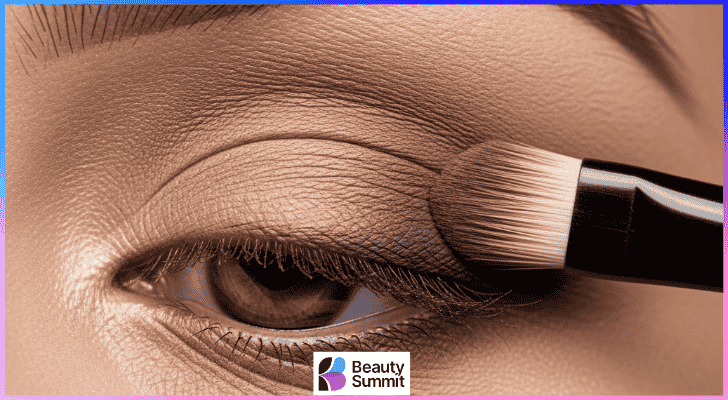
The Core 4-Step Application Method
Step 1: Applying a Transition Shade to the Crease: You begin by applying a matte color. Select one a shade darker than your own.
Using a blending brush, apply it to your crease. This forms a perfect transition of the lid and brow.
Step 2: Building Depth in the Outer Corner: You focus more on the dark tint in the “Outer V This point is the external angle of your eye.
This gives it depth and lifts the eye. You should use a smaller blending brush to be precise.
Step 3: Adding a Focal Point Color to the Lid: You add your primary, shimmery, or matte pigment. Put it in the middle of the lid of your mobile.
In this case, a flat shader brush is better. This step makes your eyes pop.
Step 4: Highlighting the Inner Corner and Brow Bone: You apply light reflecting shades. Put them on the inside of your corner and beneath your arch of eyebrows.
This opens the eyes. It is also good at offering smooth and high polish.
Tailoring Techniques to Your Eye Shape
Makeup artistry does not fit into one size suits all. When you change your position, you reach professional results.
This modification depends on the structure of your eyes. Learning your eye shape is very important when you learn how to apply eyeshadow to get the best out of it.
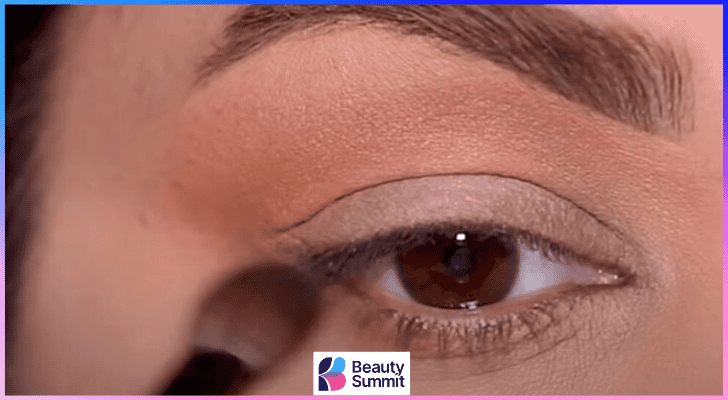
Adjusting Placement for Common Eye Shapes
Eye shapes have their own advantages to use. This will uphold the beauty of nature with the help of the shadow.
It assists you in making a flattering appearance.
Working with Hooded and Deep-Set Eyes: You put on shadow a little above the natural crease. This makes sure that you can see the color when you have your eye open.
Roach a little up in color. This gives an illusion of an increased lid space.
Enhancing Monolids and Almond Eyes: You use winged shapes and vertical gradients. This gives a definition where a natural fold is not found.
Heavy shades should be applied near the lash line. Blend up on its end to lift up.
Lifting Round and Downturned Eyes: You apply dark-colored pigments on the outer corners of the upper eyelid. This draws the eye upwards and outwards.
Make a winged effect, which is subtle. It aids in lengthening and lifting the eyes.
Master Skills for Professional Results
To elevate your look beyond the basics when learning how to apply eyeshadow, you should know how to use colors. Blending is another concept that you have to understand.
Such skills are requisite to achieve really professional results. They provide you with the power of your artistry when you put on eyeshadow.
The Art of Seamless Blending
The most important stage in eyeshadow application is arguably blending. It gives it a smooth and professional finish.
Lack of blending may turn an appearance amateurish.
The Clean Brush Technique for Erasure: In this method, you work with a new, unpigmented blending brush. Buff it out with it to remove any mistakes or rough edges.
This is a method that makes the transition soft. It creates a smooth, even look.
Your greatest friend is a clean brush.
Controlling Pressure for a Gradient Effect: It is a matter of how you press your brush. Press the brush handle further in case of light pressure.
This produces a lighter, airbrushed finish. Bring me nearer to a greater intensity.
Varying pressure helps you achieve a beautiful gradient.
Choosing Colors That Complement Your Features
Color choices have a strong influence on the final result. Wearing the right colors that suit your features makes your eyes pop.
It is also important to know finishes.
Selecting Shades Based on Iris Color: You wear complementary colors to make your eyes pretty. In the case of blue eyes, use copper or warm brows.
Purples or plums are beautiful to green eyes. Brown eyes are flexible; the majority of colors are effective.
Tips on eyeshadow for eye color are here. https://youtu.be/gdxZporMTm8?si=5TFWNHhUtSU7ccup
Understanding Matte vs. Shimmer Finishes: Matte shadows are structured and deep. They suit the crease and the outer corner.
Shimmer is for giving light and glare. You wear them on the lid and inner corner to provide accents.
They reflect light effectively.
Finishing Touches and Proper Maintenance
Refining details is the last step in the application. It also does wonders for your skin.
The right maintenance will make your eyelids ready to use in the future. These are essential steps to an erudite, durable appearance whenever you are learning how to apply eyeshadow.
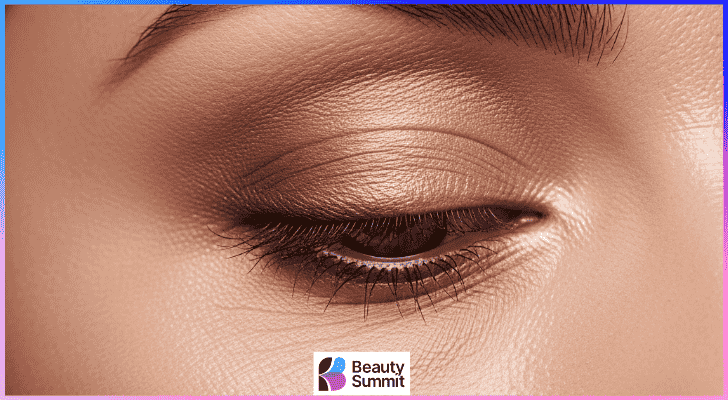
Managing Cleanup and Longevity
The most attentive application may lead to small problems. It is essential to know how to correct them.
You must also make sure that your appearance will last a day.
How to Fix Fallout and Smudges: Fallout of Eyeshadow. Fallout is widespread. A clean fan brush is for sweeping off any loose powder.
Where it is difficult to remove the smudges, apply a cotton swab. Dip it in the micellar water or concealer.
This eliminates errors without spoiling your base makeup.
Setting Your Look for All-Day Wear: Setting sprays help to prevent eyeshadow fade. Once you have finished doing all your makeup, spray your face with a setting spray.
This locks your look in place. The techniques of layering are also helpful.
You put on a cream shadow on top of powder to give it better staying power.
Safe Removal and Eyelid Care
It is necessary to remove and maintain it properly. They cover the sensitive skin of your eyes.
This will help you to have nice, smooth eyelids.
Gentle Cleansing to Protect Skin Integrity: You never leave your eye makeup on. Apply a non-detergent makeup remover or oil-based cleanser.
Avoid pulling or tugging the delicate skin around the eyes. Harsh rubbing can cause premature aging.
This area is very sensitive.
Post-Makeup Hydration: This comes after cleaning your face; you hydrate the eyelids. Apply an eye moisturizer or eye cream that is eye safe.
This keeps the eyelid smooth. Hydration also prevents dryness.
It gets your skin ready to apply your next makeup application.
Frequently Asked Questions: Expert Troubleshooting
You have also learned the main tricks on how to apply eyeshadow; it is time to discuss the obstacles. These solutions aid in the choice of products and the care of skin conditions.
What is the difference between an eyeshadow “base” and an eyeshadow “primer,” and which provides more pigment intensity?
Eyeshadow primer is usually a thick formula. It provides a smooth finish, and it does not crease.
A base over the eyeshadow can be thicker than usual and even coloured. It has the ability to counteract the discoloration of the lid and a huge boost of pigment intensity.
To apply a high amount of color, you apply a dedicated base of eyeshadow.
Is it necessary to use a transition shade if you are only applying a single color for a “one-wash” look?
No, there has to be no transition shade with the simple, one-wash appearance. In the case of one color application, you pay attention to mixing the edges.
A shade of transition is complex. It combines deeper tones in multi-colored appearances.
Which eyeshadow textures (Cream, Liquid, or Powder) are best suited for oily lids versus dry, mature skin?
The powder eyeshadows are the best on oily lids. They take in more oil and are longer-lasting.
You always use a good primer. Due to dry skin or dry eyes, which are usually worn, liquid or cream eyeshadows are usedcreases
They tend to be less willing to settle into creases. They may also seem more refreshing.
This is an eyeshadow guide for mature skin.
Should you apply your eyeshadow before or after your foundation to achieve the cleanest result?
Most of the professionals use eyeshadow prior to foundation. This will enable you to clean up any fallout easily.
It does not allow dark powder to leave a stain on your flawless base. When you put on the foundation, put on powder under the eyes.
This poses a hindrance to fallout.
Learning how to apply eyeshadow provides a realm of artistic appeal. Any look can be attained with the correct tools and tricks.
These skills can only be mastered through practice. When you have the knowledge on how to apply eyeshadow appropriately, you find fun in spoiling yourself with colors and finishes.
This should not be complicated when it comes to makeup!


Lash Brow Tint: Benefits, Process & Safety Guide (2026)
How to Apply Blush Like a Pro: The Complete Guide to Placement and Formulas
Mini Facelift: 5 Facts for a Youthful Lower Face
Eyelash Tweezers: 5 Expert Secrets for Perfect Application
7 Key Facts About Lash Lamination: Benefits & Safety
What Is a Skin Tonic Toner? How to Use It Effectively?