

Entering the beauty entrepreneur world is a thrilling process; however, creating a truly unique brand requires more than just unique products. It requires a strong visual presence and, at its core, reflects your cosmetic brand color palette. It is not simply a matter of choosing pretty colors; it is about strategically expressing your brand, appealing to the right customers, and creating long-term awareness. Our business is to show you how to create a face that is as efficient as it is pretty.
What Is a Cosmetic Brand Color Palette
When we talk about a cosmetic brand color palette, we mean the carefully chosen combination of colors that defines your brand’s visual identity across all touchpoints. These include your logo, product packaging, website, social media, and even your in-store display. It is not just a set of shades; it is an intentional design choice that speaks volumes without saying a single word.
The visual platform of your brand image is your palette. It sums up your brand’s personality and values, and the emotions you will create with your customers. Just imagine it as the signature of your brand that is immediately memorable and highly influential.
Why Color Palette Matters for Cosmetic Brands
The appropriate colour palette will be a game-changer for your cosmetic business. It is a vital part of creating powerful brand awareness, whereby your products are automatically recognized among the rest of the shelf or digital feed. The impact of colors on consumer perception is immense, as they subtly influence customers’ feelings towards your brand and products.
This aesthetic value plays a crucial role in the beauty industry, as visual interest is likely the baseline. Brand differentiation is achieved through a unique palette that makes you stand out from competitors. Finally, strategic color choices are a potent marketing technique that leverages the psychology of color to engage your target audience and drive emotional purchase decisions. It creates brand uniformity, with every point of contact reinforcing your message.
Popular Cosmetic Brand Color Palette Examples
Let us take a glance at some common ways to depict a cosmetic brand color palette and the message it conveys. The study of these styles may assist in the motivation of your own distinctive course.

Minimalist Cosmetic Color Palette
A minimalist palette is usually characterized by dull colors, tender neutrals, beiges, creams, and greys, with an accent color that is muted. This style falls within the line of communicating elegance, simplicity, and an emphasis on essential quality. Companies with this kind of style tend to focus more on pure formulas and minimalist style.
Luxury Cosmetic Brand Color Palette
In the case of luxury brands, we tend to have deep and rich colors like black, silver, gold, burgundy, and emerald green. These palettes will express wealth, luxury, and premium. The decision to use metallic accents also increases the feeling of indulgence and luxury.
Korean Beauty Color Palette
Korean beauty (K-Beauty) products are commonly done in soft pastel, and they also commonly have light pinks, mint greens, sky blues, and light purples. These hues create an impression of fun, a sense of youth, and also a focus on fresh, dewy skin. Their beauty is usually capricious and friendly.
Natural Skincare Color Palette
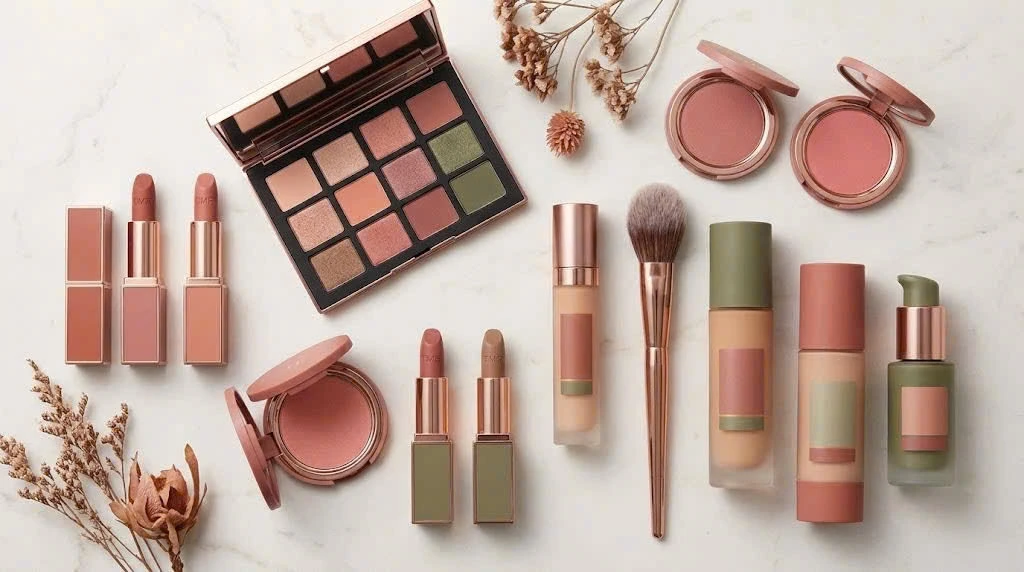
Natural and organic skincare brands usually incline towards earthy tonality. Imagery: sage green, terracotta, warm brown, off-white, and soft blue, suggestive of the natural world. This color scheme conveys healthiness, purity, and an affinity to natural ingredients, which is a plus to the green-conscious consumers.
Bold Makeup Brand Color Palette
In the case of makeup brands that embrace self-expression and artistry, an aggressive palette is usually desirable. These may be bright reds, electric blues, fuchsia, and bright oranges. The colors equally indicate energy, confidence, and a bold attitude towards beauty, usually aimed at a youthful and trendy market.
Step-by-Step Guide to Create a Cosmetic Brand Color Palette
Getting the color models of your ideal cosmetic brand developed is not that big of a deal. We can divide it into actions that can be managed in order to make sure that your decisions are purposeful and effective.
Step 1: Define Your Cosmetic Brand Style
After determining what your core brand is, consider the colors prior to picking. Who is your target audience? What is your ideal set of values? Do you play, luxurious, natural, scientific, and minimalist? The first color choice pattern is to understand what your personality as a brand is and who you are addressing. This will streamline your whole visual branding.
Step 2: Choose a Primary Brand Color
Choose a color that prevails and is the most representative of your brand personality. This will be the most used color, and it will belong to your brand tremendously. Consider your feelings and the connotation of the various colors in relation to your brand and the emotion you want your customers to develop towards it. Such an option is essential for short-term brand recognition.
Step 3: Add Supporting Colors
After you have your main or dominant color, select 1-2 of your supporting colors, which are complementary to your original color. These colors must come together with your central color and add layer and depth to your palette, but not overwhelm it. These colors’s aim is to improve the aesthetic value in general and to add balance.
Step 4: Select Neutral Colors
Balancing and reading are made available by neutral colors such as white, black, grey, beige, or cream. They create a background for your primary and supporting colors to shine through. Neutrals are useful to make sure that your brand does not look too messy due to a rather busy palette.
Step 5: Add Accent Colors
Add 1-2 more color accent colors that are brighter or bolder than your palette. They are applied to a strategic few to add an emphatic feel, e.g., call-to-action buttons, a package of limited edition products, or a special design detail. Colours on the accents offer visual attractiveness and have the ability to attract attention to important messages or products.
Step 6: Test the Palette on Packaging and Website
It is important to consider and only imagine the palette you have selected in the real world. Design fake versions of your packaging, webpage, and social media images. This will aid in maintaining the brand integrity and will also give assurance that the colors are as good in practice as they are on paper. Colors may be changing differently with different materials or screens.
Step 7: Save Your Color Palette with HEX and RGB
After the finalization of the palette record, all the color codes. Store the HEXs (online and web), RGB (online display), in each color. This makes sure that even those who do the printing or the designers on your branding use the very same shades so that you can have the brand complete in all the platforms.
Best Color Combinations for Cosmetic Brands
At other times, just an example or the correct equipment can inspire the ideal concept of the aesthetic of your brand.
Pink and Nude Cosmetic Palette
This combination implies femininity, gentleness, and natural beauty. It suits well where the brand focuses on the softness of touch or simple sophistication.
Black and Gold Luxury Palette
Black and gold are perennial and rich, and such a combination is the first indication of the high-cost luxury, refinement, and high-quality, which suits exclusive lines.
Green and Beige Skincare Palette
Reminiscent of nature, purity, and calmness, this palette is a top choice when targeting organic, natural, or delicate skin-based skincare companies.
Purple and Silver Makeup Palette
Purple is a sense of royalty, creativity, and magic, whereas the touch of silver offers a sense of high-tech and sleekness. Great for innovative makeup.
Peach and Coral Beauty Palette
These friendly, warm colors are indicative of youthfulness, colorfulness, and a warm outlook. Perfect with friendly and light-minded brands of beauty.
Tools to Create a Cosmetic Brand Color Palette
Using Canva to Create Beauty Brand Colors
Canva has simple templates and a color palette creator, so even amateurs can design and test the color combinations and how their brand may look.
Using Adobe Color for Palette Generation
Adobe Color is a robust web-based program that helps in building compatible color palettes. Trends, palettes extracted based on pictures, and all sorts of color rules can undergo a strict selection process to find the best combinations.
Using Coolors for Quick Color Schemes
Coolors.co is a color palette generator with super-fast generation speed. Just press the spacebar to create new palettes, lock the colours that you prefer, and export them in different formats. It is great when you have to ideate fast.
Using Figma for Brand Design
Figma is a collaborative design platform in which one is able to create, structure, and share his/her entire visual brand, including color styles, in a more detailed way. It is strong among designers, which is brand consistency.

Cosmetic Brand Color Palette Ideas Ready to Use
Soft Pink Cosmetic Palette
Consider rose, blush, and off-white. This color scheme is feminine, smooth, and inviting, and would work well as a skincare or daytime makeup.
Elegant Nude Beauty Palette
Taupes, creams, and light browns are sophisticated, minimalist, and natural, and are suitable in luxury or clean beauty.
Clean Skincare Color Palette
Purity, lack of staleness, and a little silver give a modern skincare brand a sense of scientific effectiveness, freshness, and purity.
Pastel Korean Cosmetic Palette
The colors, including mint green, lavender, and baby pink, feel very youthful, chic, and playful, which has become the signature of a lot of K-beauty brands.
Dark Luxury Makeup Palette
Dark charcoal, magnetic gold, and deep burgundy will connote drama, glamour, and luxurious fashion makeup.
Organic Beauty Brand Palette
Sage green, country brown, and a creamy off-white help to address the theme of natural products, sustainability, and tender treatment.
Mistakes to Avoid When Choosing Cosmetic Brand Color Palette
However, it is not difficult to lose the path even when the vision is clear. Here are some pitfalls that you can see and avoid so that the decisions that you make about which palette to use can be as effective as possible.
Using Too Many Colors
A cluttered palette makes your brand message lose its strength. Strive towards clarity and meaningfulness. We recommend 3-5 core colors.
Choosing Colors That Do Not Match Target Customers
Your favorite color as an individual may not appeal to your fans. Study your target audience and their tastes, and make sure that your brand identity resonates with them.
Not Using Neutral Colors
When you do not consider neutrals, the palette will be confusing or unsophisticated. The neutrals offer the required breathing space and equilibrium.
Ignoring Packaging and Print Colors
Colors do not usually appear on screen as they do on print. Always keep in mind how your palette will be reproduced as physical products and marketing material to keep the brand on track.
Not Testing Colors on Light and Dark Backgrounds
Your colors ought to be spectacular and readable in a wide range of backgrounds. Test contrast and visibility to be able to be versatile with all your visual branding.
For more insight into the beauty market, see Strategic Playbook for the Emerging Beauty Market: 2026–2030 Growth Guide
FAQ About Cosmetic Brand Color Palette
How Many Colors Should a Cosmetic Brand Have
Usually, a cosmetic brand has a core color, 1-2 supporting colors, and 1-2 neutral/accent colors, which is 3-5 core colors. This offers flexibility but is not too extensive.
What Colors Are Best for Beauty Brands
The most optimum colors will all be decided by your individual brand and target market. As an example, pinks and pastels may be favorite by younger customers, whereas golds and blacks would be suitable in luxury brands. It is important to know the psychology of colors.
What Color Looks Luxury for Cosmetics
Usually, black, gold, silver, deep jewel colors, such as emerald green, sapphire blue, and ruby red, are linked to luxury. These colors illustrate luxury, opulence, and high-end.
What Colors Are Best for Skincare Brands
It is usually the case that skincare brands like to use the colors that make people associate a sense of purity, freshness, and calm. Consider whites, light blues, greens (or sage or mint, in particular), and warm colors such as beige or terracotta, depending on the focus of the brand on a clinical product or a product based on natural ingredients.
Can Pastel Colors Work for Makeup Brands
Absolutely! Light colors are quite successful when applied in overall makeup brands that are desired to look soft, youthful, playful, or romantic. They are used in the K-Beauty market and during spring/summer collections, especially when a fresh substitute to such a vivid shade is needed.
Conclusion: How to Build a Strong Cosmetic Brand Color Palette
Developing a powerful cosmetic brand color palette is a core ingredient for a successful cosmetic company. The decisions that you make concerning color are not merely decorative. Color is a compelling means of communication and recognition, as well as the means of connecting with your audience. Through a serious approach to formulating the style of your brand and a careful choice of your main, auxiliary, supporting, neutral, and accent colors, one can come up with a visual language that speaks a lot.
Keep Your Palette Simple
Less and less again when it comes to colors. The limited palette of 3-5 colors is certain to be clear and effective without being overwhelming the reader and keeping them in the memory of your brand. Improve aesthetic value with simplicity.
Stay Consistent Across All Branding
After creating your palette, use it throughout your marketing experience, packaging included, and digital advertisements. This consistency and consistency develops the great brand awareness and trust among your consumers.
Test Colors Before Finalizing
The value of testing your colors on real materials and on a variety of digital displays should never be undervalued. This will be a key measure for you to identify any anomalies so that your visual branding is impeccable anywhere.
Choose Colors That Match Your Brand Identity
Finally, the palette of your brand should also have an implication of your brand personality, values, and market. Allow your brand identity to be the guide you use to make all decisions regarding colors so that your visual narrative will be heard.


GMP Cosmetic Manufacturing Compliance Guide: FDA, ISO 22716 & MoCRA Mistakes to Avoid
Is Car Wash Business Worth It in 2026?
Opening Multiple Salon Locations: 6 Expert Tips for Faster Growth
What Is Cosmetic Product Development and Why Do Most New Products Fail?
The Ultimate Guide to Cosmetic Formulation for Beginners
Cosmetic Labeling Requirements Explained (US, EU & Global Standards)