

Trade shows represent game changers for beauty brands. Nonetheless, most brands end up spending heavily without much to show. Developing a strong trade show marketing strategy proves essential. This guide will help you shift your approach to generate actual sales and establish long-term relationships.
Why Beauty Brands Struggle to Generate Sales at Trade Shows in the US
Trade show booths require expensive investments. You allocate time, budget, and personnel. However, many beauty brands leave events without a clear payback. This frustrates any business owner.
High trade show investment with unclear revenue return
Exhibition costs grow rapidly. You pay for booth space, design, travel, and promotional materials. Without a well-developed trade show marketing strategy, these expenses often exceed their apparent returns. You need methods to measure your success accurately.
Busy booths that fail to convert into wholesale or retail orders
Having a crowded booth may appear victorious. However, foot traffic does not necessarily equal sales. Numerous brands attract visitors yet fail to convert interest into real orders. The potential exists, but transformations remain lacking.
Strategic mistakes beauty brands commonly make at US trade shows
One mistake involves a lack of clear goals beyond brand visibility. Another includes an ineffective booth design that deters customer interaction. Many brands also fail at pre-event marketing or post-event follow-up. These errors cost you significant revenue.
How Beauty Buyers and Retailers Evaluate Brands on the Trade Show Floor
Understanding buyer interests can revolutionize your approach. Customers maintain certain standards when evaluating booths. A smart trade show marketing strategy addresses these priorities directly.
What buyers look for in the first few minutes at a booth
Buyers stay busy at trade shows. They scan quickly to find relevant products and compelling stories. They want to grasp your brand’s unique selling proposition at a glance. First impressions truly count on the trade show floor.
Decision-making factors for retailers and distributors
Retailers consider product quality, pricing, and market demand. They also assess your brand story and support infrastructure. Distributors seek healthy profit margins and efficient logistics. Both parties want beneficial working relationships that support their businesses.
Why clarity and differentiation matter more than booth size
You don’t need the largest booth to succeed. A distinct product offer and message prove more effective. Focus on what makes your beauty brand unique. This attracts the right buyers and sparks meaningful conversations.
Mastering Your Trade Show Marketing Strategy: 10 Key Tactics
To succeed, you must develop an active and well-implemented plan. These strategies will inform your exhibition arrangement. They focus on making your trade show participation genuinely lucrative.
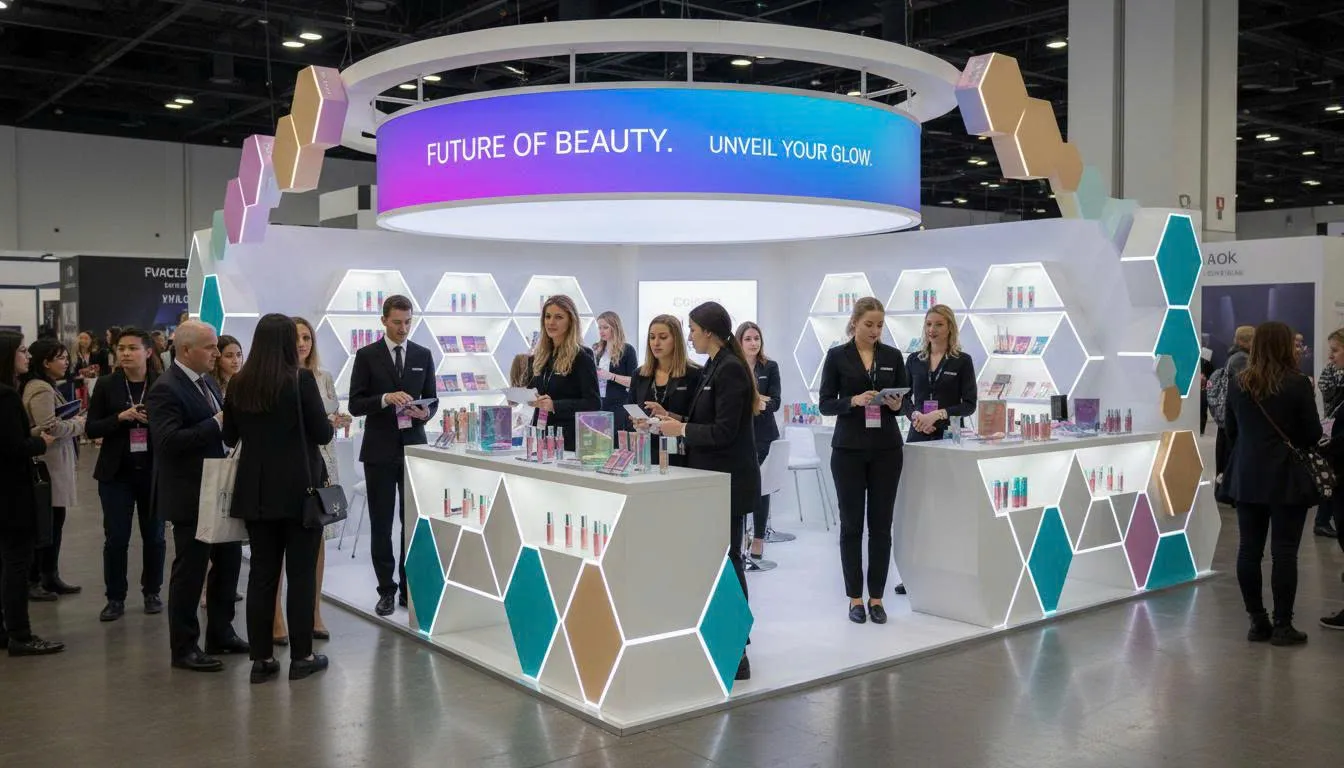
1. Set Clear Sales-Focused Goals Before the Trade Show
Determine how your brand defines success. Don’t just desire increased brand awareness. Establish targets, such as securing X wholesale accounts or generating Y in new orders. Your objectives should remain measurable and specific.
Defining success beyond brand awareness: Move past vague awareness goals. Target concrete outcomes like lead counts or revenue targets. Your trade show marketing strategy requires quantifiable benchmarks to assess performance accurately.
Aligning marketing, sales, and leadership teams: Align your marketing, sales, and leadership teams completely. Everyone should understand the goals clearly. This ensures concentrated effort toward shared objectives. Strong alignment enhances overall effectiveness significantly.
Metrics that indicate real trade show performance: Monitor metrics like qualified lead numbers, scheduled follow-up meetings, and sales conversions. These indicators reflect actual trade show performance. They help you analyze your investment value and understand critical numbers.
2. Design Your Beauty Booth to Support the Buyer Journey
Eliminate typical booth layout problems that damage conversion rates. Avoid creating dead ends or congestion points. Your booth layout must feel inviting, not confusing. Always consider natural traffic flow patterns.
Common booth layout issues that hurt conversion: Dead ends trap visitors awkwardly. Overcrowded areas overwhelm potential customers. Your trade show marketing strategy should prioritize intuitive navigation and comfortable browsing zones.
Structuring space for discovery, demos, and sales conversations: Arrange your space to facilitate discovery, product display, and individual discussions. Establish separate zones for product exhibition, live demonstrations, and sales talks. This guides visitors through natural experiences and enhances buyer interaction.
Reducing friction in the in-booth buying experience: Minimize friction throughout the in-booth purchasing process. Ensure prices remain clear, and samples stay readily available. Easy buying procedures help buyers advance to the next steps. Reduce complexity at every interaction point.
3. Communicate a Strong Value Proposition in Seconds
Buyers stop and engage when they encounter clear, strong messages. Your main product should appear self-evident immediately. Display your distinct selling points prominently. Leverage visuals and succinct slogans effectively.
Messaging that resonates with US beauty retailers: Craft messaging that appeals specifically to US beauty retailers. Showcase benefits like healthy margins, special ingredients, or addressing specific consumer needs. Communicate in their language and fulfill their requirements. Illustrate how your offering addresses their challenges.
Positioning mistakes that create confusion or disinterest: Avoid positioning errors that generate confusion or boredom. Don’t become too ambiguous or use excessive technical language. Your message must stay direct and compelling. Clarity creates genuine interest.
4. Drive Qualified Traffic With Pre-Show Outreach
Don’t rely entirely on walk-in traffic, which proves unpredictable. Most major purchasers schedule their visits beforehand. You must appear on their radar before they arrive. Proactive outreach becomes essential.
Email and outbound tactics to attract the right buyers: Use email and outbound strategies to capture attention from the right buyers. Create personal requests targeting specific audience segments. Emphasize new launches or special promotions. Make them feel recognized and special.
Scheduling meetings before the show starts: Schedule meetings before the show begins. This guarantees face-to-face time with high-priority leads. Pre-planned meetings ensure quality networking opportunities. It represents smart use of your limited time.
5. Turn Product Demos Into Revenue-Generating Conversations
Why do demos often fail to generate orders? They focus too heavily on features rather than solutions. Great demos showcase benefits clearly. They bridge gaps between buyer needs and products.
Using demos to uncover buyer needs and intent: Discover buyer needs and intent through your demonstrations. Engage the audience by asking questions during presentations. Learn about their existing challenges and preferences. Adjust your presentation based on their interests. Make it personally relevant.
Moving from product interest to pricing discussions: Transition smoothly from product interest to pricing conversations. After buyers understand the value, discuss how to begin. Present your wholesale packages or retail options. Encourage them to make concrete commitments.
6. Train Booth Staff to Qualify and Convert Buyers
High-performing booth teams display specific behaviors consistently. They stay friendly, knowledgeable, and proactive. They listen more than they talk. Top staff members represent your greatest assets.
Questions that identify serious buyers quickly: Equip your staff with questions that identify serious buyers rapidly. Focus on their role, needs, and purchasing timeline. This helps prioritize interactions effectively. Don’t waste time on casual window shoppers.
Ensuring consistent communication across staff: Ensure consistent communication across your entire staff. Everyone should deliver the same brand message and product information. Frequent training sessions prove invaluable here. A unified front builds buyer trust.
7. Capture High-Intent Leads Instead of Collecting Contacts
Low-quality lead collection creates problems. Most brands collect business cards without context. This results in poor follow-up outcomes. You need quality over quantity.
Prioritizing buyers, distributors, and decision-makers: Prioritize buyers, distributors, and key decision-makers. Target people positioned to make actual orders. Their contact information carries much greater value. Focus your lead generation strategically.
Systems for recording actionable lead data: Install systems to capture actionable lead information. Record their specific product interests, potential order sizes, and follow-up preferences. CRM systems or detailed lead sheets work wonderfully. This facilitates effective post-event follow-ups.
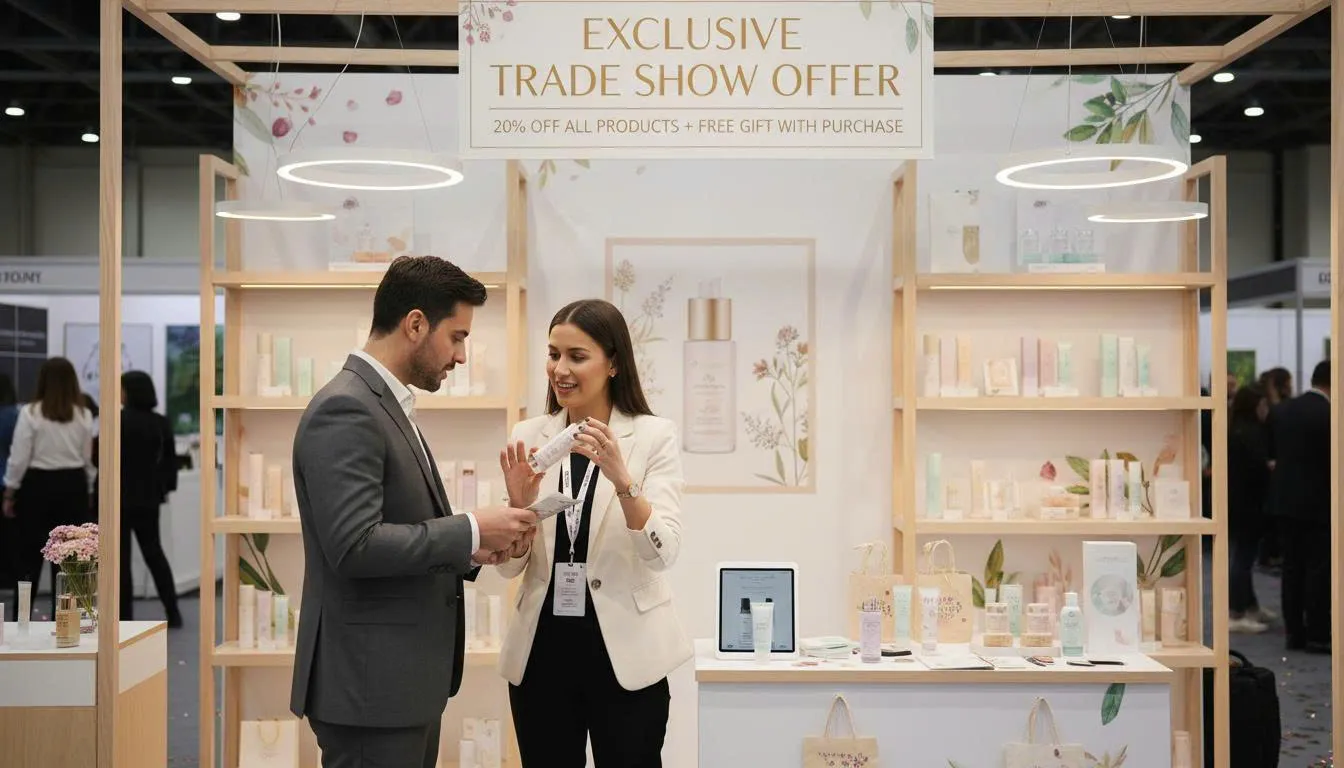
8. Use Trade Show-Only Incentives to Create Urgency
Promotions that encourage immediate business at the exhibition prove effective. Consider special pricing, priority delivery, or exclusive product packages. These provide strong motivation for immediate commitments. Make your offers genuinely attractive.
Balancing incentives with long-term brand value: Balance incentives against long-term brand value carefully. Don’t devalue your brand image through excessive discounting. Offers must enhance, not diminish, your perception. Your brand maintains significant value.
Avoiding price-driven positioning: Avoid over-reliance on price-driven positioning. Stress the intrinsic value of your products. Bonuses shouldn’t serve as primary purchase motivations. Emphasize quality and advantages first.
9. Convert Leads After the Show With a Structured Follow-Up Process
Follow-up timing significantly influences deal momentum. Strike while the iron is hot. Deliver tailored emails within the first 24–48 hours. Prompt replies reflect how serious you are.
Segmenting outreach by buyer type: Segment outreach by buyer types carefully. Tailor messages to retailers, distributors, or media contacts. Each group has unique needs and interests. Personalized approaches lead to higher engagement rates.
Post-show workflows that support sales teams: Provide post-show workflows that support sales teams effectively. Schedule follow-up calls, deliver product samples, or provide requested information. Automate processes where possible while maintaining personal touches. Consistency proves crucial here.
Please refer to Financial Planning for Salon Growth for more interesting development strategies
10. Analyze Results and Improve Future Trade Show Performance
Assess the commercial value of trade show attendance carefully. Compare sales generated directly from events to your total investment. Calculate your ROI accurately. This helps justify continued participation.
Identifying what worked and what didn’t at the booth: Determine what succeeded and what failed at your booth. Examine lead generation activities, booth design effectiveness, and staff performance. Collect feedback from your team members. Every event offers valuable lessons.
Applying insights to future events and strategies: Transfer learnings to new events and plans systematically. Use data to refine your planning processes. Optimize your targeting and promotional activities. Growth is driven by continuous improvement.
Turning Beauty Trade Shows Into a Repeatable Sales Channel
Trade shows present networking opportunities and direct sales potential simultaneously. They become business development pillars with the right trade show marketing strategy. Focus on strategic planning and execution to maximize returns.
When trade shows make sense for beauty brands
Trade shows work best when introducing new products or entering new markets. They provide firsthand feedback on buyers and competitors. They also excel at building brand awareness and strengthening relationships. With clear goals, they prove invaluable.
Scaling trade show participation as the brand grows
Start small and perfect your approach gradually. As your brand expands, you can invest in larger booths or premium events. Use event analytics to make sound decisions. An effective trade show marketing strategy becomes a stable sales engine for your beauty brand.
FAQs
Q1: How can I measure the ROI of my trade show participation?
Track all show-related costs comprehensively. Then calculate direct sales, new wholesale accounts, and qualified lead values generated. Compare these to your total investment. This provides a proper perspective on returns.
Q2: What’s the most important aspect of booth design for beauty brands?
Clarity and engagement matter most. Your booth should communicate your brand value immediately and invite interaction. Focus on product presentation, approachable design, and strong visual branding. Your brand presentation should appear flawless.
Q3: Should I prioritize lead quantity or quality?
Always prioritize quality over quantity. Focus on gathering contact details from high-intent buyers and decision-makers. These leads show a higher probability of converting into actual sales. Quality leads drive business progress.
A trade show marketing strategy proves essential for beauty brands seeking maximum ROI from exhibitions. These 10 tactics provide a complete framework for transforming your beauty booth from a simple display stand into an effective selling machine.
Beauty brands that invest in strategic planning, booth staff training, and structured follow-up will consistently outperform competitors. By setting specific objectives, designing your booth to facilitate consumer experiences, and executing systematic post-show follow-up, you can develop repeatable models that produce consistent sales. Start implementing these concepts at your next trade show and make exhibitions a foundation for sustainable beauty brand growth.


Automating Salon Operations: 9 Proven Ways to Boost Efficiency & Profits
Financial Planning for Salon Growth: 6 Proven Strategies for Big Wins
Effective Strategies for Lead Capture at Events
How to Create a Memorable Customer Experience at Events
How to Build a Successful QR Code Marketing Strategy
Opening Multiple Salon Locations: 6 Expert Tips for Faster Growth