

We are living in an exciting era where digital innovation transforms our everyday experiences. One of the most impactful changes in beauty retail is the rise of AR makeup try-on technology.
This innovative solution lets you instantly visualize how different products look on your face. It blends augmented reality with cosmetics, offering a unique “try before you buy” experience.
This technology is quickly becoming essential for brands seeking instant user engagement.
The Technical Architecture of Hyper-Realistic AR Cosmetics
Creating a truly realistic virtual try-on experience involves complex technical work. It is not just a simple filter.
We build advanced systems that simulate real-world physics and light. This ensures the digital makeup looks natural on every user.
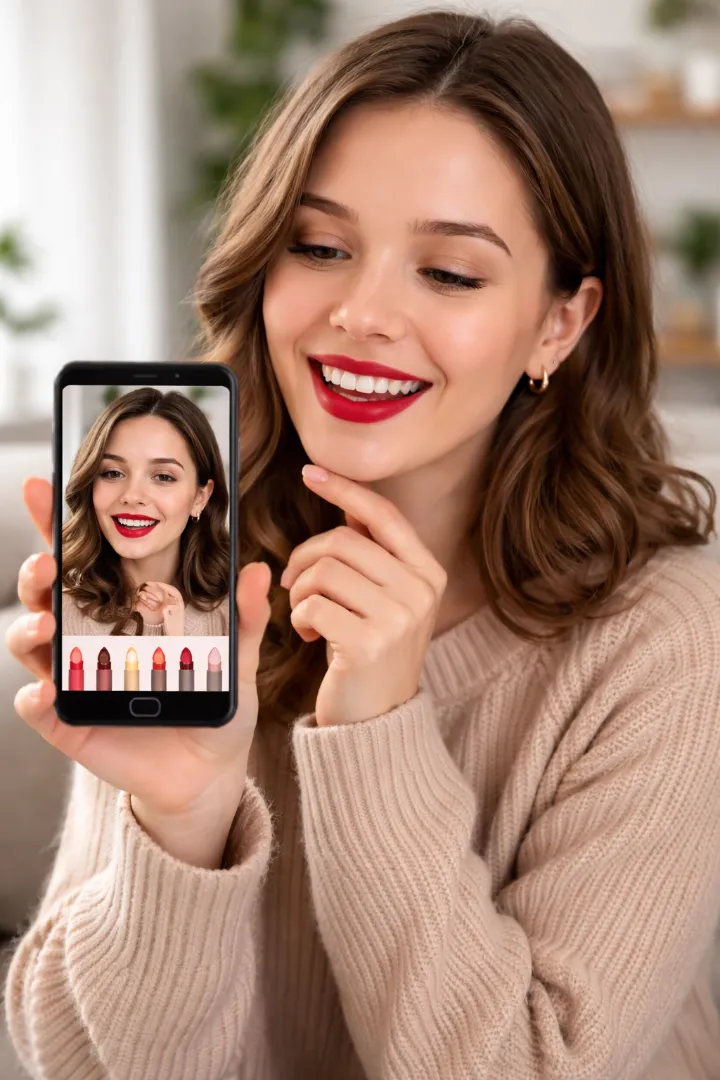
Physically Based Rendering (PBR) and Dynamic Light Simulation
Physically Based Rendering, or PBR, is key to realism. It makes digital objects react to light just like real ones.
We use PBR to accurately show how makeup interacts with skin. This includes how light reflects and scatters.
This advanced rendering technique helps us achieve unparalleled visual accuracy.
For example, different makeup finishes react to light uniquely. A matte lipstick absorbs more light. A glossy finish reflects light brightly.
Shimmer products scatter light to create sparkle. Our AR systems precisely model these light reflectance properties. This ensures that a virtual product looks exactly like its physical counterpart.
We aim for perfect digital twins.
Also, lighting conditions change constantly. Your bathroom light differs from outdoor sunlight. Our technology dynamically calibrates to these changes.
It adjusts the virtual makeup’s appearance in real time. This ensures the try-on looks consistent and natural, no matter your environment.
This real-time calibration is vital.
Furthermore, skin is not a simple surface. Light penetrates the skin, scatters, and then exits. This phenomenon is subsurface scattering.
It gives skin its soft, natural look. Our AR makeup models this complex interaction. This makes digital cosmetics blend seamlessly with your actual skin tone and texture.
It avoids a “painted on” or artificial look.
3D Face Mesh Mapping and Precision Motion Tracking
Another critical element is accurately mapping makeup to your face. This is not simple overlays anymore.
We use sophisticated 3D face mesh mapping. This creates a digital replica of your facial contours. It allows makeup to sit perfectly on your virtual face.
This mapping ensures a custom fit.
Our technology identifies over 100 specific points on your face. These are called facial landmarks. They include points around your eyes, lips, and nose.
These landmarks create a detailed map. This map allows for precise alignment of virtual makeup. It ensures a natural and custom fit every time.
Your face is rarely still. You blink, smile, and talk. Our AR system uses precision motion tracking.
It keeps the virtual makeup perfectly stable on your face. This happens even when you move your head or make expressions. The digital cosmetics stay locked in place.
This provides a very realistic and immersive experience.
True realism means handling complex layers. What if your hair falls over your cheek? Or you wear glasses?
Our technology features advanced occlusion handling. It can realistically layer digital makeup behind hair strands. It also works with accessories like hats or glasses.
This creates an incredibly believable virtual try-on scene. It makes the experience feel truly authentic.
Psychological Drivers of Instant User Engagement
AR makeup isn’t just a technical marvel. It is deeply related to human psychology. This helps drive instant user connection.
We understand how people decide things. We use this to create more engaging experiences. These experiences encourage exploration and purchase.
The Endowment Effect and the Power of Virtual Ownership
The endowment effect is a powerful concept. We tend to value things more when we feel we own them. Virtual try-on creates a sense of ownership.
When you see a lipstick on your own lips, it starts to feel like yours. This urges you to buy it.
This creates emotional connections through personalized visualization. Seeing yourself with a product builds an immediate bond. It shifts from “what if I buy this?” to “this is already mine.”
This personal connection drives conversion. It helps users feel more confident about their choices.
We also see extended user session duration via interactive product discovery. People spend more time exploring options. They try different shades and styles.
This interactive play keeps them engaged longer. More time equals more chances to find a perfect match. This makes the shopping experience fun and engaging.
Reducing Friction in the Traditional Beauty Journey
The traditional beauty shopping journey has many hurdles. Finding the right shade can be hard. Testers can be unhygienic.
AR makeup removes these pain points. It creates a smoother, more enjoyable path to purchase. This reduces any hesitation shoppers might have.
One major advantage is rapid multi-shade swatching and comparison. Imagine trying 50 shades of lipstick in seconds. You can compare them side-by-side easily.
This is impossible in a physical store. Our virtual tools make quick comparisons simple and efficient. This speeds up the decision-making process.
It also eliminates hygiene barriers for confident, risk-free exploration. No more worrying about shared testers. You can try every shade safely from your home.
This boosts confidence in trying new products. It removes a major deterrent for many shoppers. This erases all the worries in shopping.
Lastly, it gamifies the shopping experience to drive social sharing. Trying on makeup becomes a fun activity. Users can share their favorite looks with friends.
This creates social engagement and free marketing. Friends often ask, “What app is that?” This organically spreads brand awareness.
Quantifying Strategic ROI and Commercial Value
Implementing AR makeup isn’t just about cool tech. It’s about clear business results. We see significant returns on investment (ROI).
This technology drives measurable commercial value. It impacts conversion rates, average order values, and even return rates. We track these metrics closely to show its effectiveness.
Conversion Rate Optimization and Cart Value Growth
One of the biggest impacts is on conversion rate optimization. When users can try before they buy, confidence grows. This leads to more purchases.
We consistently observe higher conversion rates for products with AR try-on. It helps hesitant shoppers feel sure about their choice.
It bridges the online confidence gap for high-intent shoppers. Many people hesitate to buy makeup online. They worry about color accuracy.
AR makeup provides that missing confidence. It assures them the shade will look good. This turns browsers into buyers more effectively.
AI-driven recommendations also increase Average Order Value (AOV). Our systems learn user preferences. They suggest complementary products or shades.
“You liked this lipstick, perhaps try this matching liner?” This intelligent cross-selling boosts the total cart value. It makes shopping more personalized and valuable.
Sustainable Commerce Through Reduced Return Rates
Returns are costly for businesses and the environment. AR makeup helps reduce these significantly. We aim for a more sustainable commerce model.
Accurate virtual try-on means fewer mismatches. This results in happier customers and fewer returns.
It mitigates color-mismatch returns via high-fidelity accuracy. The number one reason for makeup returns online is color mismatch. Our high-fidelity AR accuracy tackles this head-on.
Users see exactly how a shade will look. This greatly reduces the chances of returning an item. It builds trust in online purchases.
This also optimizes logistics by aligning digital expectations with reality. When what you see online matches what you get, logistics run smoother. Fewer returns mean less shipping and handling.
This approach benefits businesses with greater efficiency and offers customers more convenience.
Finally, there’s the environmental impact of lowering shipping-related returns. Fewer returns mean fewer trucks on the road. This reduces carbon emissions.
It lessens packaging waste. AR makeup supports a greener, more eco-friendly beauty industry. We are proud to contribute to sustainability.
Operational Roadmap for Implementing AR Makeup Solutions
So, how do brands actually bring AR makeup to life? We follow a clear, progressive roadmap. This ensures a smooth and effective integration.
From initial setup to ongoing optimization, each stage is crucial. It helps brands maximize the technology’s benefits.
Five Progressive Stages of Technology Integration
Implementing AR makeup involves several key steps. We break it down into five manageable stages. This approach helps brands integrate the technology effectively.
Each stage builds upon the last, ensuring a robust deployment.
Stage 1: Asset Digitization and 3D Product Catalog Construction
First, we create digital versions of physical products. This means scanning actual makeup items. We build a comprehensive 3D product catalog.
Each shade and texture is accurately captured. This digital foundation is essential for realistic try-ons.
Stage 2: Platform Selection: Evaluating Web AR versus Native App SDKs
Next, brands choose how to deploy the AR experience. Options include Web AR, accessible directly through a browser. Or, a native app SDK for integration into existing mobile apps.
We help evaluate which platform best fits a brand’s needs and audience.
Stage 3: Designing Frictionless UI for Instant Camera Activation
User experience is paramount. We design an intuitive and frictionless user interface (UI). Activating the camera should be instant and easy.
The goal is to get users trying on makeup with minimal clicks. A smooth UI encourages higher engagement rates.
Stage 4: Omnichannel Deployment Across Web, Social, and In-Store Kiosks
AR makeup should be everywhere customers are. We facilitate omnichannel deployment. This means integrating the technology across websites, social media platforms, and even in-store kiosks.
This ensures a consistent brand experience no matter the touchpoint.
Stage 5: Analyzing User Engagement Data for Iterative Optimization
Finally, we continuously analyze performance. We look at user engagement data, conversion rates, and session durations. This data informs iterative optimization.
We categorize the experience based on real user feedback. This ensures ongoing improvement and maximum impact.
Ensuring Trust Through Privacy and Algorithmic Inclusion
While AR makeup offers great benefits, trust is crucial. We put priority on user privacy and data security. We also ensure our algorithms are fair and inclusive.
This builds confidence in the technology. It makes sure everyone can enjoy the experience safely.
Biometric Data Security and Global Privacy Compliance
Facial scanning involves biometric data. We recognize the sensitivity of this information and safeguard it with robust security controls.
Our systems are designed with privacy at their core. This means adhering to the highest standards of data protection.
We prioritize on-device processing for facial data protection. Instead of sending facial data to external servers, we process it locally. This means your data stays on your device.
It protect your privacy and security at the highest level. Your facial information is never stored or transmitted elsewhere.
Transparent consent architectures for GDPR and CCPA adherence are vital. Users must understand the way their data is used. We build clear consent mechanisms.
These comply with global regulations like GDPR and CCPA. Users have full control over their data. This fosters trust and transparency.
Diversity-Driven AI Training for Universal Accuracy
AI algorithms can sometimes carry biases. This happens if they are not trained on diverse data. We actively work to prevent this in our AR makeup systems.
We believe everyone deserves an accurate and inclusive experience.
We mitigate algorithmic bias across global skin tones and features. Our AI models are trained on vast, diverse datasets. These include a wide range of skin tones, facial structures, and features.
This ensures the virtual makeup looks natural and accurate on everyone. We want it to be truly universal.
Ensuring accessible interfaces for diverse digital literacy levels is also important. Not everyone is tech-savvy. Our user interfaces are designed to be simple and intuitive.
This makes the AR makeup experience accessible to all users. We aim for broad usability across different skill levels.
Supplemental Insights: Evaluating the Value of Digital Beauty
As we explore the depth of AR makeup, some key questions naturally arise. These insights help further evaluate its value. We look at different aspects, from essentiality to specific use cases.
This provides a fuller picture of its impact.
Is AR Makeup Technology Now Essential for Brand Survival? (Boolean Question)
For beauty brands aiming for market leadership, we believe AR makeup is rapidly moving from “nice-to-have” to “must-have.” While not every small brand might collapse without it today, ignoring this trend is risky.
It’s a key differentiator and expectation for modern consumers. It drives significant competitive advantage and customer loyalty.
So, yes, it’s becoming essential for sustained growth and relevance.
What Technically Distinguishes Professional AR from Social Filters? (Definitional Question)
The difference lies in precision and purpose. Social media filters are often for entertainment. They provide exaggerated or fun effects.
Professional AR makeup uses hyper-accurate 3D rendering and advanced facial tracking. It aims for realism and precise shade matching. It also prioritizes accurate product representation for commerce.
This level of technical sophistication is far beyond simple filters.
Which Beauty Categories Yield the Highest Engagement via AR? (Grouping Question)
We see high engagement across several categories:
Lip and Cheek Cosmetics: The high-volume engagement leaders
Lipsticks, lip glosses, blushes are top performers. Users love trying endless shades. The immediate visual change is striking.
This drives very high engagement numbers.
Foundations and Concealers: The high-utility shade-matching leaders
These products are critical for finding the perfect match. AR makes shade matching incredibly accurate. This provides immense utility for shoppers.
It reduces the biggest pain point in online foundation shopping.
Complex Eye Art and Lashes: The technical innovation leaders
Eyeliner styles, eyeshadow palettes, and false lashes offer complex looks. AR handles intricate details. It shows how these products enhance the eyes.
This pushes the boundaries of virtual artistry.
How Does Web-Based AR Reach Compare to Native App Stability? (Comparative Question)
Web-based AR offers broad reach. Users can access it instantly via a browser link. There’s no app download needed.
This lowers the barrier to entry significantly. However, native app AR often provides superior stability and performance. It can access device hardware more directly.
The choice depends on the brand’s priorities: maximum reach versus ultimate performance. Many brands use both.
See AI’s roles in the beauty industry at How an AI Booth Enhances the Beauty Customer Experience
Final Verdict: Does AR Makeup Replace the In-Store Sensory Experience?
We believe AR makeup does not replace the in-store sensory experience. Instead, it enhances it. AR serves as a powerful digital bridge.
It helps customers narrow down choices before visiting a store. It also allows for extensive exploration from home.
In-store, AR kiosks can complement physical testers. This creates a holistic, engaging shopping journey. It combines the best of both worlds.
The goal is to enrich the overall customer experience, not to replace a part of it.
Frequently Asked Questions About AR Makeup
What are the main benefits of AR makeup for consumers?
For consumers, AR makeup offers a risk-free way to try products. You can experiment with many shades and styles from home. It saves time and removes hygiene concerns.
This leads to more confident purchasing decisions.
How accurate is AR makeup technology?
Modern AR makeup technology is highly accurate. It uses advanced rendering and tracking. This ensures realistic appearances across different skin tones and lighting.
While minor variations can occur, it provides an excellent preview.
Can AR makeup integrate with existing e-commerce platforms?
Yes, AR makeup solutions are designed for seamless integration. They can embed into existing e-commerce websites. Many also offer SDKs for mobile apps.
This allows brands to easily add virtual try-on features to their platforms.


Revolutionizing Retail: How an AI Booth Enhances the Beauty Customer Experience