

I love the energy of a busy trade show floor. The hum of voices and the flash of screens create a unique buzz. However, I know that energy alone does not prove success.
You need the right booth engagement measurement tools to see what really happens. These tools help me understand how visitors move and interact.
In this guide, I will share nine ways to make your measurement strategy better. We will look at how to gather data without being pushy. I will also show you how to turn that data into real sales.
Using these booth engagement measurement tools properly ensures your next event is a triumph.
Defining Success Within the Engagement Funnel
Every great plan starts with a clear goal. I always look at the engagement funnel first. This funnel shows the journey a visitor takes.
It starts when they see your booth from the aisle. It ends when they become a qualified lead. Understanding this path is vital for event success.
I use booth engagement measurement tools to track every step of this journey.
I focus on identifying key physical touchpoints. These are areas where visitors stop and look. It might be a demo station or a video wall.
By tracking these spots, I can see what catches the eye. This visitor interaction tracking helps me refine the booth layout. I want to know which parts of the display work best.
I often use booth engagement measurement tools to compare different zones.
I also work on balancing traffic volume with interaction quality. High foot traffic is great for optics. However, it does not always mean high value.
I want to see how many people stay for a deep conversation. This system allows me to see the difference. I can tell if people are just passing through or truly interested.
This data helps me focus my team on the right visitors.
Utilizing Passive Sensors for Automatic Data Collection
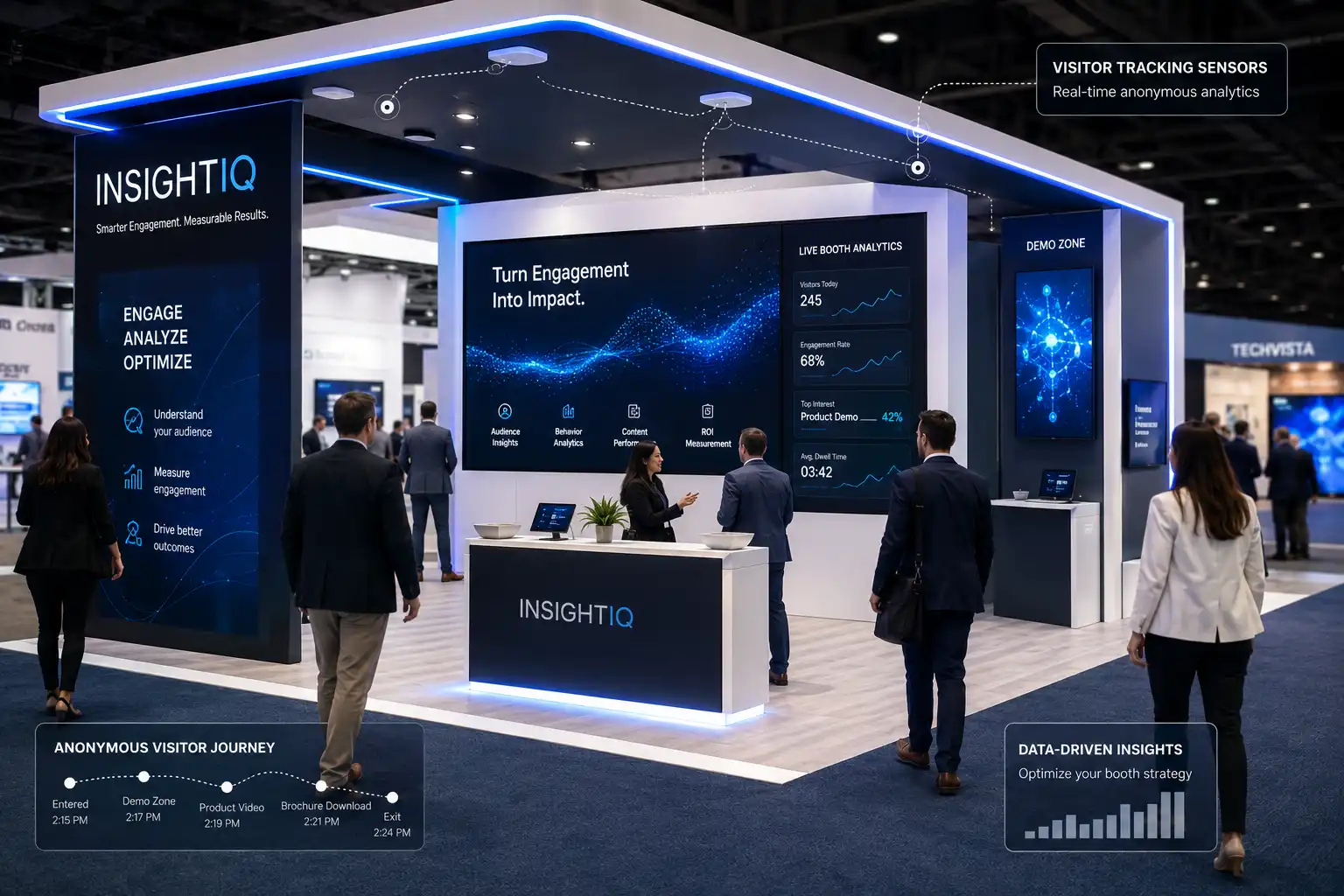
I find that passive sensors are game-changers. They collect data without asking the visitor to do anything. This keeps the experience natural.
Modern booth engagement measurement tools now include advanced sensor tech. This tech works in the background while I focus on my guests.
1. Deploying computer vision for visitor counts
I use computer vision to get accurate visitor counts. These smart cameras can tell the difference between a person and a piece of furniture. They count how many people enter the booth space.
I get an accurate number of total impressions this way. These booth engagement measurement tools provide a clear view of booth popularity. I can see peaks and valleys in traffic throughout the day..
2. Tracking heat-maps for flow optimization
Another enhancement is tracking heat-maps. I use these maps to see where people cluster. If a corner is empty, I know I need to change something.
This attendee flow analysis tells me how to move traffic. I can move a popular demo to a quieter area. This balances the booth energy.
These booth engagement measurement tools make floor plan changes easy and data-driven.
3. Measuring sentiment via attention analysis
I also measure sentiment through attention analysis. This tech looks at how long people look at a specific screen. It can even detect facial expressions to gauge interest.
I find this very helpful for testing new marketing videos. If people look confused, I can fix the message. These booth engagement measurement tools give me insights that a simple scan cannot provide..
Upgrading Active Tools for Deeper Lead Insights
Passive data is great, but active tools provide the details. I use lead capture technology to learn who my visitors are. This helps me build a better relationship after the show. Upgrading these booth engagement measurement tools is a smart move for any exhibitor.
4. Improving lead retrieval with qualification apps
I always improve my lead retrieval with custom qualification apps. These apps let my team take notes quickly. We can rank a lead as “hot” or “cold” in seconds.
I can also add specific questions to the app. This ensures we collect the data my sales team needs. The right apps bridge the gap between a chat and a sale..
5. Capturing dwell time through digital content
I capture dwell time by offering digital content. When a visitor views a PDF or a video, I track it. I want to know exactly how long they spent on each item.
This helps me create an interest score. If someone spends five minutes on a product video, they are highly interested. These booth engagement measurement tools help me rank leads by their actual behavior..
6. Implementing RFID for frictionless tracking
I love implementing RFID for frictionless tracking. Digital badge scans are good, but RFID is better. It tracks a visitor as they move near a sensor.
I don’t have to ask them to scan their badge every time. It makes the visit feel smoother for the guest. These booth engagement measurement tools provide a complete map of the visitor’s journey..
| Tool Type | Primary Benefit | Effort for Visitor |
| Computer Vision | High-accuracy counts | Zero |
| RFID Tracking | Seamless journey maps | Zero |
| Lead Capture Apps | Detailed contact info | Low (Scanning) |
| Digital Content Logs | Specific interest data | Medium (Interaction) |
Synchronizing Your Measurement Tech Stack for Accuracy
Data is only useful if it is organized. I make sure to synchronize all my tools. When my systems talk to each other, I get a better picture.
I use event analytics to combine different data points. This synchronization is the key to mastering booth engagement measurement tools.
7. Managing real-time performance dashboards
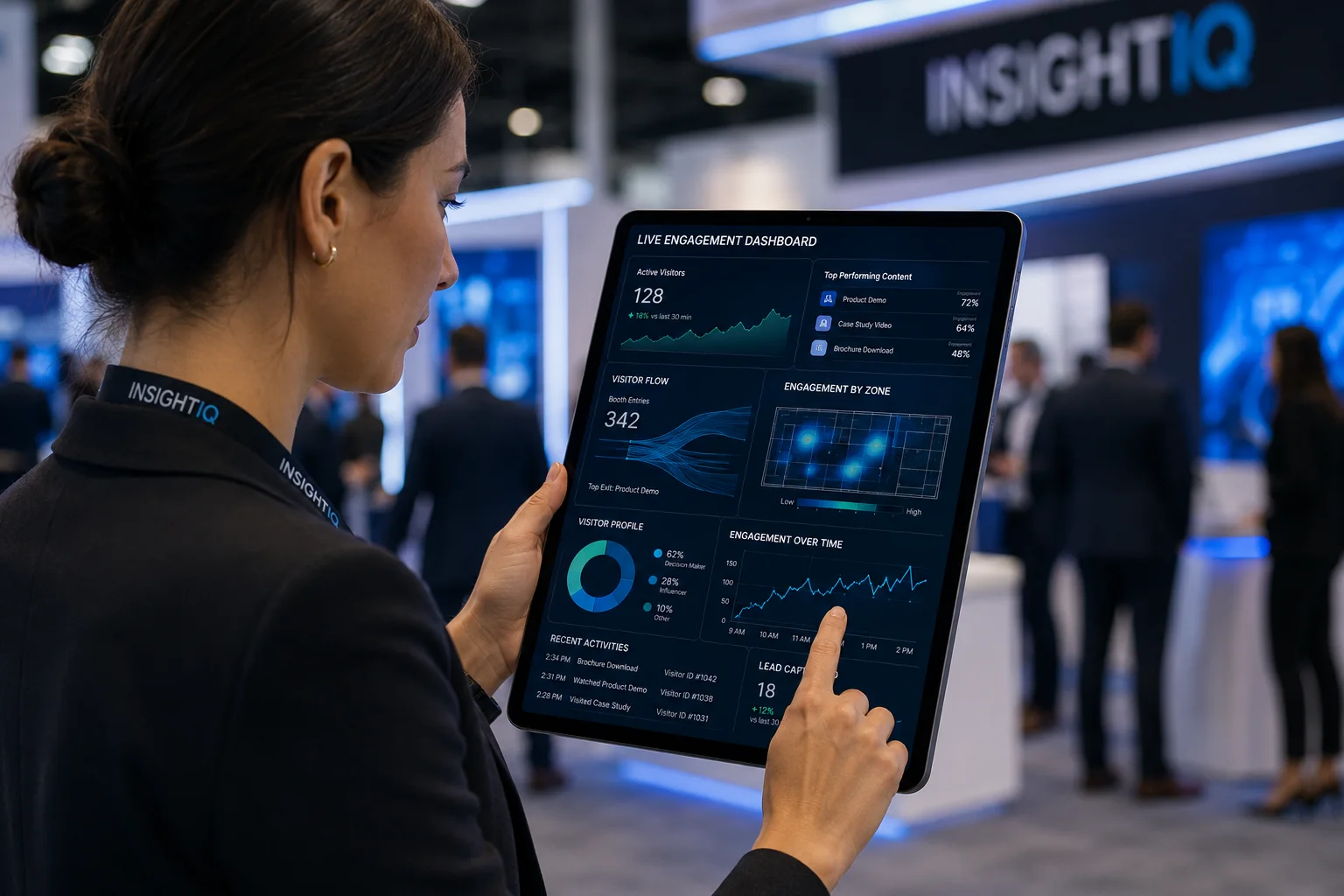
I manage my events using real-time engagement dashboards. These screens show me what is happening right now. If I see a drop in engagement, I can act fast.
I might tell my team to start a new demo. I can also see which staff members are the most active. These booth engagement measurement tools allow for quick adjustments during the show..
8. Evaluating staff efficacy using data
I use data to evaluate how my staff is doing. I can see how many leads each person captures. I also look at the quality of those leads.
This is not about being a bossy leader. It is about finding out who needs more training. This approach helps me build a stronger team for the next event.
I also focus on connecting exhibition metrics to my corporate CRM. This is a vital step. I want my sales team to see the booth data immediately.
When they call a lead, they should know what the person liked. This makes the follow-up feel personal and helpful. I use booth engagement measurement tools to ensure no data is lost in the shuffle..
Strategic Answers to Common Industry Questions
I often get asked how to handle the “creepy” factor of data collection. It is a fair question. You must balance data needs with visitor comfort. A thoughtful strategy makes all the difference.
9. Maintaining privacy compliance during events
I always prioritize privacy compliance. I make sure my booth engagement measurement tools follow GDPR and CCPA rules. I place clear signs that explain we are collecting data.
I also give people a way to opt out if they want. This builds trust with my audience. Trust is the foundation of any good business relationship..
Matching technology to your specific booth scale is also important. If I have a small 10×10 booth, I don’t need 20 cameras. I might just use a single lead capture app and one sensor.
For a large custom island, I use a full suite of advanced event tech. I always scale my tech to fit my space and my budget.
I also spend time comparing proprietary versus show-mandated hardware. Sometimes the show provides tools, but they might be basic. I often prefer to bring my own systems.
This gives me more control over the data. It also allows me to use the same setup at every show I attend. This creates consistent data over time..
Protecting the Integrity of Your Measurement Success
I have seen tech fail on the show floor many times. It is a nightmare for any exhibitor. I take extra steps to protect my data collection. I want my systems to work perfectly from start to finish.
I focus on preventing tech-related entry barriers for visitors. If a check-in kiosk is slow, people will walk away. I make sure all my tools are fast and easy to use.
I test everything many times before the doors open. My goal is to make the experience invisible to the guest.
Ensuring hardware stability on the show floor is my final tip. Trade shows have messy Wi-Fi and power issues. I use wired connections whenever I can.
I also bring backup batteries for all my mobile devices. If one tool goes down, I have a plan to keep measuring. Reliable systems are the only ones worth using..
Frequently Asked Questions
How do I measure ROI with these tools?
I measure ROI by looking at the cost per lead and the lead quality. By using booth engagement measurement tools, I can see which activities led to the most sales. I compare the total show cost to the total value of the deals closed.
Are passive sensors better than active lead capture?
I think you need both. Passive sensors give you big-picture data like crowd size. Active lead capture gives you the contact details you need to make a sale. I use a mix of both for the best results.
I hope these tips help you master your next trade show. Remember that data is a tool to help you connect with people better. It should never get in the way of a good conversation.
When you use booth engagement measurement tools correctly, you gain a massive advantage. You can see what others miss and improve your strategy every year. This approach is the key to proving your value and growing your business..


AI Cameras to Analyze Visitor Behavior: The Comprehensive Guide to Business Intelligence
15 Ironclad Strategies for Remote Store Data Security Management in 2026
17 Proven Strategies to Master Fast Payment Integration for Booths Effortlessly
Conquering Privacy Concerns in E-commerce Personalization: 5 Critical Strategies for Absolute Customer Trust
10 Revolutionary Strategies: How AI Improves E-commerce Customer Experience
7 High-Performance Contactless Payment Solutions for Booths to Maximize Your Revenue