

The trick to a perfect makeup routine is smoothing your face base naturally. Many people wonder how to apply foundation correctly. This step-by-step guide covers everything you need.
We address skincare prep, expert application techniques, and troubleshooting tips. Prepare to achieve a flawless final finish that looks like your best skin.
1. Preparation and Choosing the Right Tools
Foundation application begins before you touch the product to your skin. Proper tools and preparation make a significant difference.
You can ensure your foundation resembles a second skin. This section discusses essential initial steps.
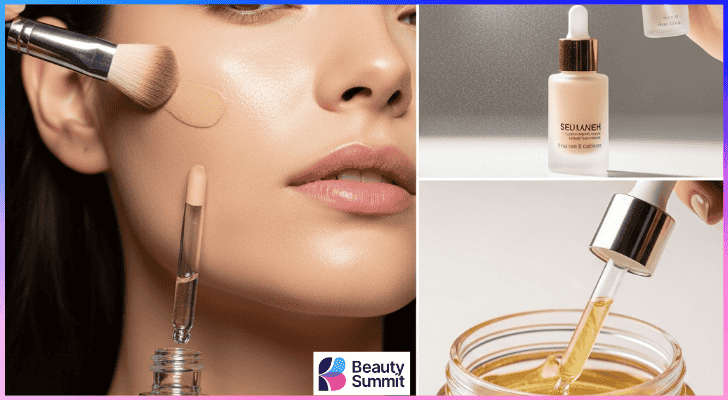
Preparing the Skin Canvas
Start with clean skin as your foundation base. Light exfoliation helps shed dead skin cells effectively.
This prevents the foundation from clinging to dry patches. Hydrate your skin thoroughly after cleansing with a quality moisturizer.
Allow time for your moisturizer to absorb completely. Follow the “5-Minute Rule” before applying other products.
Wait at least five minutes between skincare prep steps. This prevents product piling and maintains a smooth texture.
Hydrated skin creates the ideal canvas when learning how to apply foundation. Your moisturizer acts as a barrier between skin and makeup.
This helps the foundation glide on smoothly. It also prevents makeup from settling into fine lines.
Next, consider adding primer to your routine. Primer serves as a buffer between the skin and the foundation layers.
Select a silicone-based primer to blur pores and fine lines. Choose a water-based primer for additional hydration and glow.
Perform the “Tacky Test” before moving forward. Your skin should feel slightly tacky for optimal makeup adhesion.
This tackiness helps with foundation longevity throughout the day.
Selecting the Best Applicator
Your tool choice heavily impacts your final finish. Each applicator offers unique advantages for different needs.
Choose one based on your skin type and coverage goals.
Damp Beauty Sponge: A damp beauty sponge works beautifully on dry skin types. It delivers a natural, dewy appearance effortlessly.
Wetting the sponge causes it to swell with water. This prevents excessive product absorption and allows light layers.
Dense Foundation Brush: A dense kabuki-style foundation brush excels for fuller coverage. It works particularly well on oily skin types.
Look for synthetic bristles for the best results. They pair perfectly with liquid and cream formulas for precise application.
Fingers: Your fingers warm up cream or stick foundations naturally. This helps them melt into the skin for an extremely natural look.
Fingers work best when you need quick, light coverage. They’re ideal for touch-ups throughout the day.
2. Step-by-Step Application Guide
After preparing your skin and gathering tools, the application begins. These steps deliver professional-quality results every time.
Focus on blending and building light layers for optimal appearance. This guide ensures a smooth, natural final finish.
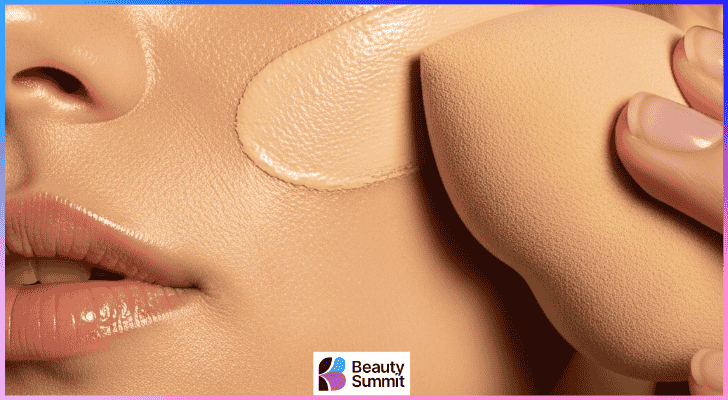
Application and Blending Techniques
Never pour foundation directly onto your face initially. Instead, dispense a small amount onto your hand’s back.
This controls the quantity you use. It also warms the product slightly, enhancing blending ability.
Use the “Center-Out” method when learning How to apply foundation. Start where you have the most redness or unevenness.
This typically appears around your nose and cheeks. Work outward toward your hairline and face perimeter.
Blend carefully along your jawline and hairline edges. This prevents a harsh makeup line from forming.
It helps your foundation blend seamlessly into your natural skin. The transition should appear invisible and natural.
Pay attention to correct application movements for best results. Stippling means pressing product into skin with a patting motion.
This builds coverage gradually without disturbing your base. Buffing involves small circular movements to blend edges perfectly.
Avoid dragging or swiping motions across your face. Swiping can shift product and create visible streaks.
Instead, press foundation in using gentle patting movements. This technique helps you avoid cakiness while building coverage.
Finishing Touches and Setting
Once the foundation application is complete, apply concealer strategically. Using concealer over foundation prevents it from moving around.
This order is crucial for seamless blending. Apply concealer only where needed—under eyes or on blemishes.
Now set your foundation for lasting wear. Setting helps with durability and controls shine throughout the day.
For oily skin types, press loose setting powder into your T-zone. This technique is called “baking” in professional circles.
For dry skin, use a setting spray containing glycerin instead. This fuses all your makeup layers together beautifully.
It provides a smooth final finish without heavy powder. The spray creates a protective barrier over your makeup.
3. Troubleshooting Common Issues and Skin Types
Even with careful application, problems can occur occasionally. Knowing how to fix them is crucial for success.
This section addresses common issues like texture problems. It also provides recommendations for various skin conditions.
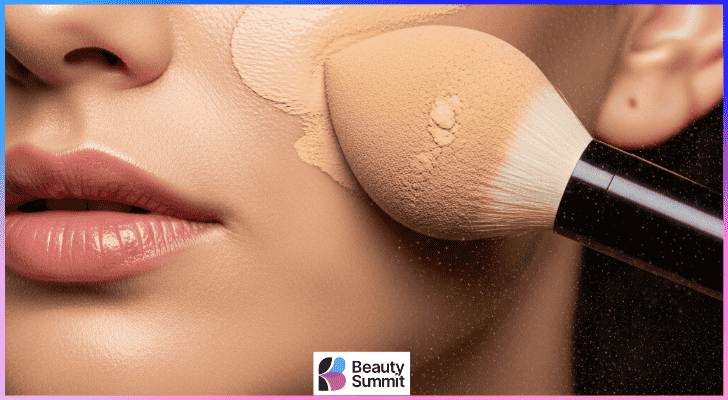
Fixing Texture and Longevity Problems
A cakey appearance ranks among the most common complaints. The solution involves spraying your face with water lightly.
Then, press a damp beauty sponge against affected areas gently. This rehydrates your makeup and presses down surplus powder.
Foundation separation on the nose is another frequent issue. The nose bridge tends to produce more oil naturally.
Apply eyeshadow primer before foundation in this specific area. Then use extremely thin foundation layers to control oil.
This prevents makeup breakdown throughout the day. For more tips on lasting makeup, visit Allure’s guide to long-lasting makeup.
Visible peach fuzz can cause an uneven foundation appearance. The secret is a final downward blending pass.
Once you’ve applied foundation, lightly sweep your tool downward. This flattens facial hair against your skin’s surface.
It creates a smoother, more uniform appearance overall. This simple action significantly helps you avoid cakiness and texture issues.
Adjusting for Specific Skin Conditions
Proper technique is essential if you have acne or textured skin. Gently pat filling primers onto textured surfaces when learning how to apply foundation.
Never rub them harshly across bumps. Use a stippling patting motion when applying your foundation base.
This builds coverage without emphasizing texture or bumps. Avoid heavy layers that will highlight imperfections instead of concealing them.
For mature skin, skip heavy setting powder under the eyes entirely. Powder can settle into fine lines and emphasize them.
Choose serum-based foundations for a youthful appearance. These formulas feel refreshing and lightweight on the skin.
They deliver a more natural, glowing final finish. Focus on light application throughout your face.
Blend upward motions to create a subtle lifting effect.
4. Common Questions and Advanced Tips
Beyond basic application, other foundation questions arise frequently. This section clarifies popular concerns and misconceptions.
It also offers advanced tips for perfecting your technique. You’ll make wiser decisions about products and methods.
Understanding Formulas and Tools
Do I need to use primer every time?
No, not always when you know how to apply foundation properly. Well-moisturized skin may provide a sufficient base on its own.
However, primer acts as extra insurance for longevity. It also offers color correction and creates a smoother canvas.
What is “oxidizing” in foundation?
Oxidizing is a chemical reaction that occurs on the skin. The foundation darkens or turns orange after initial application.
This happens due to contact with natural skin oils. The true color appears after the foundation dries down completely.
Always patch test the foundation and wait to see its natural color. This prevents shade-matching disasters and wasted product.
Which foundations suit specific skin needs best?
Mature Skin: Serum foundations provide hydration and youthful radiance without settling into lines.
Oily/Acne-Prone: Oil-free matte formulas control shine and reduce pore clogging throughout the day.
Sensitive Skin: Mineral powder foundations contain fewer potential irritants and harsh chemicals.
Setting Powder vs. Setting Spray Comparison:
Setting powder absorbs excess oil and provides matte durability. Setting spray creates a protective coating that locks in your final finish.
Combining both creates a “sandwich” effect for maximum wear. Choose wisely based on your skin type and climate.
5. Removal and Skin Care
The final step in your foundation routine is proper removal. Makeup removal is as crucial as the application itself.
It prepares your skin for the following day. It also maintains long-term skin health and prevents breakouts.
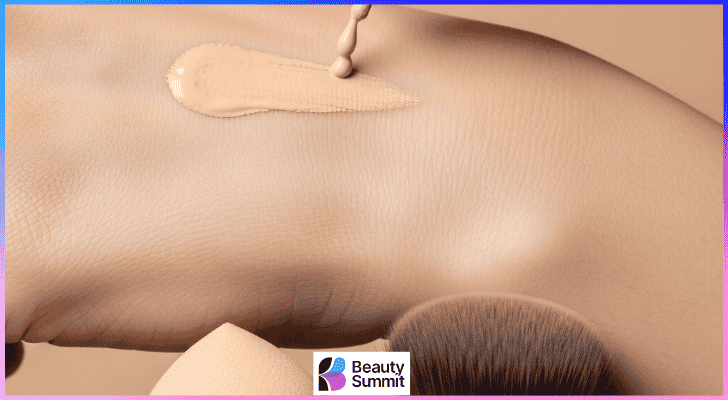
The Double-Cleanse Method
Long-wear foundations contain stubborn polymers and silicone primers. Water alone cannot dissolve these ingredients effectively.
Apply an oil-based cleanser first to break down makeup. A cleansing oil or balm works perfectly for this step.
Massage it thoroughly over dry skin initially. This dissolves makeup, sunscreen, and impurities trapped in pores.
The oil binds to makeup molecules and lifts them away.
Following the oil cleanse, use a water-based cleanser second. This step purifies pores to a deeper level effectively.
It eliminates any remaining residue from the oil cleanser. This two-step process protects your skin barrier health.
Your face will feel completely clean and refreshed. Your skin will be prepared for nighttime skincare products.
For proper cleansing guidance, refer to the American Academy of Dermatology’s guide on how to wash your face.
Frequently Asked Questions (FAQs)
Q1: How do I achieve perfect shade matching?
Try foundation shades on your jawline in natural daylight. The right shade should blend seamlessly into your skin tone.
Consider your undertone (cool, warm, neutral) when shade matching. This ensures a natural-looking final finish.
Q2: Can I apply foundation without primer?
Yes, you can when you understand how to apply foundation to well-prepared skin. Properly moisturized skin often provides a sufficient base alone.
However, primer offers advantages like extended wear and pore blurring. It creates a smoother canvas for application.
Q3: Why does my foundation look cakey by midday?
This usually results from using excessive product or setting powder. Try applying thinner light layers with a damp beauty sponge.
A hydrating setting spray can refresh your appearance throughout the day. This prevents a heavy, cakey final finish.
Conclusion
Learning how to apply foundation requires practice and patience. Using these professional tips, you’ll achieve flawless, natural results consistently.
Remember that the goal is to enhance your natural beauty. Your foundation should resemble skin, not heavy makeup.
Experiment with different techniques and products confidently. Find what works best for your unique skin needs.
Perfect your blend seamlessly with each application. Enjoy your radiant, confident appearance every single day!


7 Best Picks for Bioderma Sunscreen: Safe, Gentle Protection
Sun Exposure After Laser Hair Removal: Safety Guide & Recovery Timeline
Sun Damage After Laser Hair Removal: A Clinical Guide to Identifying, Treating, and Reversing Skin Damage
Eyeliner Tips: 7 Pro Secrets for a Flawless, Smudge-Proof Look
How to Choose A Foundation Shade: A Step-by-Step Guide
Face Wax Strips: 10 Key Facts for Smooth, Lasting Results