
A live event is a form of establishing a physical sales funnel. You spend a lot of money on booth space and employees. However, a lot of business owners are at risk of passive browsing when a potential customer passes by. This guide unveils a strong conversion strategy that will convert casual visitors into regular purchasers.
We will demonstrate how to move from attention-gaining (Browsing) to experience creation (Trying), and finally to revenue generation (Buying). No more wasting of good foot traffic as an opportunity. You can turn more visitors into customers.
This strategy will have an unmistakable changeover. You will cease to rely on the same practices of vanity, such as the foot traffic at the booth, for the real, physical sales outcomes. Prepare to maximize all the interactions in your next event.
- Define live events as a corporeal sales funnel.
- Conquer the danger of being passively browsed at your booth.
- Acquire a fundamental system for taking people to buy.
- Movement of tracking foot traffic to real sales.
The Foundations of Event Conversion Strategy
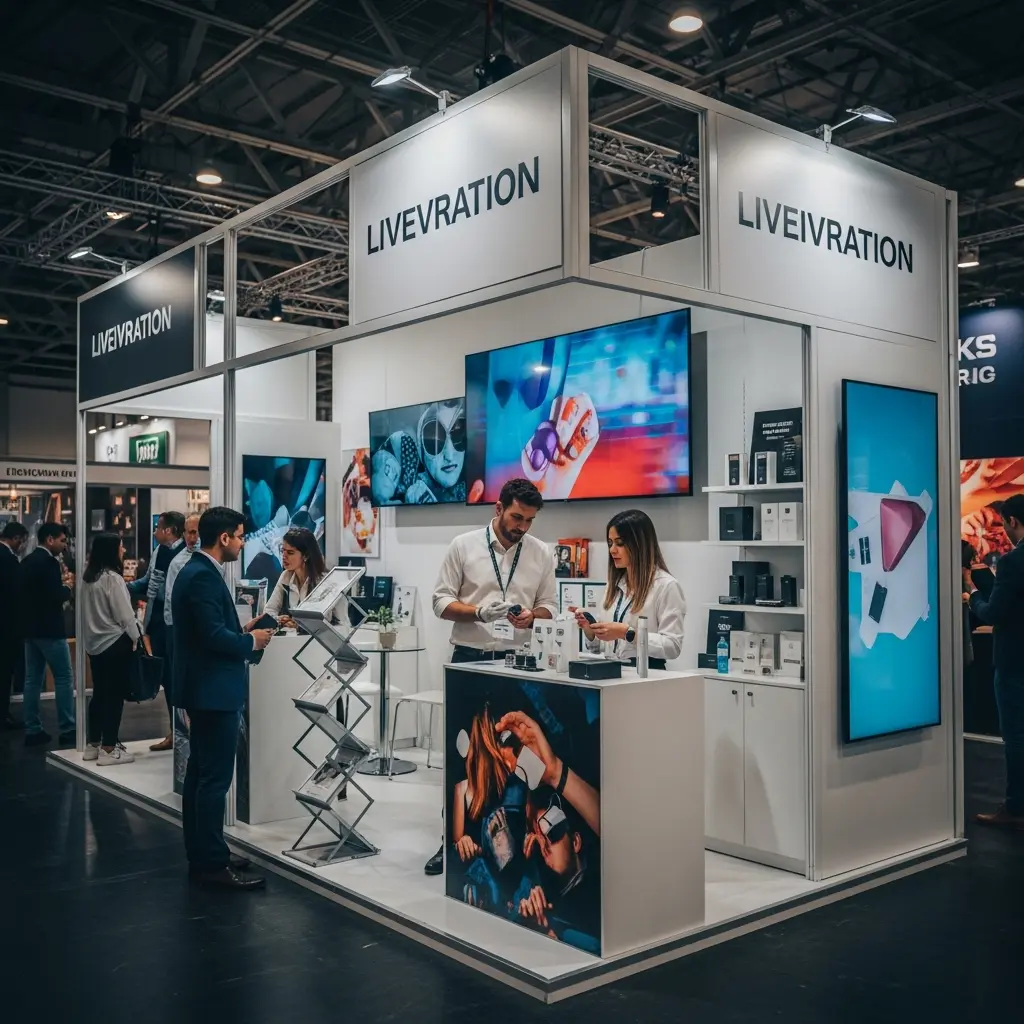
What makes a high-performance event conversion strategy? It is not just about a nice booth. It considers the purposeful planning of all touchpoints.
You aim at guiding visitors through the sales process. This plan assumes that the event floor is an ever-changing marketplace where every second counts.
Take into account the 10-3-1 Rule of Event ROI. One out of every 10 individuals who visit your stand should actually become interested. Of those 3, you need to make 1 of them a customer or a lead that will be qualified.
This principle can guide you to have achievable objectives. It also emphasizes maximizing individual steps when implementing an effective event conversion strategy.
Digital conversion is very different compared to event conversion. When using person-to-person communication, attention spans are short-lived. The real-life physical friction points, such as crowds or waiting lines, exist.
Nevertheless, the possibility of one-on-one, high-impact interaction is enormous, as well. This is why it is important to optimize your event interactions to gain meaningful lift.
| Aspect | Digital CRO (Website/App) | Physical Event Conversion (Booth) |
| Attention Spans | Longer, but easily distracted by other tabs. | Extremely short (seconds), high environmental distraction. |
| Friction Points | Complicated forms, slow loading times, and unclear navigation. | Crowds, physical barriers, staff availability, and perceived pressure. |
| Lift Impact | Optimization yields incremental percentage gains. | Direct interaction yields dramatic, immediate conversion lifts. |
Capturing Attention: The Browsing Phase
In several seconds, your booth has to impress. The booth layout rule of 3 seconds is this one. You must clearly convey your value in your booth from 10 feet away.
Straightforwardness and direct visual appeal are important. What hast thou got therefore, why must they halt? Understanding this critical phase is essential for any event conversion strategy.
Enhance your Stopping Power Index using dynamic factors. Research indicates that movement and tactical lighting can add visitor stops up to 42. Take video screens, moving screens or interactive. These are eye catchers and stand out in an event floor that is generally very crowded.
Reconsider your scripts on staff interaction. Do not use passive types of questions, such as can I help you? Rather, employ Open Loop questions.
Attempt: What is the difficulty that brings you here to this event today? or [specific pain point]. Are you seeking solutions to [specific pain point]? This provokes discussion, and not a flight.
The tactical visuals will lead you and your visitors into your space. They make them feel they should stop by:
The Power of Height: Utilise high displays or signs. These lighthouses will make your booth visible across the hall.
Sensory Anchoring: Use more than one sense. Provide something special in terms of scent, background music, or attractive textures. This makes it an atmosphere to remember and to visit.
Eliminating Physical Obstacles: Do not have a reception desk or rope in front of your booth. Create a free and inviting entrance. Ensure that people find it easy to go and investigate.
Building Trust: The Trying Phase
After capturing their attention, make them trust and be interested. In this regard, the Endowment Effect is important. Studies have also indicated that when a customer possesses the chance to touch or handle a product, the purchase intention would rise by up to 30%.
Allow them to possess it, taste it, or feel it firsthand. This engagement tactic is crucial for your event conversion strategy.
Use intelligent micro-conversions. Differentiate Value-for-Data exchanges. Give a free sample or a brief demonstration in return for a badge scan or a brief survey.
This gathers quality lead information. It also generates goodwill as it gives the visitor something to enjoy in the moment.
Master the 60-Second Demo Rule. The demonstration of your product must be within a short time span and be effective. Centralize on one of the advantages or strengths.
Do not try to congest your booth. Make the demo short, interesting, and simplified. You do not want to dishearten them, but to interest them.
Develop friction-free points of contact. These promote more interaction:
Interactive Gamification: Add short and fun games or quizzes. These may be in connection with your product or industry. Provide minor rewards to achieve more participation and data collection.
Social Proof Anchoring: Expose trial areas and activate them. Have satisfied customers who use your product. Highlight customer feedback or case studies. This creates confidence about what you have to offer.
Closing the Sale: The Buying Phase
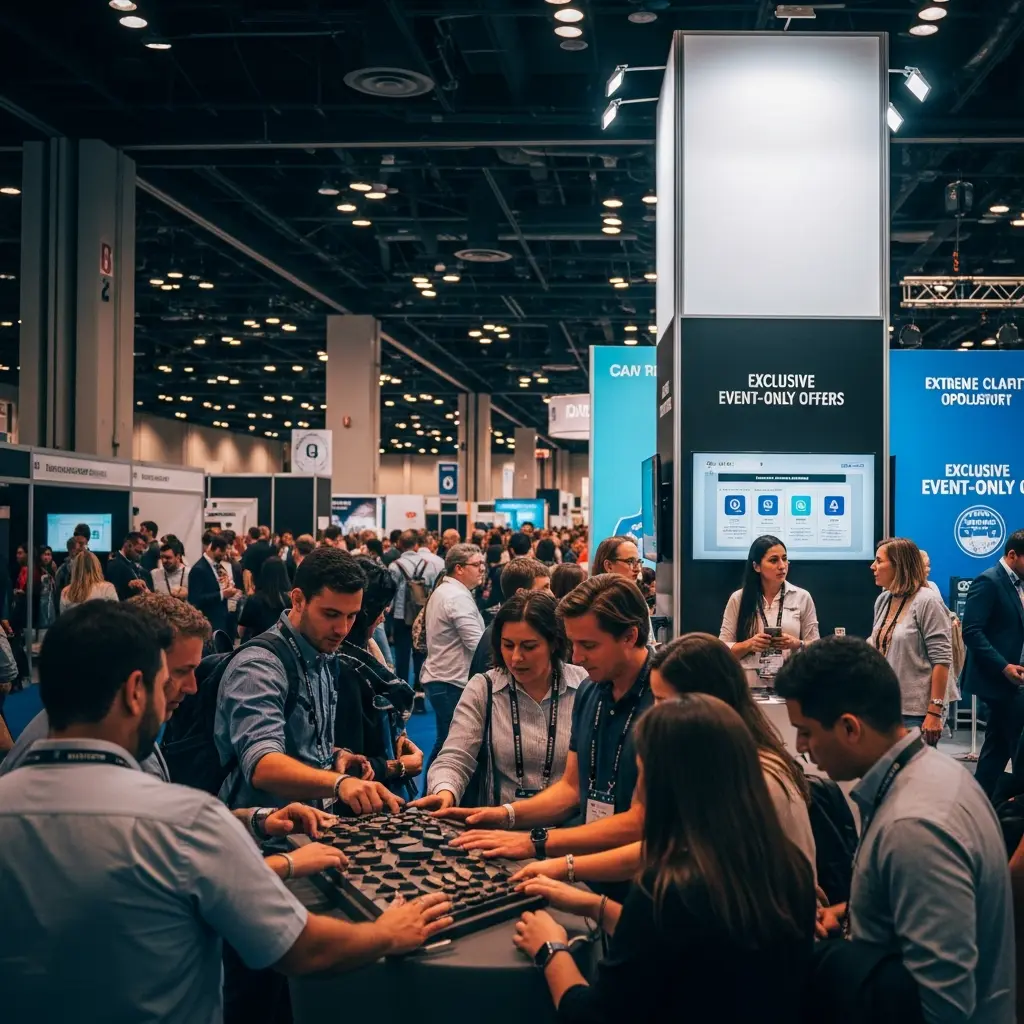
It is time to shift from interest to commitment. Effective use of the Urgency Trigger. Introduce Event-Only Offers (EOOs). These are exclusive and available discounts, packages, or bonuses during the event.
Scarcity caused on-site commitment. Make it clear that these deals are very short-lived. This closing technique is a cornerstone of any successful event conversion strategy.
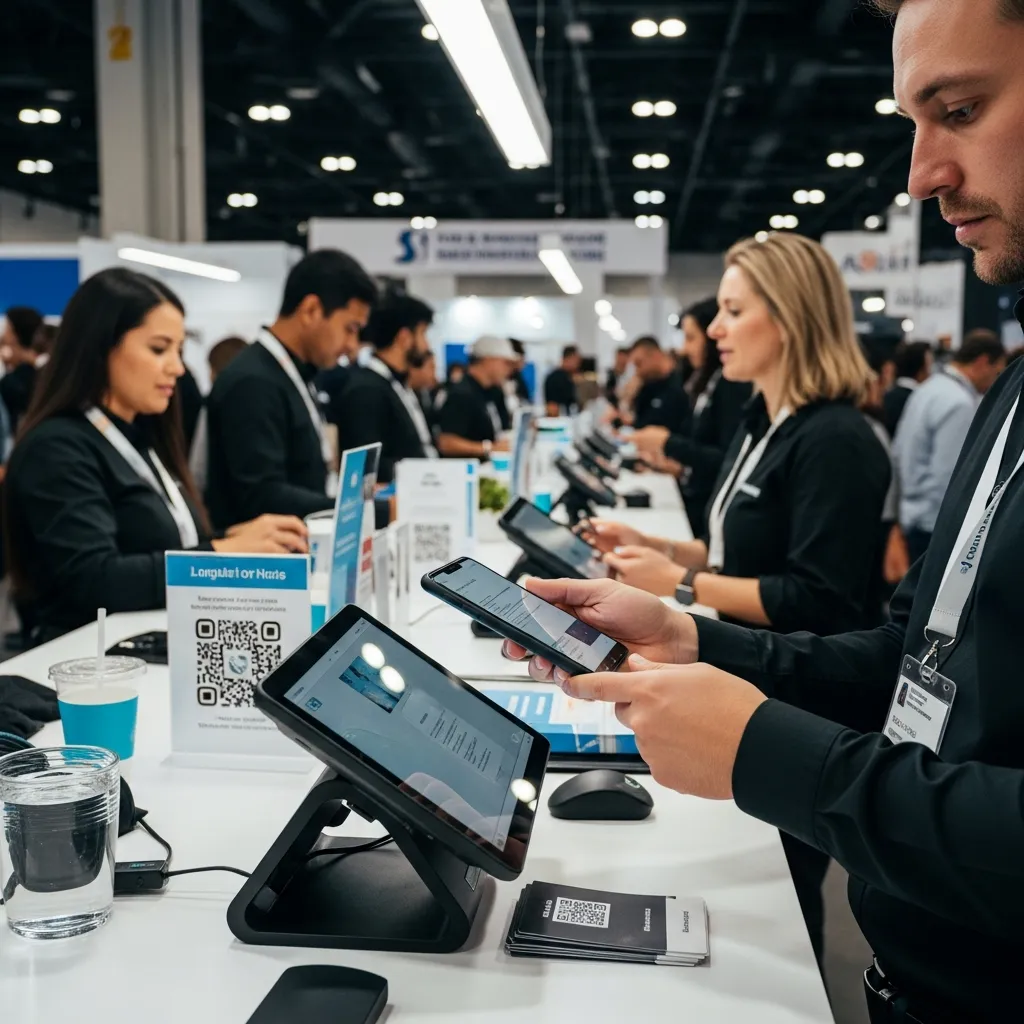
Do away with transactional friction to facilitate purchases. Make buying easy and fast. A long line will easily scare away a keen customer. These are typical barriers that should be mitigated through the following:
| Barrier | Solution |
| Checkout Lines | Deploy multiple Mobile POS (Point-of-Sale) devices. Enable staff to process transactions anywhere in the booth. |
| Logistics of Carrying | Offer Scan-to-Home Shipping options. Allow customers to purchase at the event and have items delivered. |
| Limited Payment Options | Accept diverse payment methods: credit cards, digital wallets (Apple Pay, Google Pay), and even QR code payments. |
Apply the Assumptive Close Technique. Once the demo is successful, go to payment.
Use expressions such as how many would you like to bring home today? or “We could have this established today. This strategy will direct the discussion to a purchase, as there must be an established interest.
When it is a high ticket, then secure the partial conversion. This aim may not be a direct sale. Rather, arrange a face-to-face meeting or a follow-up consultation (personalized). This warms them up and takes them to the next level of your sales stream.
Maximizing ROI: Post-Event Nurturing
The success of your event does not stop as soon as the doors are closed. The 24-hour Lead Velocity Rule is critical. The follow-up leads opened within 24 hours tend to have a higher open rate, 3 times greater.
Make a personalized email or a call close by. Engagement is significantly high when it comes to timeliness. Proper post-event follow-up completes your event conversion strategy cycle.
Split into segments due to the level of interaction. Draw a line between those who will be casual Browsers and those who will be active Triers. General brand awareness content can reach browsers.
Tiers, on the other hand, must receive content that is related to their interests or the product that they were engaging in. This personalization enhances this relevance.
Connect omnichannel retargeting. Feed online marketing efforts with information that you gather at your stall. Install social remarketing advertisements for people who scanned a badge or came into your venue. One-on-one video follow-up, according to their particular product interest, may also prove to be very effective.
Make CRM Handshake seamless. Add event information to your CRM. Pass information on the map to your sales teams immediately. This ensures the process is fully covered.
It also permits tracking and reporting on the customer journey all the way through. Integration is key to measuring your event conversion strategy’s effectiveness.
Strategic FAQs and Risk Assessment
Is a crowded booth always successful?
No, a packed booth is not necessarily a success. It can be an indicator of interest. But when it causes “Trial Friction” (lengthy waits, hard access), then it may cause conversions to stall. Enhance movement and interaction with the staff to handle crowds.
How does Event Conversion ROI compare to PPC?
ROI General ROI may be concerned with the long-term customer lifetime value (LTV). PPC is concerned with cost per acquisition (CPA). The incidents lead to more connected relationships and quality leads.
This may result in a better LTV than a fast PPC conversion. Understanding these metrics helps refine your event conversion strategy.
Major Event Conversion Killers:
- Inadequate training of staff: Staff who are not ready to meet the visitors cannot interact well with them.
- Poor user experience (UX): Overcrowded booths or unclear demonstrations can turn visitors away.
- Payment failures: Rigid or unstable payment systems result in sales.
- Overlooking common pitfalls: Review the 10 most common trade show sales mistakes to avoid losing sales before they happen.
From the creation of first impressions to the acquisition of long-term purchase incentives, an excellent conversion strategy changes your appearance at an event. It guarantees that each time you are on the event floor, you are adding to your bottom line. Mastering your event conversion strategy transforms casual booth visitors into committed buyers and long-term customers.


Strategic Playbook for the Emerging Beauty Market: 2026–2030 Growth Guide
Global Cosmetics Expo: Top 5 Key Insights For Shaping Beauty’s Future
Southeast Asia Beauty Hub: Navigating the 2025 Market Landscape and Vietnam’s Ascendance
How to Create a Memorable Customer Experience at Events
Trade Show Staff Training: 12 Steps to 3x Booth Performance (Ultimate 2026 Guide)
Skincare Workshop at Beauty Summit: What to Expect and How to Join