
Automating salon operations has become the strategic advantage separating thriving salons from those struggling to keep pace. The benefits of automating salon operations and digital solutions for spa efficiency are fundamentally transforming how beauty businesses deliver exceptional client experiences while building sustainable profitability.
Why Automating Salon Operations Is Essential for Modern Beauty Businesses
The strategic integration of technology to streamline, optimize, and elevate every part of your business operations—from client scheduling to inventory management and beyond—has become an absolute necessity for salons of all sizes.
What once seemed like a luxury reserved for large spa chains now represents a competitive must-have in an increasingly demanding marketplace. When automating salon operations, clients expect seamless, personalized experiences at every touchpoint.
Time Savings and Operational Efficiency
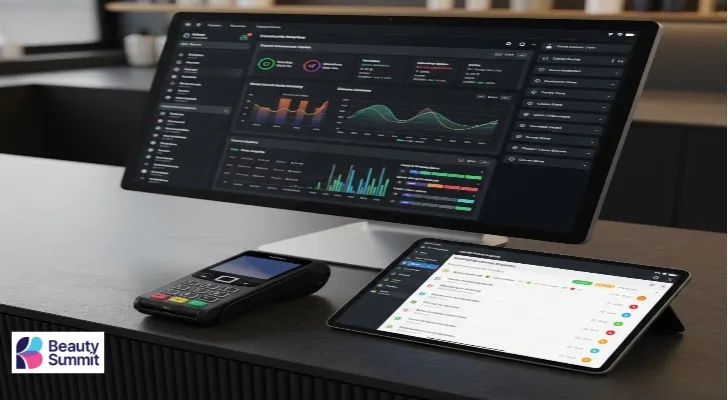
Implementing salon technology frees you and your talented team from the endless cycle of repetitive administrative tasks. These include manual appointment logging, inventory counts, and payment reconciliation.
By automating salon operations, you allow everyone to redirect their energy toward what truly matters: delivering outstanding services that keep clients returning.
Imagine reclaiming 10-15 hours each week previously lost to scheduling conflicts, data entry errors, and chasing down client information scattered across notebooks and outdated spreadsheets.
Enhanced Client Experience Through Digital Solutions
Today’s discerning clients expect convenience that matches their busy lifestyles. This includes 24/7 booking accessibility, personalized communication that remembers their preferences, and frictionless payment experiences.
Automated booking systems enable you to meet and exceed these expectations consistently. Automating salon operations helps you build loyalty through reliability and thoughtful touches that demonstrate you value their time as much as they value your expertise.
Increased Profitability and Revenue Growth
Beyond convenience, automating salon operations directly impacts your bottom line. You reduce overhead costs, minimize revenue loss from no-shows (which can account for 15-30% of potential revenue), optimize staff utilization based on demand patterns, and manage inventory smarter to prevent both stockouts and overordering.
These seemingly small efficiencies compound dramatically over time. When properly automating salon operations, modest improvements transform into significant profit increases that can reach 20-40% within the first year of comprehensive implementation.
Key Automation Features That Transform Beauty Business Operations
Understanding which specific automation features deliver the greatest impact helps you prioritize investments and implementation efforts for maximum return when automating salon operations.
Client Booking and Communication Management
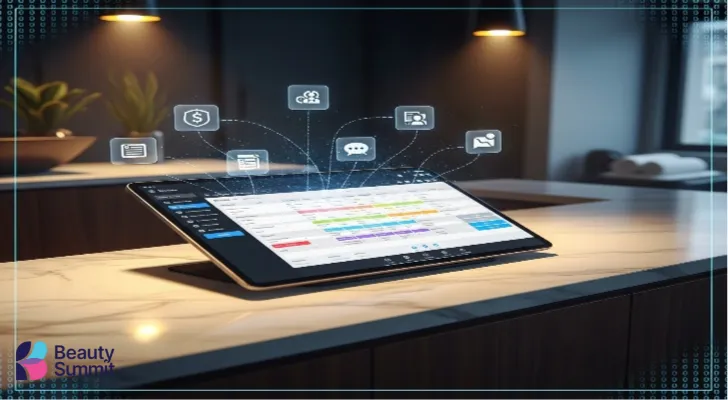
24/7 Online Booking & Automated Reminders: Self-service booking through automated systems empowers clients to schedule appointments at their convenience. They can book at midnight on Sunday or during their lunch break.
Real-time availability prevents double-bookings, while customizable SMS and email reminders, sent 24-48 hours in advance, significantly decrease no-shows.
Salons successfully automating salon operations report reduction rates of 25-30% after implementing these digital solutions.
Integrated CRM & Client Profiles: A centralized database becomes your salon’s institutional memory. It stores detailed client histories including service preferences, product purchases, allergy information, and personal notes.
This enables every team member to deliver personalized experiences. This foundation enables targeted messaging for birthdays, service anniversaries, and relevant promotions that drive repeat bookings and increase client lifetime value through automating salon operations.
Contactless Check-in and Digital Forms: Modern options like QR code check-in, app-based payments, and digital intake forms enhance both convenience and hygiene.
These considerations have become increasingly important to health-conscious clients who appreciate touchless interactions and the efficiency of completing paperwork from their smartphones when automating salon operations.
Business Management and Operational Tools
Point of Sale & Payment Processing: Fast, secure transaction processing for both services and retail products represents essential components of streamlining workflows.
This includes integrated card readers accepting all payment types, mobile payment options like Apple Pay and Google Pay, and sophisticated gift card management systems that encourage prepaid revenue when automating salon operations.
Inventory Control and Product Management: Real-time tracking monitors both professional product usage during services and retail stock levels.
Automated low-stock alerts prevent embarrassing situations where you can’t complete a client’s desired service.
Simplified supplier reordering with historical data analysis helps you maintain optimal inventory levels. Automating salon operations reduces waste by up to 40% while ensuring constant availability of your most popular products.
Staff Scheduling & Performance Tracking: Create flexible staff rosters based on individual availability, skill certifications, and predicted demand patterns.
Track commissions automatically to eliminate calculation errors and disputes. Monitor key performance metrics like service times and client satisfaction ratings that inform coaching and compensation decisions when automating salon operations.
Marketing Automation and Data Analytics
Automated Marketing Campaigns: Sophisticated drip campaigns welcome new clients with sequential messages that build relationships.
Re-engagement sequences win back clients who haven’t visited in 60-90 days. Automated review requests capture positive feedback when satisfaction is highest.
Personalized promotional messages target specific client segments with relevant offers that drive conversions without feeling generic or impersonal through automating salon operations.
Reporting & Analytics Dashboards: Comprehensive dashboards provide real-time visibility into sales trends by service category and time period, client retention rates that highlight loyalty program effectiveness, individual staff performance metrics that inform coaching decisions, and service popularity data that guides menu optimization and training priorities.
All of these are critical benefits that enable data-driven decision-making when automating salon operations.
Choosing the Right Salon Automation Software
Selecting the appropriate software platform represents one of your most critical business decisions. The right choice amplifies success while a poor fit creates frustration, wasted investment, and missed opportunities.
Assess Your Salon’s Unique Needs

Size & Scale Considerations: A solo stylist’s needs differ dramatically from a ten-chair salon, which in turn has different requirements than a multi-location spa offering comprehensive wellness services.
Solo professionals might thrive with basic booking and payment processing. Larger operations require advanced features like multi-location reporting, complex staff permission levels, and enterprise-grade security measures when automating salon operations.
Budget & Feature Priorities: Approach software selection strategically by clearly distinguishing between “must-have” features and “nice-to-have” capabilities.
Must-have features address your most pressing operational pain points. Nice-to-have capabilities would be convenient but aren’t essential to your immediate business goals, especially when working within budget constraints that require prioritization for automating salon operations.
Key Evaluation Criteria for Salon Management Software
User-Friendliness & Mobile Access: Intuitive interfaces that require minimal training encourage rapid staff adoption and consistent usage.
Mobile accessibility through responsive web design and dedicated iOS and Android apps ensures both team members and clients can access necessary features anytime, anywhere. This is a fundamental requirement for effective client scheduling automation when automating salon operations.
Integration & Scalability Capabilities: Seamless integration with your existing tools prevents data silos and duplicate entry. These tools include accounting software like QuickBooks or Xero, website booking widgets, social media platforms, and email marketing services.
Scalability ensures your chosen platform can accommodate growth from your current size to your future ambitions without forcing disruptive platform migrations when automating salon operations.
Support & Security Standards: Reliable, responsive customer support through multiple channels (phone, email, live chat) with comprehensive training resources and documentation prevents minor technical issues from becoming major operational disruptions.
Robust data protection measures including encryption, regular backups, and compliance with relevant regulations (GDPR, HIPAA where applicable) protect both your business and your clients’ sensitive information when automating salon operations.
Top Software Options for Automating Salon Operations
Mindbody: Best for large, multi-location spas and wellness centers seeking comprehensive features including class scheduling, membership management, and extensive integrations.
Key benefits include powerful marketing automation tools and industry-leading brand recognition that clients trust.
Considerations include higher pricing tiers starting at $129/month and interface complexity that may overwhelm smaller operations.
Vagaro: Strong all-rounder particularly appealing to small and medium-sized salons seeking excellent value with robust features at competitive pricing ($25-$100/month).
Offers intuitive design, solid marketing capabilities, and highly-rated mobile apps for both staff and clients. This makes it ideal for businesses focused on automating salon operations efficiently.
Zenoti: Premium platform designed for multi-location salons, spas, and franchises requiring advanced capabilities like centralized reporting, sophisticated inventory management, and enterprise-grade security.
Delivers exceptional depth for automating salon operations at scale but comes with higher investment requirements (starting at $299/month) and steeper learning curves.
Square Appointments: Budget-friendly option ideal for solo stylists and small salons already using Square payment processing. Offers seamless integration and familiar interfaces at prices starting at $0-$50/month.
Perfect for straightforward needs and automated booking systems. However, it lacks some advanced features like comprehensive CRM capabilities and sophisticated marketing automation found in specialized salon software when automating salon operations.
Rosy Salon Software: Feature-rich platform specifically designed for beauty and wellness businesses. Offers strong appointment management, client communication tools, and good value for growing salons at $29-$99/month.
Users appreciate its salon-specific design and intuitive workflow for streamlining operations. However, some desire more robust reporting analytics for advanced business intelligence when automating salon operations.
Always request demos and take advantage of free trial periods. Evaluate how each platform performs with your actual workflows, client volume, and team dynamics before committing to long-term contracts.
Implementing Your Salon Automation System Successfully
Successful implementation requires thoughtful planning, clear communication, and patient persistence. Your team needs time to adapt to new workflows and clients need time to adjust to enhanced digital experiences.
Phased Implementation Approach
- Planning & Preparation Phase: Establish clear, measurable key performance indicators (KPIs) that define success for your automation initiative.
Examples include reducing no-shows by 25%, increasing online bookings to 60% of total appointments, or reclaiming 10 hours per week from administrative tasks.
Conduct a thorough audit of current manual workflows to identify inefficiencies and bottlenecks when planning for automating salon operations. Develop a detailed data migration plan covering client lists, service menus, pricing structures, and product inventory to ensure nothing gets lost in transition.
- Setup & Training Phase: Configure software settings to match your salon’s specific operational preferences and business rules.
Integrate with payment processors, card readers, and other essential hardware. Then conduct comprehensive training sessions for all team members.
Address their concerns, highlight personal benefits they’ll experience, and provide hands-on practice in a low-stakes environment before go-live when automating salon operations.
Consider designating “automation champions” among staff who can provide peer support during the transition period.
- Communication & Optimization Phase: Announce your new system to clients through multiple channels. These include email, social media, in-salon signage, and direct conversations.
Enthusiastically highlight benefits they’ll enjoy like convenient online booking and automated reminders.
Then continuously monitor performance metrics against your established KPIs. Actively gather feedback from both staff and clients through surveys and informal check-ins when automating salon operations.
Regularly adjust settings and workflows to achieve peak efficiency as you discover optimization opportunities through real-world usage.
Measuring Your Return on Investment
Quantifying Benefits: Monitor specific improvements including reduced staff hours spent on administrative tasks (calculate hourly wage savings by multiplying hours saved by average hourly rate), decreased no-show rates (track lost revenue recovery by comparing pre- and post-implementation appointment fulfillment), increased average service values resulting from better-targeted marketing and upselling prompts, elevated online booking percentages that reduce phone interruptions and allow staff to focus on clients, and inventory cost savings from optimized stock levels that minimize waste while preventing stockouts.
Calculating Returns: Apply the standard ROI formula—(Net Gain ÷ Cost of Investment) × 100. Track all initial costs including software subscription fees, hardware purchases (card readers, tablets, printers), training time investment, and any consulting fees.
Then compare against documented monetary gains across the metrics mentioned above. Typically measure over quarterly and annual periods to account for seasonal variations in the beauty industry when evaluating the results of automating salon operations.
Most salons achieve positive ROI within 3-6 months of implementing comprehensive automation.
Real-World Results: Salons successfully implementing automation commonly report transformative results. These include reducing no-shows by 25-30% through automated reminders (saving thousands in lost revenue monthly), increasing online bookings from 20% to 60% of total appointments within six months (reducing phone interruptions by up to 70%), reclaiming 10-15 hours per week previously spent on administrative tasks (equivalent to $400-$600 in labor cost savings monthly), and improving inventory turns by 40% through intelligent reorder alerts (reducing tied-up capital and product waste significantly) when automating salon operations.
Future Trends in Salon Automation and Digital Solutions
Looking beyond current standard features reveals exciting possibilities. These position forward-thinking salon owners for continued competitive advantages as technology capabilities expand and client expectations evolve in the beauty industry when automating salon operations.
AI & Predictive Analytics
Artificial intelligence will increasingly suggest personalized service recommendations based on individual client history and preferences.
It will predict busy periods with remarkable accuracy enabling optimal staffing decisions that reduce labor costs while maintaining service quality.
AI will offer dynamic pricing that maximizes revenue during high-demand times while filling slow periods with strategic discounts. It will provide intelligent chatbots that handle routine client inquiries instantly without requiring staff intervention when automating salon operations.
Voice Control & IoT Integration
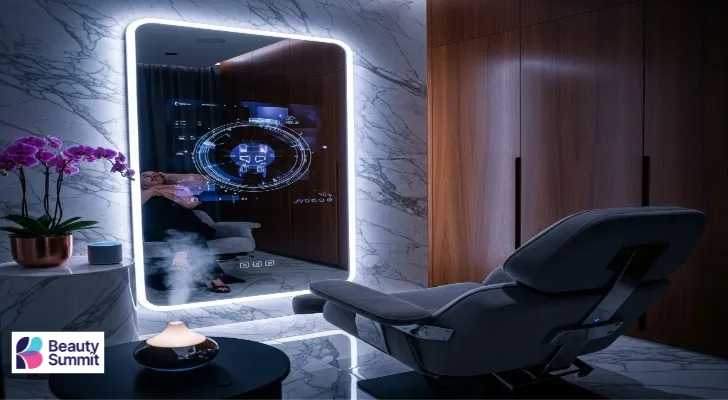
Voice-activated scheduling through smart speakers like Amazon Alexa and Google Home, intelligent mirrors offering virtual try-ons and video consultations that enhance service visualization, and integrated smart devices controlling ambient elements like lighting, music, and aromatherapy will create immersive, personalized environments.
These will enhance every client’s unique experience and differentiate your salon from competitors through advanced methods of automating salon operations.
Adaptive Client Experiences
Sophisticated systems leveraging machine learning algorithms will learn individual client preferences over time. They will automatically suggest complementary services and products perfectly timed to their purchase and service cycles.
This creates genuinely tailored experiences that feel personally curated rather than generically marketed to broad demographic segments. This is the ultimate expression of digital solutions meeting personalized service delivery when automating salon operations.
Common Questions About Automating Salon Operations
Is salon automation right for every size of beauty business?
Absolutely, though the appropriate scale and complexity varies significantly based on your specific circumstances and business model.
Solo stylists and booth renters might begin with simple automated booking and payment processing (starting at $0-$50/month). Larger salons benefit from comprehensive suites integrating scheduling, inventory management, marketing automation, and analytics (ranging from $100-$500/month depending on features and user count).
The key lies in finding the right fit for your current needs and growth trajectory rather than viewing the process of automating salon operations as an all-or-nothing proposition.
What less obvious tasks can salon automation tackle beyond booking and payments?
Modern platforms handle surprisingly diverse functions when automating salon operations. These include automated client intake forms that clients complete before arrival (saving 5-10 minutes per appointment), post-service feedback collection that captures insights while experiences are fresh (improving review generation by 300-400%), automated staff performance report generation that eliminates hours of manual data compilation, social media post scheduling that maintains consistent online presence without daily effort, automatic data backups protecting against catastrophic loss from hardware failures or security breaches, and automated birthday and anniversary messages that strengthen client relationships without requiring manual calendar tracking.
Will automating my salon make my business feel less personal or reduce the human touch?
This common concern fundamentally misunderstands automation’s true purpose. The technology handles repetitive, time-consuming administrative tasks, thereby freeing your talented team to spend more quality time engaging personally with clients, providing thoughtful consultations, and delivering the attentive care that builds lasting loyalty.
Research shows that salons using automation actually report higher client satisfaction scores (averaging 4.7/5 versus 4.2/5 for non-automated competitors). This is because staff have more capacity for genuine personal interaction rather than being distracted by paperwork and phone calls when automating salon operations.
What’s the biggest mistake salons make when trying to automate their operations?
The most damaging error involves failing to secure staff buy-in before implementation. This is often combined with selecting overly complex software that overwhelms users and discourages adoption (resulting in abandonment rates as high as 40% within the first year).
Avoid this by involving team members early in the selection process for automating salon operations. Actively solicit their input on operational pain points and desired features.
Provide thorough training with ongoing support rather than one-time sessions. Celebrate early wins that demonstrate tangible benefits.
Start with simpler, high-impact automations like client scheduling and reminder systems before introducing more advanced capabilities like inventory management and predictive analytics.
Can automation help with staff retention and satisfaction in my beauty business?
Significantly so—automating salon operations reduces stress from manual errors like double-bookings and incorrect commission calculations that create friction and resentment among team members.
It provides clear, accessible scheduling that improves work-life balance and reduces last-minute shift changes. Automation tracks commissions with complete transparency that builds trust and eliminates disputes.
It allows staff to focus on their craft and meaningful client relationships rather than administrative burden.
Salons implementing comprehensive automation report staff turnover reductions of 25-35% and employee satisfaction improvements of 40-50% within the first year when automating salon operations. This translates directly to better service quality and stronger client relationships.
How long does it typically take to see results from automating salon operations?
Most salons begin seeing measurable improvements within 2-4 weeks of implementation. No-show reductions appear almost immediately once automated reminders are activated.
Online booking percentages increase steadily over the first 60-90 days as clients discover and adopt the convenience when automating salon operations. Administrative time savings become apparent within the first month as staff adjust to new workflows.
Comprehensive ROI typically becomes clearly positive within 3-6 months. This is when all systems work together synergistically and the cumulative benefits compound across booking, marketing, inventory, and staff management functions.
Conclusion
Automating salon operations delivers comprehensive benefits that transform beauty businesses. From reducing no-shows by 25-30% and reclaiming 10-15 hours weekly to driving sustainable profitability through streamlined workflows, implementing effective client scheduling automation, and leveraging digital solutions for spa efficiency, the process of automating salon operations positions your salon for lasting success in Vietnam’s competitive beauty industry.
The journey of automating salon operations begins with a single step—whether that’s implementing online booking, automated reminders, or comprehensive management software. Start today and experience the transformative power of automation in your beauty business.


GMP Cosmetic Manufacturing Compliance Guide: FDA, ISO 22716 & MoCRA Mistakes to Avoid
50+ Best Business Ideas 2026 (Ranked by Startup Cost, Risk & Profit Potential)
How to Start a Cosmetic Business with Little to No Experience
What Is Cosmetic Product Development and Why Do Most New Products Fail?
Cosmetic Labeling Requirements Explained (US, EU & Global Standards)
AI Consulting for Small Businesses: Is It Worth Starting in 2026?